The Three Pillars of Global Control: The Financial, Military, and Technological Industrial Complexes | Simon Dixon on You're The Voice w/ Efrat Fenigson
Jun 02, 2026Analyzing Systemic Structures
Hey hey Sovereign Wealth Builders,
In my opinion, global influence is not merely the result of individual actors, but rather a complex web of institutional relationships and incentive structures. I believe these systems can create significant pressure on individual financial autonomy.
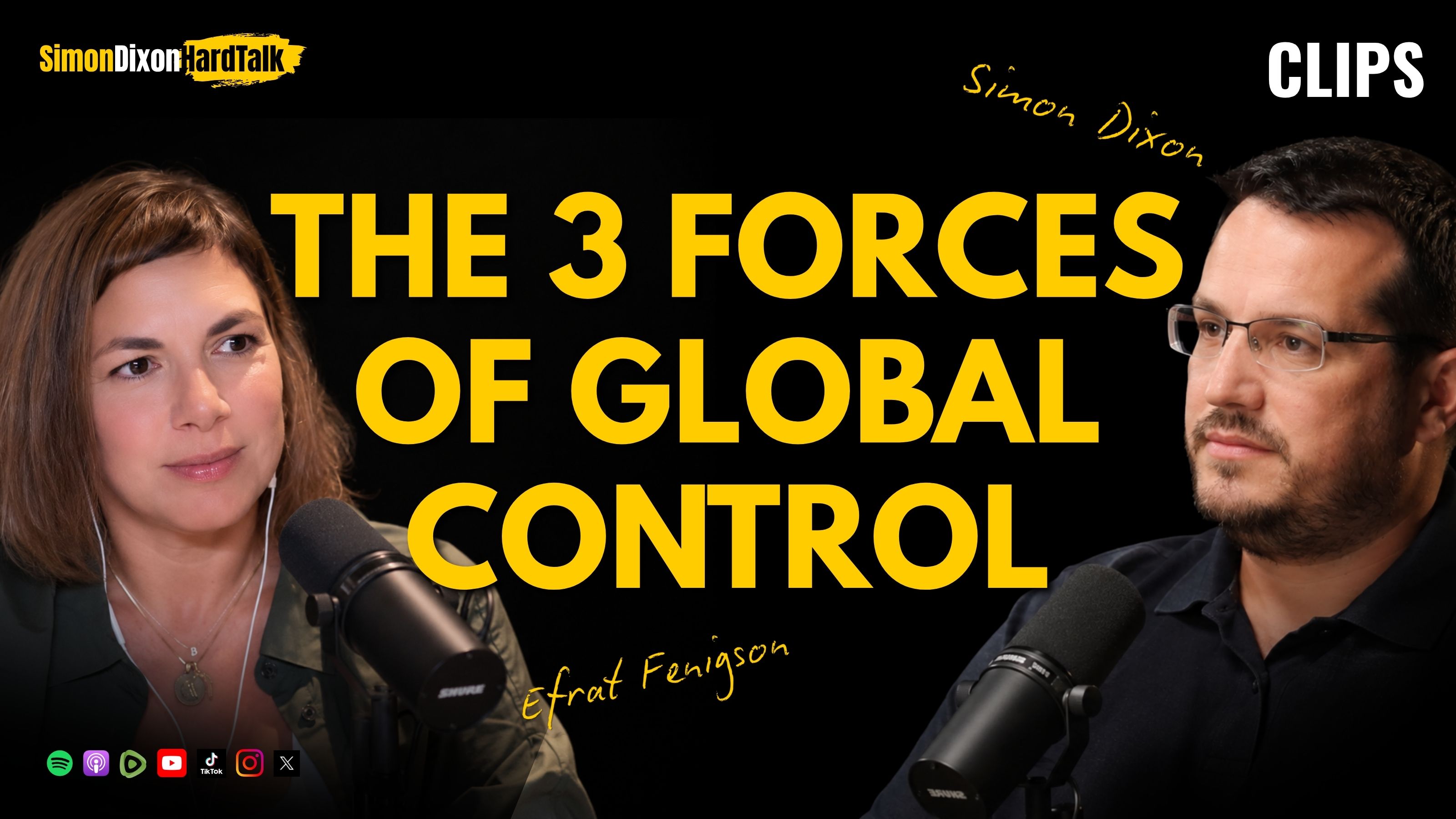
In a recent interview with Efrat Fenigson on You’re The Voice (dated 18 February 2026), we discussed the three pillars of global influence: the Financial, Military, and Technological sectors. I believe it is important to understand how these systems interact. In my view, understanding these relationships is key to managing personal wealth and freedom within modern geopolitical realities.
The Financial Industrial Complex (FIC): Hierarchy and Debt
I believe the financial sector serves as a foundation for global power structures, often functioning through a hierarchy of debt and credit obligations.
The Bank for International Settlements (BIS) in Switzerland acts as a central bank for central banks. Under this central banking structure, Commercial Banks expand the money supply through lending. These financial instruments are often managed by Investment Banks and held by large institutional investors.
The key players in this pyramid of capture include:
- The Bank for International Settlements (BIS)
- Commercial Banks
- Investment Banks (JP Morgan, Citi, Bank of America)
- Asset Managers (BlackRock, State Street, Vanguard)
Public records indicate significant levels of sovereign debt, such as the US national debt. Furthermore, market data suggests that a large percentage of equities are held by a small minority of participants. In my opinion, these dynamics can lead to significant political influence by major financial contributors and lobbies.
I believe that when political objectives are closely tied to lobby funding, it may affect the independence of policy decisions.
The Military Industrial Complex (MIC): The Business of War
In my opinion, the military sector often works in tandem with financial interests to secure strategic resources and maintain economic stability within certain jurisdictions.
Major defense contractors receive significant government funding, which I believe reinforces the current economic paradigm.
I believe that resource-rich nations often face pressure to align their economic policies with global financial standards.
The Technical Industrial Complex (TIC): Data and Algorithms
I believe the technology sector has introduced new methods of data analysis and algorithmic oversight that can impact privacy and social discourse.
Social media platforms use algorithms to drive engagement. In my opinion, this can inadvertently lead to increased polarization within public discourse.
I believe that algorithmic curation may prioritize extreme viewpoints, potentially distracting from systemic economic issues. In my view, the development of digital financial tools could lead to more centralized social and economic oversight.
Economic Implications for Individuals
I believe that within a debt-based economy, individuals may find themselves in a position where their economic output is primarily directed toward servicing financial obligations.
In my opinion, various societal institutions—including education and healthcare—can become influenced by the requirements of the broader financial system.
In my opinion, traditional measures of net worth often rely on paper assets that are subject to the stability of the custodial system.
I believe that when wealth is held within centralized financial systems, it remains subject to the policies and stability of those institutions.
Alternative Asset Strategies
I believe that diversifying into non-traditional assets can provide a measure of financial independence.
- Gold: Gold remains a traditional store of value, though I believe its physical nature can present challenges for large-scale logistics and security without third-party assistance.
- Bitcoin: I believe Bitcoin offers a digital alternative that supports self-custody and global transfer without the necessity of traditional intermediaries.
Final Considerations
Historical patterns suggest that financial systems undergo periodic restructuring. I believe it is prudent to be prepared for such transitions.
I believe that maintaining a focus on individual financial sovereignty is more productive than engaging in polarized cultural or political debates. In my opinion, building a stable foundation is essential for navigating future economic changes.
Call to Action & References
To understand the full depth of this systemic trap, watch the 21-minute clip and the full 2-hour 15-minute interview on my YouTube channel here
Follow me on X, subscribe to my channels, and share this post with anyone who still thinks their vote is more powerful than the banks. It’s time to wake up.
- Share this post. Share this blog post to expose the "divide and conquer" trap.
- Subscribe to the Simon Dixon YouTube channel. Get my weekly deep dives into geopolitics, macro, and Bitcoin. Subscribe to my YouTube channel.
- Find me on Rumble. This is my backup channel, safe from censorship. Follow me on Rumble.
- Follow me on X @SimonDixonTwitt. I post real-time updates and analysis on X and am highly active there. Follow me on X.
- Follow me on instagram. Usually short clips are posted here.
- Follow me on TikTok. Usually short clips are posted here.
- SimonDixon.com. This is my personal site and an archive of all my content, safe from de-platforming. Join the free membership portal.
About Host
Efrat Fenigson
Visit her website and youtube channel to learn more.
Watch on YouTube
Read Other Related Blogs
Disclaimer
This document is for informational purposes only and represents the opinions and interpretations of Simon Dixon regarding the global financial structure. This is not financial, legal, or investment advice. Always perform your own due diligence before making financial decisions.