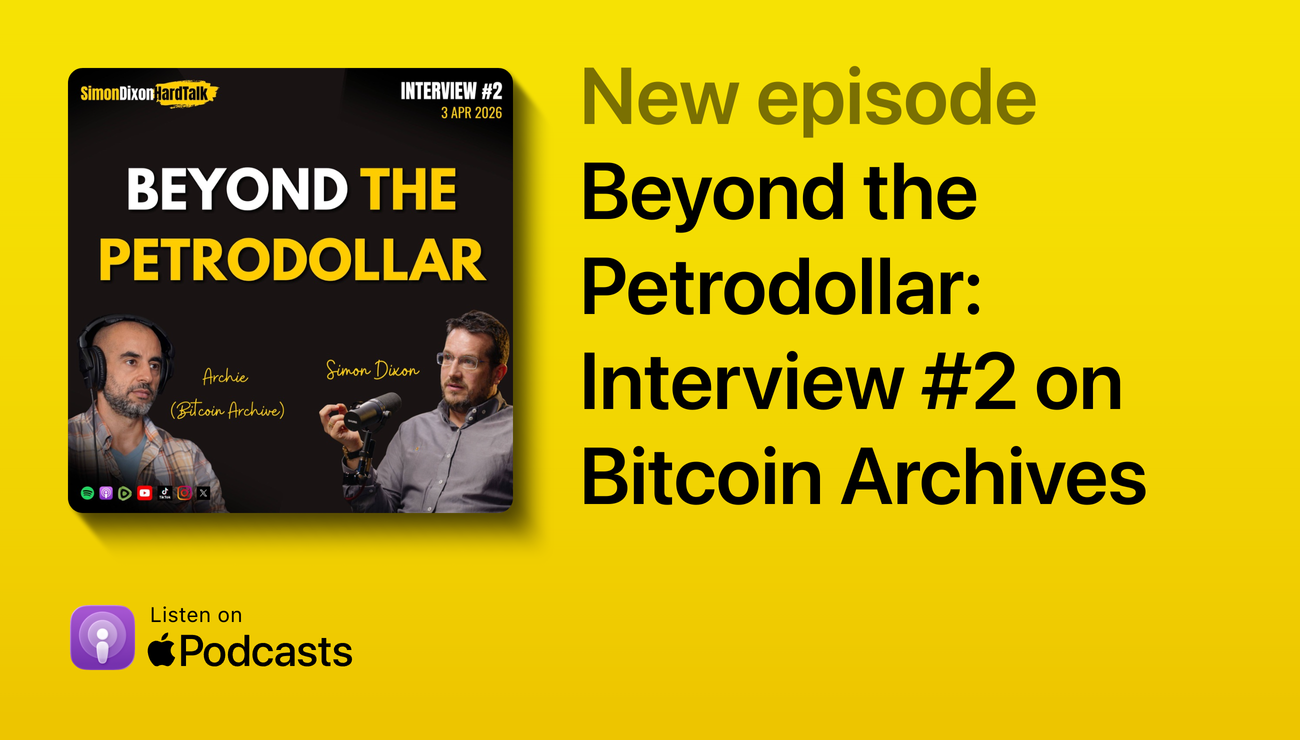
Beyond the Petrodollar: Interview #2 on Bitcoin Archives
Apr 03, 2026Hey hey sovereign wealth builders.
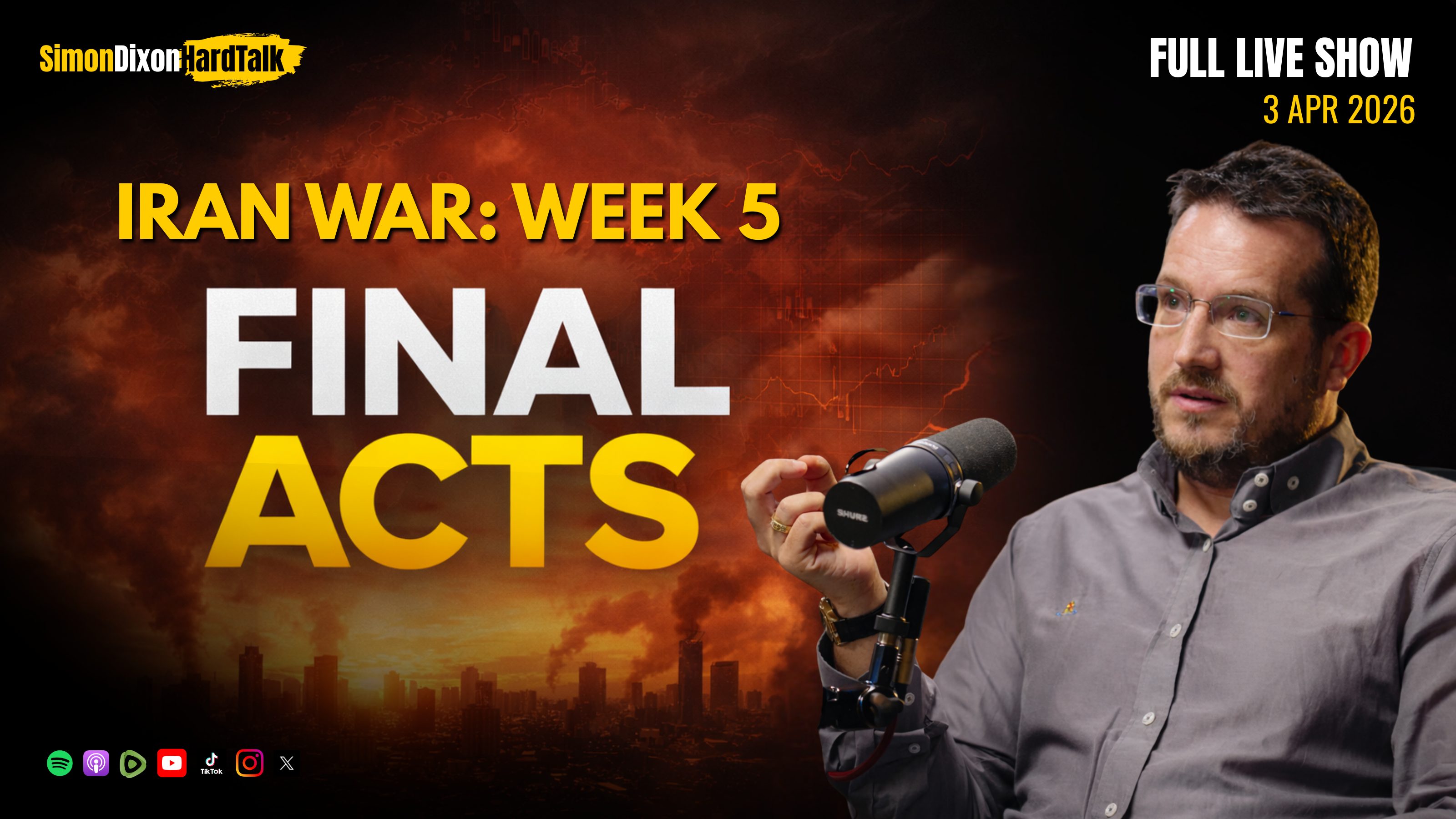
In my opinion, what we are witnessing right now is not just another geopolitical flashpoint—it is part of a much larger transition that has been building for years.
During my recent trip to London, I sat down face-to-face with Archie from Bitcoin Archive for a series of in-depth conversations. Across these discussions, we unpacked what appears to be a coordinated shift in global power structures—spanning Bitcoin, Wall Street, energy markets, and geopolitics.
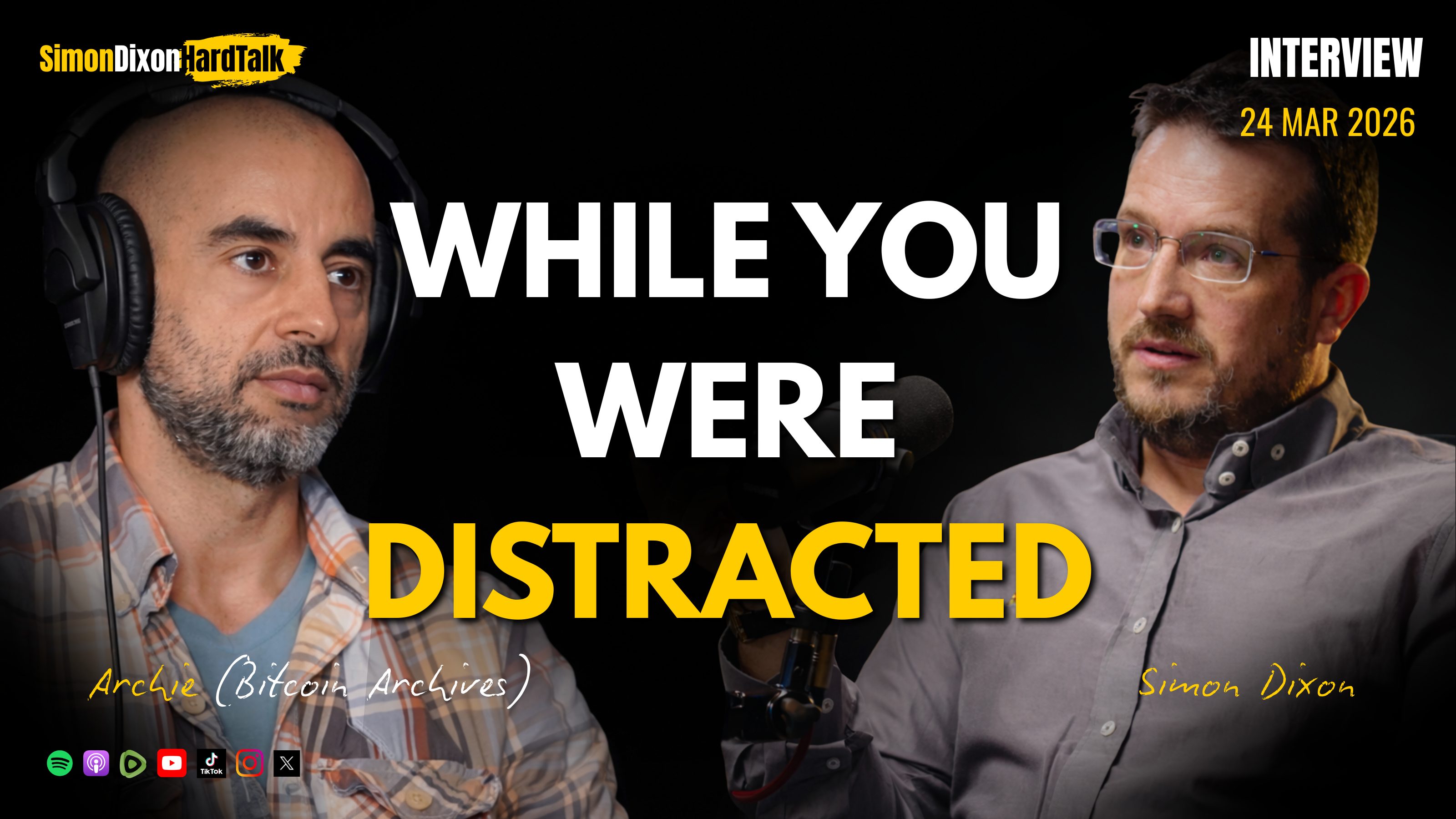
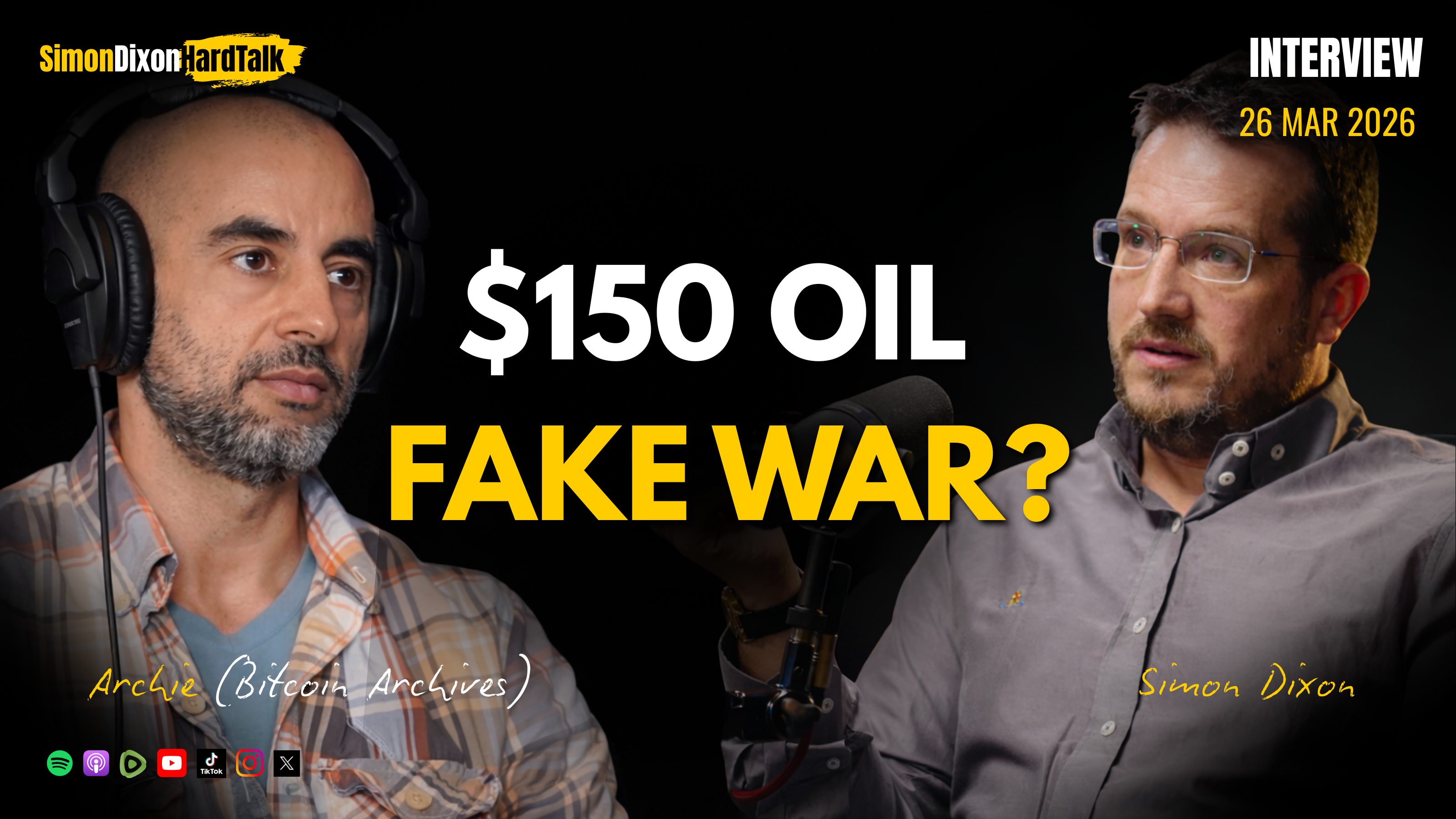
While these were released as two separate interviews—“BlackRock Attacked Bitcoin for 6 Months While Distracting You” and “$150 Oil Crisis & Fake War — Did Iran Just Beat Larry Fink?”—in my view, they form one continuous narrative.
A Managed Transition, Not Random Chaos
In my opinion, the biggest mistake people are making right now is viewing events in isolation.
Most people think they are watching:
- A war between the US, Israel, and Iran
- A separate Bitcoin bear market
- Independent economic stress in global markets
But when you connect the dots, it appears to be something far more coordinated.
Across both conversations, I laid out a framework of three dominant power blocs shaping the West:
- The Financial Industrial Complex (FIC) — asset managers, central banks, and capital allocators
- The Military Industrial Complex (MIC) — defense contractors and intelligence networks
- The Technical Industrial Complex (TIC) — big tech, AI, and surveillance infrastructure
In my opinion, what we are witnessing is a power struggle within and between these blocs, as the world transitions from a US-led system into a multipolar order.
The Attempted Capture of Bitcoin
In the first interview, we focused heavily on Bitcoin—and why, in my opinion, its recent price action makes little sense unless viewed through this lens.
Bitcoin fell roughly 50% from its highs, despite:
- A global macro environment that should favour hard assets
- Rising instability in fiat systems
- Increasing institutional attention
In my opinion, this wasn’t organic.
What we appear to have seen is the buildout of a full derivative and ETF-based control system, allowing Wall Street to:
- Suppress price in the short term
- Accumulate Bitcoin through “paper” exposure
- Shake out retail holders through coordinated narratives
The release of the Epstein files, the wave of negative media, and broader fear cycles all coincided with this phase.
To me, that’s not bearish—it’s the opposite.
In my opinion, if institutions are going to that level of effort to accumulate Bitcoin, it signals its long-term importance in the system they are building.
Financialisation and Centralisation Risks
Another key theme was the financialisation of Bitcoin itself.
We discussed how:
- Treasury companies
- ETFs
- Bitcoin-backed loans
- Corporate debt structures
…may, allegedly, be part of a broader attempt to bring Bitcoin into the same control grid as traditional finance.
At the same time, there appear to be ongoing efforts—whether intentional or not—to influence:
- Developer ecosystems
- Infrastructure companies
- Narrative control
That said, one point both Archie and I agreed on is that Bitcoin has historically become stronger through these attacks, not weaker.
The block size wars, past infiltration attempts, and internal conflicts have repeatedly reinforced its decentralisation.
In my opinion, what we’re seeing now is simply the next phase of that battle.
The “Managed War” and the End of the Petrodollar
In the second interview, we zoomed out into geopolitics—specifically the Iran conflict and energy markets.
In my opinion, this is where things become even more significant.
Most people believe this is a traditional war.
But if that were the case:
- Gold would be surging uncontrollably
- Oil would be unbounded
- Markets would reflect panic
Instead, we’re seeing something more controlled.
Oil is rising—but within limits.
Gold is not behaving like a full crisis asset.
Markets are volatile—but not collapsing.
This suggests, in my opinion, that we are watching a managed transition, not an uncontrolled escalation.
The core shift appears to be:
- The breaking of the petrodollar system
- The realignment of energy flows toward China and the Global South
- The gradual repositioning of the US as a regional, rather than global, power
As discussed in the briefing materials, this aligns with the broader thesis that the current system is moving toward a multipolar order, with capital increasingly flowing through new centres of power.
Oil, Debt, and the System’s Breaking Point
One of the most important signals discussed was the price of oil.
In my opinion, oil is the pressure valve for the entire system.
- If oil moves too high (e.g. $150+), the global economy breaks
- If yields rise too far, the US debt system enters a doom loop
- If supply chains remain disrupted, recession becomes unavoidable
This creates a paradox:
The system must allow stress—but not too much.
That’s why, in my view, we are seeing:
- Controlled escalation
- Managed narratives
- And ultimately, the need for a negotiated outcome
Because without it, the financial system itself is at risk.
The Asset Stripping of the West
Another theme we explored is what appears to be the systematic weakening of Western economies.
In my opinion, policies that seem irrational—such as:
- Energy self-sabotage
- Tax structures that drive capital away
- Deindustrialisation
…may not be accidental.
They may, allegedly, be part of a broader process of:
- Extracting value from existing systems
- Reallocating capital globally
- Consolidating ownership into fewer hands
This aligns with the idea of a “K-shaped” economy, where:
- A small group benefits from asset inflation
- The majority experiences declining purchasing power
Where Bitcoin Fits in All of This
So where does Bitcoin sit in this transition?
In my opinion, it sits at the centre.
Not because institutions want it to succeed—but because they recognise its properties:
- Fixed supply
- Portability
- Independence from the traditional system
- Self-custody.
At the same time, those same institutions appear to be trying to:
- Accumulate it
- Financialise it
- Integrate it into existing control structures
This creates a split:
- Custodial, institutional Bitcoin
- Self-custodied, sovereign Bitcoin
In my view, only one of those maintains the original value proposition.
Points of Agreement and Tension
One of the strengths of these conversations with Archie was the pushback.
We didn’t agree on everything.
For example:
- Archie questioned whether some connections (like Epstein-linked investments) were overstated
- He pushed back on whether figures like Elon Musk are fully captured or partially independent
- He raised valid concerns around the feasibility of systems like Universal Basic Income
At the same time, we aligned on key points:
- Bitcoin’s resilience despite repeated attacks
- The increasing role of institutions in shaping markets
- The broader decline of Western economic structures
That balance—between agreement and challenge—helped refine the discussion.
What This All Points To
In my opinion, both interviews ultimately point to the same conclusion:
We are living through a structural shift in the global system.
A shift where:
- The petrodollar is weakening
- Power is moving toward a multipolar world
- Markets are increasingly influenced by large institutional actors
- And Bitcoin is becoming a critical asset within that transition
This is not a short-term cycle.
It is a long-term realignment.
Final Thoughts
If this thesis is even partially correct, then the implications are significant.
In my opinion:
- Volatility is not a bug—it’s a feature of transition
- Narratives will continue to be shaped and reshaped
- And assets like Bitcoin will remain at the centre of that battle
The key question is not whether the system changes.
It’s how you position yourself within that change.
Call to Action
- Share this post. Share this blog post to expose the "divide and conquer" trap.
- Subscribe to the Simon Dixon YouTube channel. Get my weekly deep dives into geopolitics, macro, and Bitcoin. Subscribe to my YouTube channel.
- Find me on Rumble. This is my backup channel, safe from censorship. Follow me on Rumble.
- Follow me on X @SimonDixonTwitt. I post real-time updates and analysis on X and am highly active there. Follow me on X.
- Follow me on instagram. Usually short clips are posted here.
- Follow me on TikTok. Usually short clips are posted here.
- SimonDixon.com. This is my personal site and an archive of all my content, safe from de-platforming. Join the free membership portal.
Watch on YouTube
Prefer to Listen? Available on Spotify & Apple Podcasts
Read other related blogs
Disclaimer
This content reflects the personal views, opinions, and analysis of Simon Dixon based on his own research and interpretation of current market conditions and geopolitical events. It is provided for informational and educational purposes only and should not be relied upon as financial, investment, legal, or other professional advice.
Nothing in this content constitutes a recommendation to buy, sell, or hold any asset or to adopt any specific investment strategy. Markets involve risk, and past performance or analysis is not indicative of future results.
You should conduct your own research and consult with a qualified professional before making any financial decisions.