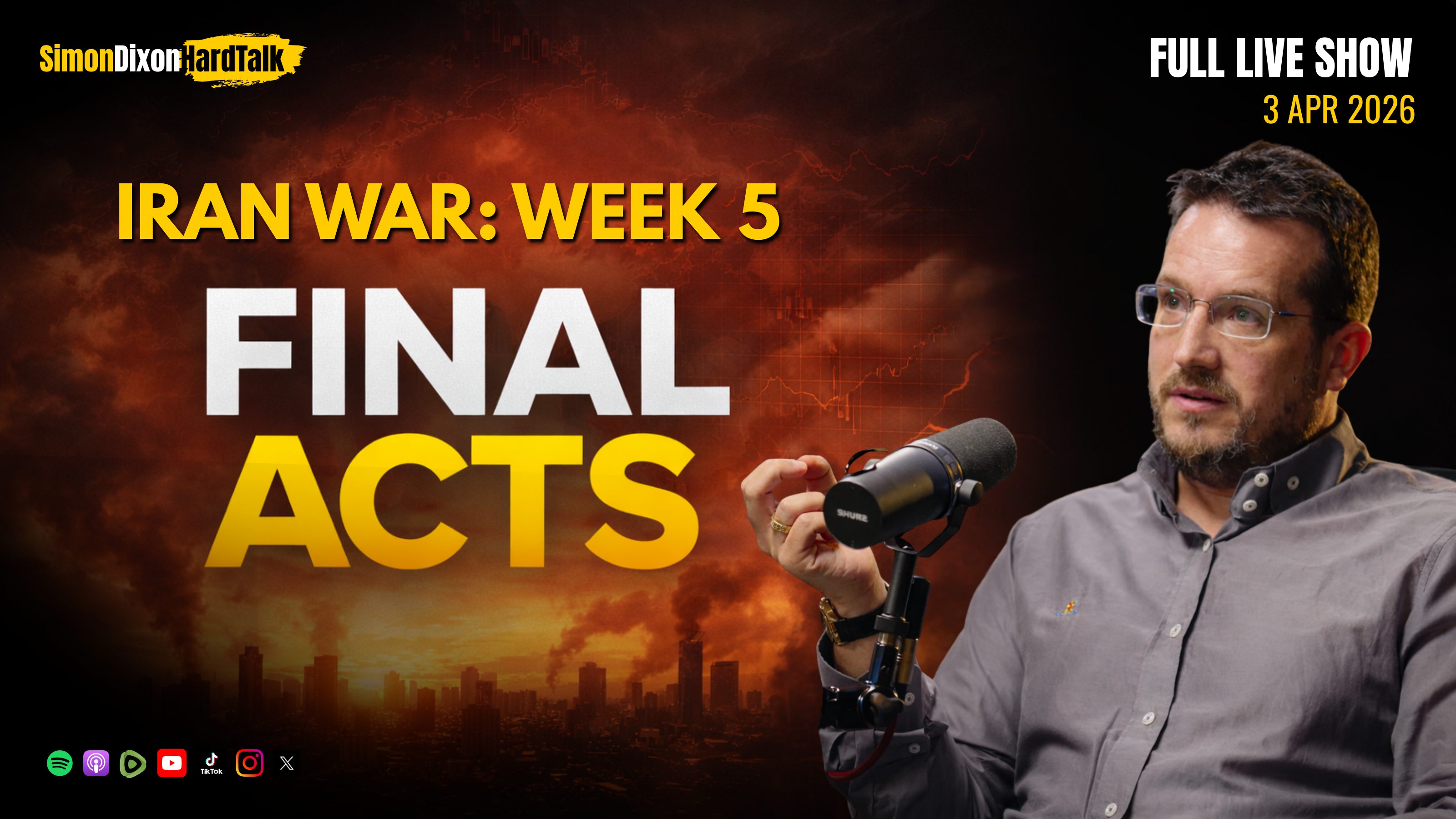
🇮🇷🇮🇱🇺🇸 Iran War Week 5: The Controlled Reset — Markets Signal The Outcome | Simon Dixon HardTalk LIVE
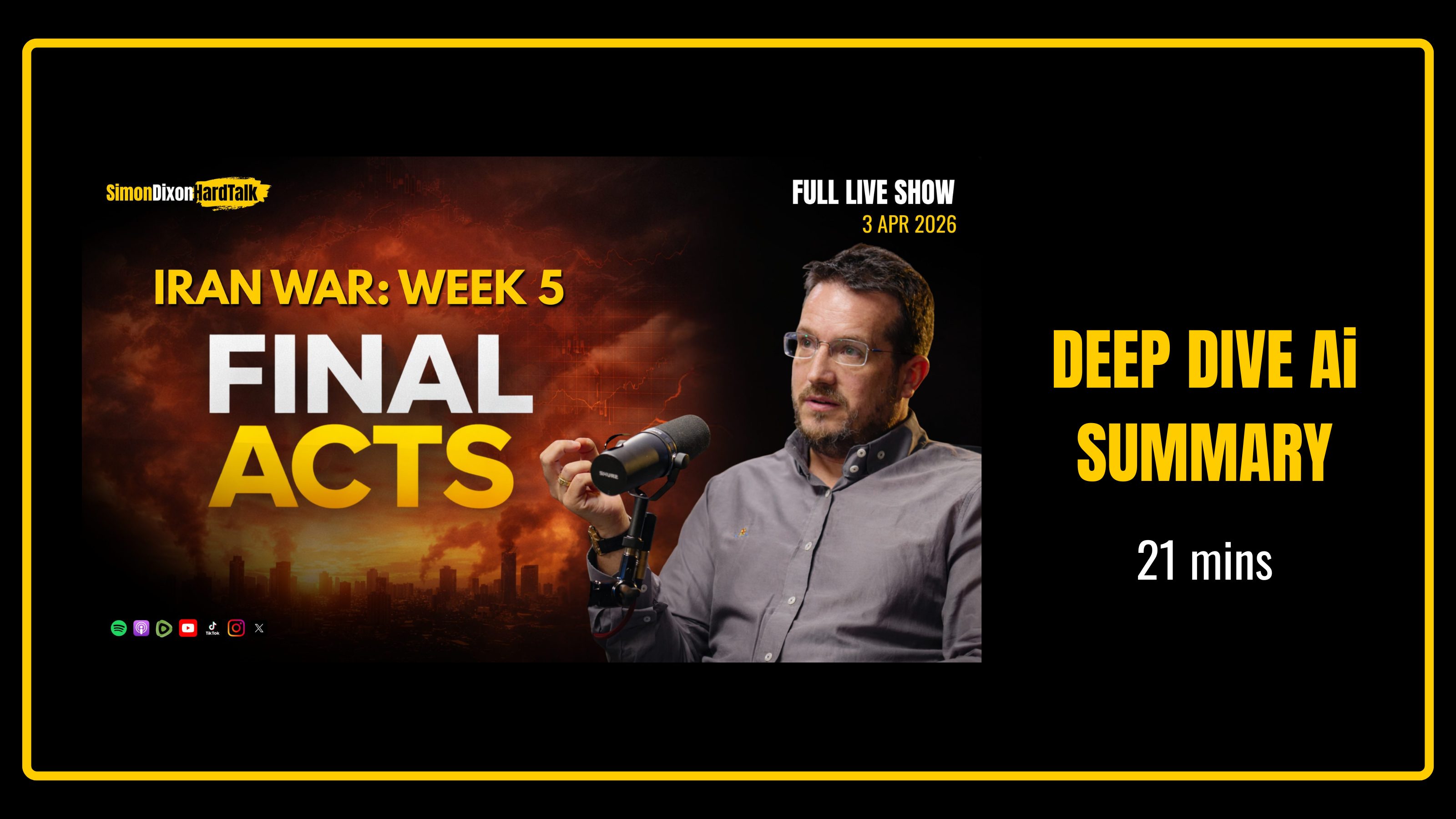
Apr 03, 2026No time for the full 3h8m video? Watch the AI-generated TL;DR Podcast Style Discussion instead (21 mins). Or watch the cinematic explainer — a richer, more visual breakdown of the full discussion (5 mins).

Hey hey sovereign wealth builders!
For the past four weeks, we’ve been closely tracking the developments around the Iran conflict—week by week, signal by signal. At this stage, there’s very little “new” information in terms of headlines. What we’re seeing now is confirmation. Confirmation of the market dynamics, confirmation of the geopolitical trajectory, and confirmation of the macro thesis I’ve been outlining for years.
So in this first part, I want to zoom out.
We’ve spent a lot of time focused on the micro—daily moves, announcements, reactions. Now it’s time to step back and look at the bigger picture: what the markets are telling us, how this ties into the broader geopolitical shift, and why this all points toward a much larger transition underway.
The Macro Framework: The Global Reset in Motion
At the highest level, what we are witnessing is not just a war—it is part of a broader macro agenda.
Call it what you like: a global reset, a repricing event, or a coordinated transition. The end result is the same. We are moving from a unipolar world dominated by the US dollar into a multipolar system where power is distributed across blocs—BRICS, the GCC, China, and a weakened but still influential West.
This transition is being accelerated, not created, by the current conflict.
The trigger point in this phase has been energy—specifically the risks surrounding the Strait of Hormuz. Energy is the backbone of everything: production, transport, supply chains, and ultimately inflation. When that system is stressed, everything downstream begins to fracture.
What we are seeing right now is effectively a fast-tracked repricing of energy and commodities—compressing years of gradual change into a much shorter time frame.
What the Markets Are Signaling
To understand what comes next, you need to watch the markets—not the headlines.
There are a few key signals:
- Oil is rising, but critically, it is being capped at $115 for WTI. It is not being allowed to sustainably break above levels that would trigger total demand destruction in the US and global economy.
- Bond yields are under significant stress. The 10-year pushing toward 4.5% and the long end near 5% puts enormous pressure on the US debt system and mortgage market.
- Gold is not behaving like it would in a true global panic. It is not seeing a full exodus. That suggests large players expect containment—not uncontrolled escalation.
- The dollar has strengthened temporarily, but this sits within a broader long-term trend of structural weakening.
Put simply: the system is under pressure, but it is being managed within boundaries.
Those boundaries exist for a reason. If oil runs too high, or yields move too far, the US financial system enters a feedback loop—higher debt costs, lower growth, and ultimately systemic instability.
The market is telling us that outcome is not the objective.
War, But Not World War
Every time the narrative shifts toward escalation, markets react—but not in a way consistent with a true world war scenario.
If this were an uncontrolled global conflict, you would see:
- Sustained surges in gold
- Unbounded oil prices
- Disorderly US bond markets
We’re not seeing that.
Instead, we’re seeing volatility within limits. That suggests expectation of a resolution—not peace in the traditional sense, but a negotiated transition into the next phase of the global order.
The Shift to a Multipolar World
Beneath the surface, the geopolitical realignment is already underway.
- The Middle East is increasingly integrating with China and BRICS.
- Gulf states are recalibrating relationships, reducing reliance on US structures.
- Europe and Asia are absorbing economic shock.
- The US is transitioning—despite the narrative—toward a more regional role.
This is not happening overnight, but the current crisis is accelerating the timeline.
The result is a world divided into economic blocs, with capital, energy, and influence being renegotiated in real time.
The Immediate Risk: Supply Chain Disruption
While much of this discussion is macro, the short-term implications are very real.
Even if the conflict de-escalates quickly, the damage to supply chains is already in motion.
Energy disruptions—particularly jet fuel—have knock-on effects across:
- Logistics
- Aviation
- Trade flows
- Consumer availability of goods
This is where macro meets reality.
Behavioral changes follow quickly:
- Governments begin preparing for shortages
- Businesses adjust pricing and inventory
- Individuals feel the impact through cost of living and availability
This is not theoretical—it is already beginning.
What This Points To
All of these signals converge on one conclusion:
We are not witnessing a random crisis. We are witnessing a controlled, but highly disruptive transition.
A transition where:
- Markets are used to manage outcomes
- Energy is used as a lever
- Debt dynamics are reshaped
- Power is redistributed globally
The goal is not immediate collapse—it is a managed shift.
But “managed” does not mean painless.
Go Deeper: The Full Breakdown with Bitcoin Archives
What I’ve covered here is the high-level macro—the signals, the trends, and the direction of travel.
But to really understand how this connects to Commodities like Gold, Bitcoin, capital flows, and the role of institutions like BlackRock, you need to go deeper.
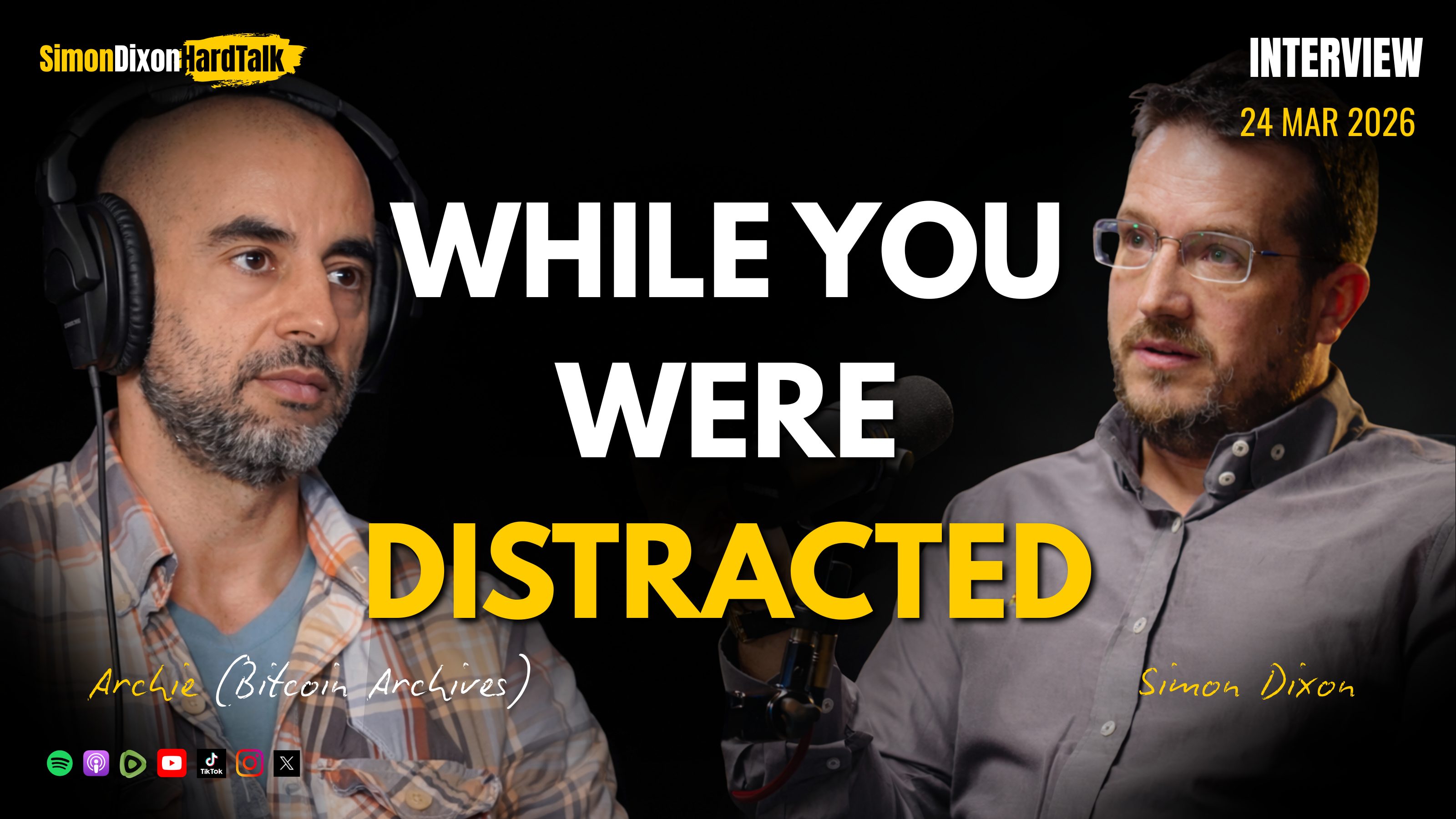
That’s exactly why I sat down in London for a face-to-face series with Archie from Bitcoin Archives.
In these conversations, we break down the mechanics behind what’s happening—how narratives are shaped, how capital is repositioned, and how Bitcoin fits into this transition.
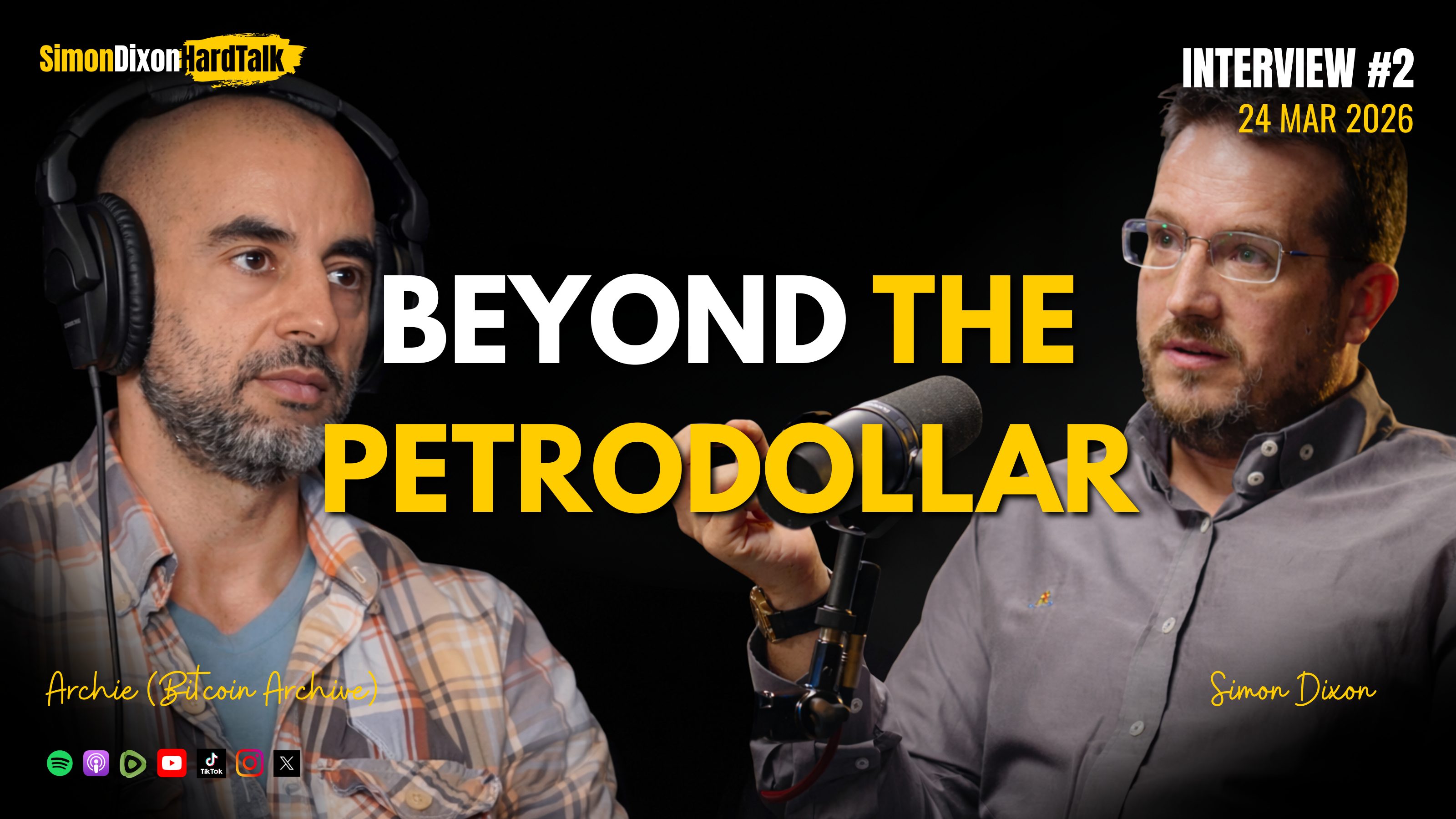
Interview 1: BlackRock Attacked Bitcoin for 6 Months While Distracting You
Published: 24 March 2026
Duration: 1h 19m
This is a deep dive into how institutional players influence sentiment, suppress narratives, and quietly accumulate position while retail is distracted.
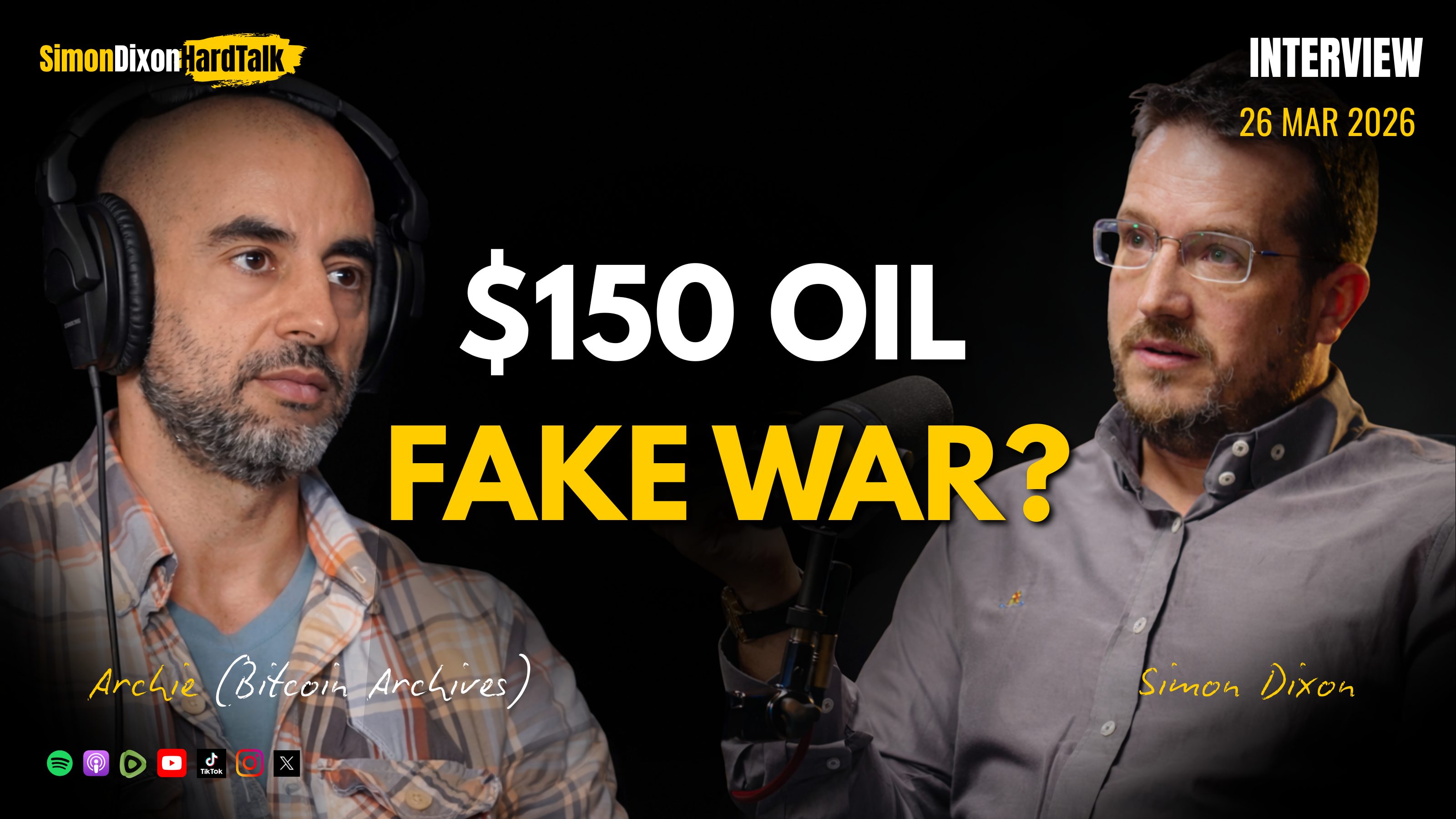
Interview 2: $150 Oil Crisis & Fake War — Did Iran Just Beat Larry Fink?
Published: 26 March 2026
Duration: 1h 22m
Here we connect the dots between energy markets, geopolitics, and financial power—breaking down whether this crisis is engineered, and who is actually benefiting.
If you want the full picture—not just the signals, but the strategy behind them—these interviews are essential viewing.
Call to Action
- Share this post. Share this blog post to expose the "divide and conquer" trap.
- Subscribe to the Simon Dixon YouTube channel. Get my weekly deep dives into geopolitics, macro, and Bitcoin. Subscribe to my YouTube channel.
- Find me on Rumble. This is my backup channel, safe from censorship. Follow me on Rumble.
- Follow me on X @SimonDixonTwitt. I post real-time updates and analysis on X and am highly active there. Follow me on X.
- Follow me on instagram. Usually short clips are posted here.
- Follow me on TikTok. Usually short clips are posted here.
- SimonDixon.com. This is my personal site and an archive of all my content, safe from de-platforming. Join the free membership portal.
Watch on YouTube
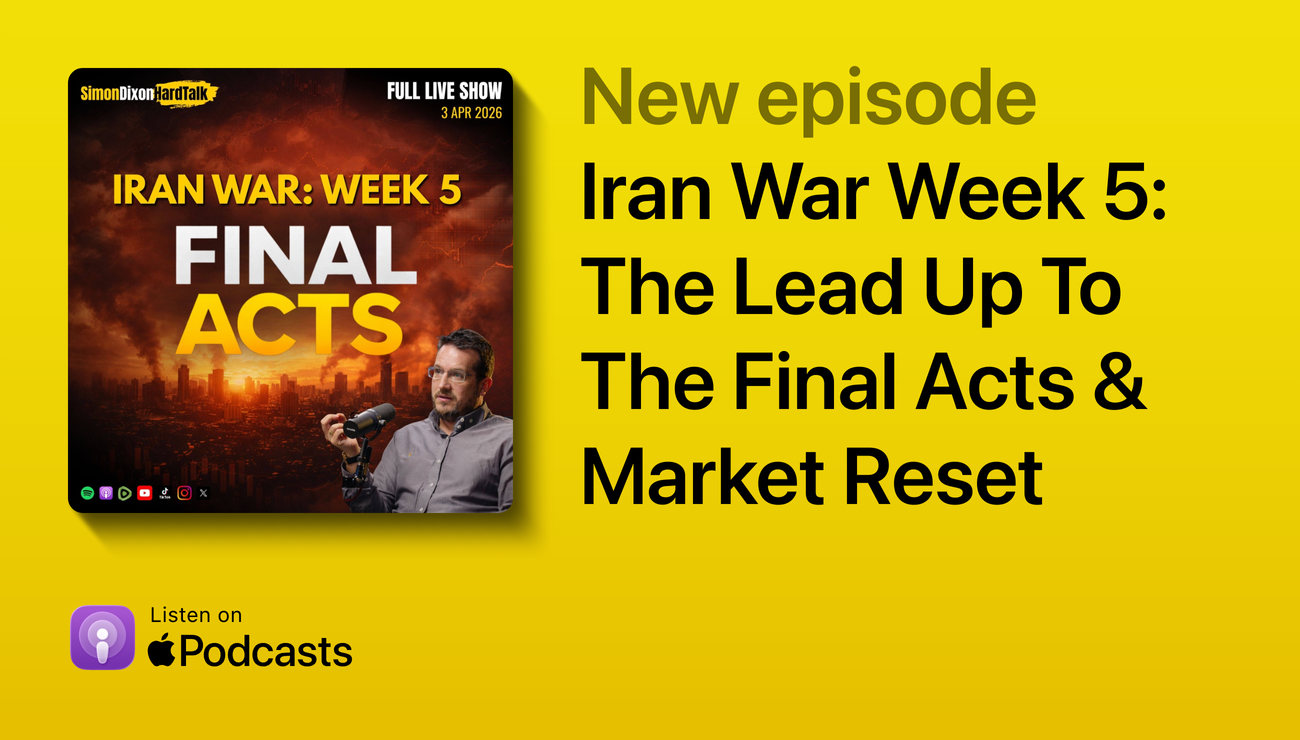
Prefer to Listen? Available on Spotify & Apple Podcasts
Read other related blogs
Disclaimer
This content reflects the personal views, opinions, and analysis of Simon Dixon based on his own research and interpretation of current market conditions and geopolitical events. It is provided for informational and educational purposes only and should not be relied upon as financial, investment, legal, or other professional advice.
Nothing in this content constitutes a recommendation to buy, sell, or hold any asset or to adopt any specific investment strategy. Markets involve risk, and past performance or analysis is not indicative of future results.
You should conduct your own research and consult with a qualified professional before making any financial decisions.