Ex-Banker Exposes Who Trump, Elon & Netanyahu Actually Work For | Simon Dixon & Danny Jones
Oct 02, 2026Context and Operational Purpose
This briefing document provides a comprehensive, structured summary of the interview between host Danny Jones and guest Simon Dixon. Simon Dixon was invited by Danny Jones for his debut interview on the Danny Jones show, recorded on 2 October 2026 in New York City, US, with a total duration of 3 hours and 10 minutes.
Executive Summary
The primary thesis presented by Simon Dixon is that global geopolitical events—frequently framed by media and politicians as an impending "World War III" or driven by nation-state animosities—are structurally coordinated today through shared incentives by transnational capital interests across the Financial Industrial Complex, countries with sovereign wealth funds and China.
Rather than viewing nation-states as sovereign, ideological entities, Dixon analyzes them through capital structures and monetary flows divided into three primary power centers:
- MIC: The Military-Industrial Complex
- FIC: The Financial-Industrial Complex
- TIC: The Technical-Industrial Complex
Dixon argues that the Western financial system functions as a debt-based Ponzi scheme that socializes losses onto government balance sheets while privatizing gains into public equities managed by mega-asset managers (e.g., BlackRock, Vanguard, State Street). Geopolitical crises, wars, and economic shocks serve as mechanisms to accelerate debt creation, strip assets, and consolidate wealth upward.
While the United States nation-state experiences economic decline, Western capital interests are actively hedging into a multipolar world order by partnering with GCC sovereign wealth funds and relying on China’s manufacturing and resource infrastructure. To navigate this evolving technocratic control grid, Dixon advocates for individual digital resistance, financial discipline (consistently acquiring hard assets), and local self-reliance rather than reliance on electoral politics.
High-Level Overview
- Analytical Framework: Dismisses political rhetoric and primary media narratives in favor of a forensic financial methodology: tracking capital structure, sponsorship, business models, funding flows, and bank records.
- Systemic Power Breakdown: Categorizes global control into the MIC (defense contractors, intelligence networks), the FIC (asset managers, central banks, bondholders, investment banks), and the TIC (data networks, AI infrastructure, algorithmic behavior manipulation).
- Evolution of Global Banking: Traces the central banking model from its 17th-century Dutch origins through the British Empire to the American era (post-WWI/WWII Bretton Woods, Fort Knox gold consolidation, and the 1971 fiat transition).
- Geopolitical Realignment: Frames current conflicts (Middle East, Russia-Ukraine) not as isolated moral or ideological battles, but as structural realignments where Western capital (FIC/TIC) negotiates access, supply chains, and infrastructure with sovereign entities like China and GCC sovereign wealth funds.
- Domestic and Foreign Extraction: Details how US domestic policies (tariffs, stablecoin regulation, defense appropriations) and foreign interventions function as wealth-extraction loops benefiting public equities, private funds, and political middlemen.
- Technocratic Endgame: Explores the transition from financial control (FIC) to data/AI-driven behavioral control (TIC), including algorithmic radicalization, programmable currency (CBDCs/stablecoins), and Universal Basic Income (UBI).
Key Arguments Made by Simon Dixon
1. Forensic Financial Methodology
- Ignoring Rhetoric: Dixon disregards statements made by politicians and analyzes who funds them, what financial incentives govern their actions, and how their capital is structured.
- Media Contextualization: Assumes all media outlets push specific agendas governed by their underlying business models, primary sponsors, and capital backers. Truth is inferred only when financial flows and capital structures align with media messaging.
- Forensic Resolution: Asserts that major global events and networks (e.g., the Jeffrey Epstein network) can only be fully understood via bank records. Notes that institutions like JP Morgan and Deutsche Bank settled lawsuits regarding Epstein's "Ball" account to protect transaction histories.
2. Capital Structure: The Interlocking Power Complexes (MIC, FIC, TIC)
- The Power Pyramid: Public corporations in the US are predominantly owned by mega-asset managers (BlackRock, Vanguard, State Street).
- Asset managers hold legal ownership and proxy voting rights (allocating board seats across thousands of companies), while retail investors hold only economic rights through index funds/ETFs.
- BlackRock manages $15.3 trillion in economic value and holds approximately 20,000 board seats, giving it structural control over corporate management.
- Subordination of Entrepreneurs: High-net-worth entrepreneurs (e.g., Elon Musk) borrow against liquid stock equity rather than selling shares (to avoid capital gains taxes). This places their wealth under the leverage of investment banks and partner sovereign wealth funds (e.g., Abu Dhabi and Saudi funds backing the acquisition of X).
- The Three Complexes Defined:
- MIC (Military-Industrial Complex): Defense manufacturers (Lockheed Martin, General Dynamics, Raytheon, Boeing, Palantir) and deep-state intelligence networks whose business model requires continuous war, defense spending, and reconstruction contracts.
- FIC (Financial-Industrial Complex): Asset managers, central banks, commercial banks, investment banks, and bondholders that dictate monetary policy, create money through debt, securitize assets, and subordinate sovereign governments to bond markets.
- TIC (Technical-Industrial Complex): AI developers, big data hosts, social platforms, and algorithmic networks capable of manipulating human behavior, managing surveillance infrastructure, and steering public discourse.
3. Central Banking as a Wealth-Extraction Ponzi Scheme
- Nature of Money Creation: Approximately 97% of money in circulation is created by commercial banks as debt when loans are issued; only ~3% exists as government-issued physical cash.
- The Structural Deficit: Because banks create the principal of a loan out of thin air but do not create the money required to pay the interest, the monetary system mathematically requires continuous debt expansion to prevent systemic collapse.
- Socialized Losses, Privatized Gains:
- When private debt cycles fail, central banks step in as guarantors, shifting toxic debt onto government balance sheets.
- The public pays for this through cash devaluation, interest expenses, and inflation (a hidden tax).
- Simultaneously, newly printed capital inflates corporate stock prices, enriching the asset-owning class at the expense of wage earners (creating a "K-shaped economy").
4. Classification of Global Sovereign Models
Dixon categorizes nation-states based on their degree of financial sovereignty versus subordination to the FIC:
- Subordinate Western States (US, UK, EU): Resources, corporate assets, and real estate are fully privatized. Governments are subordinate to bondholders and corporate lobbies.
- Sovereign Wealth Fund States (GCC / Saudi Arabia): The state retains direct ownership of national energy resources (e.g., Saudi Aramco). The resulting capital is managed via state-directed Sovereign Wealth Funds, allowing these nations to negotiate as partners with the Western FIC.
- Radically Sovereign / State-Controlled Model (China): Features intense domestic market competition at the micro level, but enforces absolute state supremacy over corporate entities at the macro level. Corporations (e.g., Alibaba, Huawei) cannot supersede government authority. Strict capital controls (e.g., $50,000 annual individual export limit) prevent foreign acquisition of domestic assets.
5. Historical Cycles of Imperial Transition
- Dutch Innovation (1600s): Invented the modern corporate-financial apparatus: the central bank, the stock market (Dutch East India Company to privatize colonial profits), and the public bond market (to load governments with debt).
- British Empire Transfer: The British adopted the Dutch model via the Bank of England and the British East India Company. Over-indebtedness from global warfare forced a transition of global wealth and gold reserves to the United States around WWI and WWII.
- 1917 Pivotal Events:
- Federal Reserve Creation (1913) followed by WWI.
- Balfour Declaration (1917): British Lord Balfour declared Palestine to Rothschild financial interests. Dixon notes that Marxism/Communism was a Western ideology developed in British institutions and installed into Russia to destabilize competing empires.
- FDR Gold Confiscation (1933): Consolidated ~20,000 tons of gold (75% of global non-private supply) into Fort Knox, enabling the Bretton Woods monetary system in 1944.
- Post-WWII / Bretton Woods & Petro-Era:
- The IMF and World Bank were established to replace the gold standard with dollar-pegged exchange rates backed by US gold promises.
- Nixon severed the dollar from gold in 1971, leading to the creation of the Petrodollar system with OPEC (pioneered via Saudi Arabia). Gulf nations agreed to price oil exclusively in US dollars and recycle profits into US Treasury bonds in exchange for US military guarantees and defense expenditure.
6. Geopolitical Dynamics: Middle East, Ukraine, and China
- Israel's Role in the Capital Structure: Dixon rejects the idea that Israel is the ultimate superpower controlling global events. He frames Israel as a military-technical node utilized by Western capital for regional destabilization, intelligence testing, and defense extraction. Israel’s defense companies (e.g., Elbit Systems, IAI) are currently being privatized into Western-managed index funds and private equity.
- The Petro-Yuan and GCC Realignment: As the US achieved domestic energy production via fracking, it stopped importing GCC oil, making China the primary customer for Gulf energy. This shifted the Petrodollar model: 30% of energy settlement moved to Petro-Yuan, and Gulf Sovereign Wealth Funds began investing directly in Western technology equities (FIC/TIC) rather than relying solely on US Treasury bonds.
- The Multipolar Shift: The FIC is actively hedging against declining US hegemony by establishing a multipolar financial order. China, the GCC, and Iran are integrating regional trade networks (e.g., CIPS, mBridge CBDC networks outside SWIFT).
- Ukraine War Mechanics: Serves as a major profit engine for the MIC, allows asset managers like BlackRock to secure future reconstruction contracts, and fully subordinates Western Europe by severing its access to cheap Russian energy.
7. Analysis of the Trump Administration and Policy Directives
Dixon characterizes Donald Trump as a transactional middleman operating at the intersection of the FIC, TIC, and MIC:
- Primary Backers: Funded by nodes across all three complexes, including Elon Musk (TIC), the Mellon family (FIC / Bank of New York Mellon), and Miriam Adelson (MIC / Israeli defense interests).
- DOGE & Palantir: The Department of Government Efficiency (DOGE) operates as a data-harvesting mechanism, integrating government databases (HHS, IRS, Social Security) into centralized AI grids managed by Palantir.
- Tariff Policies: Tariffs act as a tax on domestic small businesses, driving capital consolidation toward multinational corporations (e.g., Apple, Magnificent 7) that can negotiate private exemptions with China.
- Genius Act & World Liberty Financial: Legislative frameworks designed to convert stablecoin issuers into regulated banking entities that must purchase US Treasury debt. The Trump family’s stablecoin initiative (World Liberty Financial) monetizes this structure by capturing high yields on government debt backed by Abu Dhabi equity investments in Binance.
8. Intelligence Networks and the Black Budget
Dixon outlines three primary funding mechanisms for deep-state intelligence agencies (CIA, MI6, Mossad, Five Eyes):
- Direct Legislative Budgeting: Federal defense appropriations (Pentagon budget).
- Private Military Contracting: Outsources sensitive operations to public defense corporations (Lockheed, Raytheon, Palantir).
- Black Budget / Off-Balance-Sheet Operations: Unaccountable funding streams derived from global covert activities, including human trafficking, weapons proliferation, narcotics distribution, and partnerships with criminal cartels.
9. Algorithmic Radicalization and Technocratic Control
- Freedom of Speech vs. Freedom of Reach: Social media platforms (such as X) have temporarily relaxed content restrictions not out of altruism, but to allow AI models to ingest unstructured human communication data. This data is used to map, forecast, and manipulate population dynamics.
- Deliberate Polarization: Algorithms incentivize extreme content, locking users into ideological silos (left vs. right, gender conflicts, religious animosities). This renders populations psychologically fragmented, distracted, and easily governed.
- The Endgame: A technocratic control architecture combining Universal Basic Income (UBI), programmable digital currencies (CBDCs/stablecoins), automated social credit tracking, and ubiquitous surveillance.
10. Dixon's Strategy for Individual Financial Resistance
- Reject Political Polarization: Recognize that political parties are subordinate to the same financial structures.
- Macro Realism, Micro Optimism: Do not adopt "doomerism." Focus on areas of direct personal control: health, family, local community, and individual skill sets.
- The Wealth Formula: Consistently live below your means, generate surplus cash flow, and invest the difference into hard, decentralized, or growth assets every month (e.g., self-custodied Bitcoin, physical gold, AI infrastructure, equity).
- Digital Sovereignty: Maintain personal data hygiene, run private Large Language Model (LLM) environments, and leverage modern digital tools to maximize personal productivity.
Key Arguments Made by Other Participants (Danny Jones)
- Public Perception of Israel: Noted a strong consensus among younger demographics on social media attributing global instability, political lobbying corruption (e.g., AIPAC), and foreign military interventions directly to Israeli control over the US political apparatus.
- Alleged Soviet Gold Transfer to Israel: Cited testimony from a previous podcast guest (a former Mossad operative) claiming that media mogul Robert Maxwell brokered a covert transfer of Soviet state gold to Israel during the collapse of the USSR. The gold was allegedly held in Israel using the Russian Jewish diaspora as geopolitical leverage. Maxwell was allegedly assassinated by Mossad after bragging about making Israel "the richest country on earth."
- Media Ecosystem Split: Highlighted a clear divergence between mainstream television networks (CNN and Fox News remaining aligned on war narratives) and social media platforms (X operating as a unstructured, highly contentious battleground for commentary).
- Allegations of Presidential Insider Trading: Cited a public statement by Senator Marco Rubio detailing Donald Trump’s stock transactions during his presidency. The trades included purchasing Palantir shares prior to public endorsements, buying energy stocks (ExxonMobil, Chevron) during fluctuations in the Iran conflict, acquiring Nvidia stock ahead of Commerce Department chip export approvals, and family crypto deals with UAE state-backed entities.
- The AI Data Harvester Thesis (Beck Lover Clip): Introduced commentary from Beck Lover regarding "Project Meridian," arguing that social media algorithms permit uncensored speech primarily to train advanced military AI networks ("Skynet") to analyze human psychological patterns and forecast civil unrest.
Points of Agreement
- Corporate Media Manipulation: Both participants agree that legacy media platforms do not operate as objective news sources, but rather push targeted agendas dictated by corporate ownership, financial sponsors, and underlying business models.
- Political Subordination: Agreed that elected officials in Western democracies are largely subordinate to donor networks, corporate lobbies, and political action committees rather than the public interest.
- Mathematics of National Debt: Concurred that the $40 trillion US national debt cannot be mathematically repaid through conventional taxation and must be perpetually rolled over or inflated away.
- Algorithmic Fragmentation: Agreed that social media algorithms actively radicalize users into hostile ideological camps, damaging social cohesion.
- Technocratic Expansion: Both recognized that rapid deployments of AI, centralized database integration, and digital surveillance are fundamentally changing global governance.
Points of Disagreement
- Israel's Geopolitical Hierarchy:
- Danny Jones: Highlighted popular arguments depicting Israel as the master manipulator driving US foreign policy and global conflict.
- Simon Dixon: Disagreed with this framing, asserting that Israel is a subordinate operational node within a larger global capital structure (FIC/MIC/TIC). Dixon argues that Israeli military assets are being privatized by Western financial institutions and that Israeli politicians act as useful tools for broader financial extraction.
- Political Corruption Framing:
- Danny Jones: Framed congressional and presidential stock trading and foreign business deals as unique indicators of extreme administrative corruption.
- Simon Dixon: Agreed the transactions occur, but argued that Trump is simply executing standard operational procedures in a highly transparent manner. Dixon maintains that all recent US administrations (Clinton, Bush, Obama, Biden) operated under the same structural mandates of the FIC.
- Societal Outlook (Doomerism vs. Individual Action):
- Danny Jones: Focused heavily on the dark, oppressive capabilities of the technocratic control grid ("Skynet", ubiquitous surveillance, systemic corruption).
- Simon Dixon: Rejected passive "doomerism," contending that modern technology grants individuals unprecedented tools to build personal wealth, run sovereign digital systems, and achieve financial independence as a double edged sword.
Important Data, Claims, or References Mentioned
Conceptual Framework Definitions
|
Term |
Full Name |
Constituent Entities |
Primary Function |
|
MIC |
Military-Industrial Complex |
Lockheed Martin, General Dynamics, Raytheon, Boeing, Palantir, Intelligence Agencies (CIA, MI6, Mossad) |
Generates revenue through perpetual warfare, defense contracts, intelligence operations, and post-war reconstruction. |
|
FIC |
Financial-Industrial Complex |
Asset Managers (BlackRock, Vanguard, State Street), Central Banks (Fed, BIS), Investment Banks, Bondholders |
Creates money via debt, securitizes corporate assets, controls corporate governance via board seats, socializes private losses onto governments. |
|
TIC |
Technical-Industrial Complex |
Big Tech (Meta, Google, X), AI Developers (OpenAI, Anthropic), Data Hosting Centers, Algorithmic Networks |
Captures human data, trains predictive AI models, manages surveillance networks, manipulates behavioral trends, builds digital monetary rails. |
Financial Statistics and Quantitative Data Points
|
Data Point / Metric |
Value / Figure Cited |
Contextual Significance |
|
BlackRock Assets Under Management |
$15.3 Trillion |
Controls proxy voting power across public equities and holds ~20,000 corporate board seats. |
|
Money Supply Composition |
97% Debt / 3% Government Cash |
Demonstrates that almost all circulating currency is issued by private commercial banks as debt. |
|
US National Debt & Annual Interest |
40T Debt / ~1.2T Annual Interest |
Illustrates the exponential growth of national debt; ~$10T requires rollover in the short term. |
|
Average Cost vs. Yield on US Debt |
3.3% Avg Cost / 5.3% 30-Year Yield |
Indicates expanding fiscal strain as government debt refinances at significantly higher market rates. |
|
FDIC Deposit Guarantee Limit |
$250,000 per depositor |
Highlights that wealthy individuals and corporations cannot hold large cash reserves in commercial banks without suffering bail-in risk. |
|
FDIC Insurance Reserve Ratio |
~1% of Total Insured Assets |
Indicates that the federal insurance fund holds actual cash reserves for only a fraction of guaranteed deposits. |
|
Foreign-Owned US Assets |
~$70 Trillion (20%–30% of Total) |
Demonstrates that a massive portion of US real estate and corporate equity is owned by foreign capital and sovereign funds. |
|
US Share of Global GDP |
Dropped from 60% to 25% |
Illustrates the relative economic decline of the US nation-state within the global economy. |
|
US Stock Market Concentration |
Top 10% households own 90% of stock |
Highlights the extreme wealth disparity generated by monetary expansion (K-shaped economy). |
|
US Military Aid Package to Israel |
$3 Billion (40,000 tons of munitions) |
Cited via Tucker Carlson post; part of $352 Billion in total US aid transferred to Israel since 1951. |
|
Chinese Individual Capital Export Limit |
$50,000 per person / year |
Enforced capital control measure to prevent foreign asset stripping of China's domestic economy. |
|
Fort Knox US Gold Reserves |
~8,000 Tons |
Consolidated following FDR's 1933 Executive Order; double-booked on Treasury and Fed balance sheets. |
|
Alleged USAID Diversion to Militias |
$695 Million |
Claimed via AI-driven DOGE audit release as US funds directed to regional training camps in the Middle East. |
Classification of Global Sovereign Models
|
Sovereign Model Type |
Representative Nations |
Resource Ownership Structure |
Subordination to Western FIC |
|
Subordinate Financialized State |
United States, United Kingdom, European Union |
Fully privatized resources and public corporations; heavily burdened by government debt. |
High: Governance is subordinate to central bank mandates, private asset managers, and bondholders. |
|
Sovereign Wealth Fund State |
GCC (Saudi Arabia, UAE, Qatar), Norway, Singapore |
State retains direct ownership of national resources (e.g., oil) and manages profits via sovereign funds. |
Medium: Partnered with Western capital, but negotiates independently due to direct resource wealth. |
|
Radically Sovereign / State-Controlled |
China |
Micro-level cutthroat capitalism, but strict macro state control over major corporate entities and banking rails. |
Low: Operates its own nationalized central bank (PBOC), enforces capital controls, and expels foreign high-finance leverage. |
Notable Quotes or Framing
- On Forensic Financial Analysis:
"I ignore everything that a politician says... I look at who they're funded by and what their interests are and what financially they benefit from."
- On the Nature of the United States:
"I don't think of the United States as a country... I think of the United States as a capital structure."
- On Central Banking and Financial Extraction:
"The commercial bank's superpower is the ability to create money... Money became debt where there's not enough interest to pay down the debt." "You socialize the losses... across the population through government debt, and you privatize all the gains into the stock market."
- On the Role of the US Military:
"Think of the US military as a for-rent militia group like ISIS and Al-Qaeda."
- On Media Control and Social Algorithms:
"Freedom of speech, but not freedom of reach."
- On Individual Financial Sovereignty:
"Spend less than you earn, invest the difference in assets, own more assets every single month... The battle is centralization versus decentralization."
Open Questions or Unresolved Issues
- Audit Status of Fort Knox Gold: The actual physical volume and unencumbered ownership of the ~8,000 tons of US gold reserves in Fort Knox remain unverified by an independent audit.
- Corroboration of Soviet Gold Transfer Claims: The claim made regarding Robert Maxwell brokering a massive gold transfer from the falling Soviet Union to Israel remains an unverified assertion needing historical documentation.
- Broker Identity in Pre-9/11 Options Trades: The specific brokerage firms and institutional investors that placed put options on airline equities prior to September 11, 2001, remain officially undisclosed due to halted SEC investigations.
- Strait of Hormuz Governance: The long-term resolution of maritime transit fees and strategic chokepoints involving Iran, Oman, the GCC, and transnational shipping interests remains uncertain.
- Structural Power Shift between FIC and TIC: It remains unclear whether the TIC (tech companies controlling AI and behavioral data) will eventually eclipse the FIC (banking networks controlling currency issuance) as the dominant global power structure.
Call To Action
- Share this post. Share this blog post to expose the "divide and conquer" trap.
- Subscribe to the Simon Dixon YouTube channel. Get my weekly deep dives into geopolitics, macro, and Bitcoin. Subscribe to my YouTube channel.
- Find me on Rumble. This is my backup channel, safe from censorship. Follow me on Rumble.
- Follow me on X @SimonDixonTwitt. I post real-time updates and analysis on X and am highly active there. Follow me on X.
- Follow me on instagram. Usually short clips are posted here.
- Follow me on TikTok. Usually short clips are posted here.
- Follow me on NOSTR.
- Subscribe to my Substack.
- SimonDixon.com This is my personal site and an archive of all my content, safe from de-platforming. Join the free membership portal.
Watch On YouTube (1 hour preview)
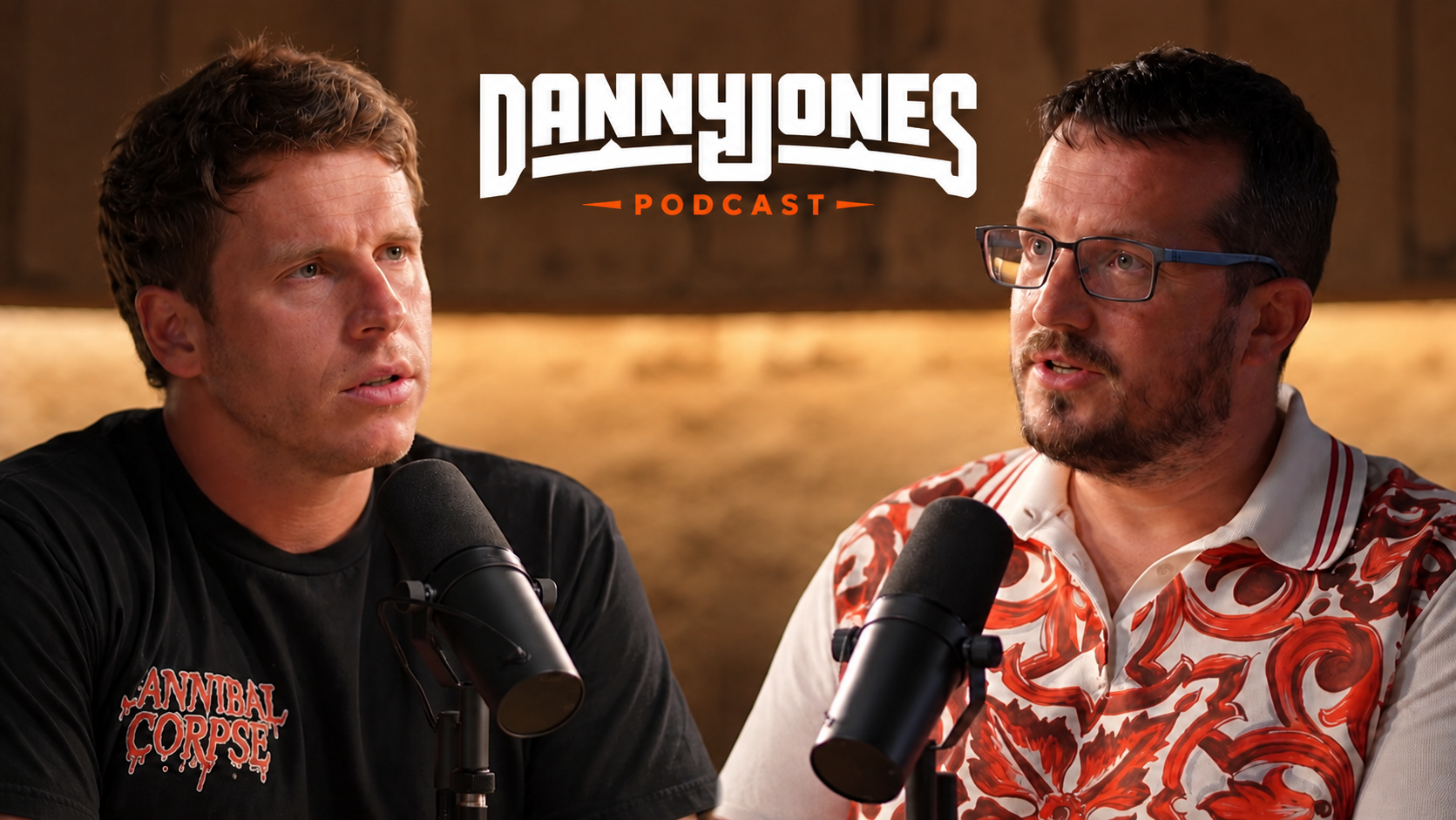
Watch On Danny Jones YouTube Channel (3 hour full interview)
Prefer to Listen? Available on Apple Podcasts & Spotify
Want the faster version of this article?
If you don’t have time to read or watch the full discussion, you can access the AI Summary and Whiteboard Explainer for this post inside the Simon Dixon Hard Talk Membership Portal.
Already have your complimentary login? Simply sign in to access them.
Not a member yet? The portal is 100% complimentary to join and use.
You can also download a free PDF copy of Simon’s 2011 book and access the full archive of Simon Dixon Hard Talk LIVE episodes, interviews, long-form conversations, AI summaries and explainer videos.
Simon does not ask you to buy anything.
- No membership fees.
- No upsells.
- No sponsors.
- No ad revenue.
- No products being pushed.
The portal exists to build a sovereign community and independent archive that does not depend entirely on YouTube, X or any other social platform to stay connected.
Disclaimer: This blog post is provided solely for educational and informational commentary and reflects personal opinion. It does not constitute financial, investment, legal, or tax advice.