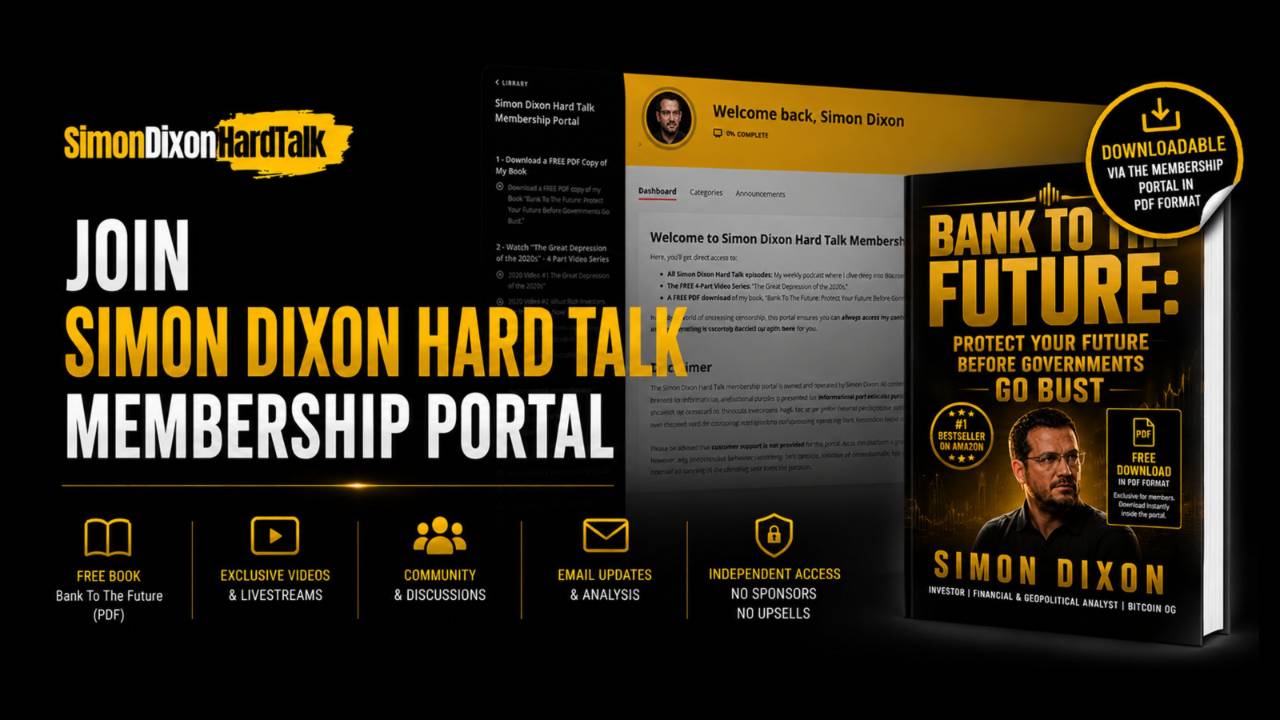
Is Bitcoin Compatible with Islam? | Simon Dixon on Bitcoin Majlis with host Michael Howe
Sep 25, 2026Executive Summary
This document synthesizes the key insights from an interview conducted by The Bitcoin Guide on the Bitcoin Majlis YouTube channel, featuring Simon Dixon. The discussion, held on August 13, 2026, explores the intersection of Islamic finance principles, the systemic flaws of the global financial system, and Bitcoin’s role as a tool for financial sovereignty.
Simon Dixon argues that the current global monetary system is inherently flawed because it is built on riba (interest) and debt-based money creation, which drives a cycle of war and wealth extraction. He posits that Bitcoin, as a decentralized "hard money", provides a mechanism for Muslims and others to "exit" this system. However, he warns of ongoing efforts by the Financial Industrial Complex (FIC) and the Technical Industrial Complex (TIC) to co-opt Bitcoin through centralization and custodial services. The primary takeaway is the necessity of self-custody ("holding your own keys") as a form of digital resistance.
High-Level Overview
The interview serves as a deep dive into Simon Dixon’s 26-year journey through finance, his study of Islamic finance and economics, and his technical analysis of Bitcoin. The conversation frames Bitcoin not merely as a financial asset, but as a technological "open hand" that facilitates free trade and hard money, aligning with historical Islamic economic successes. The discussion highlights the "Golden Age of Islam" as a precedent for sound money and ethical trade, contrasting it with the "Invisible Hand" of secular economics which Dixon believes takes out moral accountability.
Key Arguments Made by Simon Dixon
The Systemic Corruption of Banking
- Debt-Based Money Creation: Digital money is created when banks issue loans. This money does not exist prior to the loan; it is "written into existence" as credit.
- The Riba Trap: Because interest is charged on debt but the money to pay that interest is never created, the system requires a constant expansion of debt (individuals, then businesses, then governments).
- The War Machine: In Simon Dixon’s opinion, the easiest way to get a government into debt is through war. This creates a cycle where the Military Industrial Complex (MIC) profits from destruction and the FIC profits from the subsequent "rebuild" contracts and debt servicing.
- The FIC and TIC Alliance: Simon Dixon believes the Financial Industrial Complex and the Technical Industrial Complex are building "digital control grids" (CBDCs and stablecoins) to maintain this system of extraction.
Islamic Synthesis and the "Open Hand"
- The Open Hand vs. Invisible Hand: Dixon contrasts Adam Smith’s "Invisible Hand" (which he views as ignoring morality) with the Islamic concept of the "Open Hand," where free will is exercised within a framework of divine accountability.
- Internal Accountability: Simon Dixon argues that libertarianism is incomplete on its own because it lacks a moral framework. In his view, without accountability to a creator, individuals inevitably maximize for self-interest, leading to the debasement of money and the rise and fall of empires.
- Neutrality of Money: He believes money is a neutral tool, but its construction can be haram (e.g., fiat with built-in interest). Bitcoin is viewed as a "neutral instrument" that can be used for good or evil, but can be cleansing through individual use.
Bitcoin’s Origins and Strategic Importance
- The Breakaway Project Theory: Simon Dixon believes Bitcoin was an anonymous breakaway project intended to resist intelligence-led digital currency projects. He identifies Len Sassaman as a likely candidate for Satoshi Nakamoto.
- Digital Resistance: Bitcoin allows for transacting in an "innocent until proven guilty" system without the need for a central bank or government permission.
- The Civil Wars: He details the 2017 "Civil War" (won by users/nodes) and the 2026 policy changes (where he believes the nodes lost to developer influence). He predicts upcoming battles over privacy and quantum resistance.
The Battle for Centralization
- Capture by Convenience: Simon Dixon warns that the FIC is using "convenience" (ETFs, custodial services like Coinbase and Fidelity) to attempt to centralize Bitcoin.
- Strategy Government Services: He points out that Bitcoin Treasury companies like Strategy and its sub-division Strategy Government Services, have board members with CIA intelligence backgrounds, suggesting an attempt to use Bitcoin as collateral for a new tokenised centralized control grid.
- Self-Custody as Sovereignty: Dixon stresses that if 70% of Bitcoin remains outside the FIC, the network remains decentralized. If users surrender their keys, the system is co-opted.
Key Arguments Made by Other Participants (The Bitcoin Guide)
- Bitcoin as a Sovereignty Tool: The host frames Bitcoin as a tool for "digital hijra"—a difficult but necessary struggle to move toward sovereign financial rails.
- Fairness in Trade: He emphasizes that Islamic teachings rely on a sound monetary standard to ensure justice in commerce.
- The Cost of the Current System: The host notes that Muslims have been at the receiving end of the $8 trillion printed for wars since 9/11, including resource grabs and the toppling of leadership.
- Libertarian vs. Islamic View: He questions the compatibility of the "self-interest" model of libertarianism with the Islamic view that God, not the individual, owns everything.
Points of Agreement
- The Necessity of Hard Money: Both agree that "hard money" (high stock-to-flow) is essential to prevent government debasement and the "Gresham’s Law" effect where bad money drives out good.
- Accountability: They agree that voluntary participation without spiritual guidance is insufficient; humans require accountability to a higher power to prevent moral and financial degradation.
- Rejection of the Current Model: Both reject the "forever war" model and the extraction-based economy of the current American empire stage.
- Technical Literacy: Both emphasize that the community must become technically literate to survive the "hyper-technocratic" shift.
Points of Disagreement
- Degree of Optimism regarding Governance: While Simon Dixon is optimistic about individual sovereignty, he expresses skepticism about whether a country can successfully combine governance with ethical principles without being co-opted. The host remains focused on the potential for an "actual Islamic compliant financial system" using Bitcoin as collateral.
- The 2026 Protocol Changes: Simon Dixon explicitly mentions he "lost" the 2026 battle regarding certain policy changes in Bitcoin, indicating internal friction within the pro-decentralization community about the direction of the code.
Important Data, Claims, or References Mentioned
|
Category |
Specific Data / Reference |
|
Monetary Data |
21 million total Bitcoin supply; 2140 estimated end of mining. |
|
Historical Events |
2008 Bitcoin White Paper; 1913 Federal Reserve Creation; 1917 Bolshevik Revolution; 1948 Founding of Israel. |
|
Banking Reform |
Bank of England required £60 million deposit for a banking license. |
|
Global Conflict |
$8 trillion printed for post-9/11 wars; $2 trillion profit from Afghanistan war. |
|
Corporate Entities |
BlackRock, Fidelity, Coinbase, MicroStrategy (and Strategy Government Services), Tether, Bitfinex. |
|
Literature |
The Wealth of Nations (Adam Smith); The Grip of Death (Michael Rowbotham); The Bitcoin Standard (Saifedean Ammous). |
|
Intelligence/Agencies |
CIA (In-Q-Tel), MI6, Mossad, Safari Club, Operation Gladio. |
|
Sovereign Mining |
UAE, Iran, El Salvador, Bhutan, and Norway (via MicroStrategy/ETF) are mining or holding Bitcoin. |
Notable Quotes or Framing
- On Truth: "As a Muslim, even when it's inconvenient, we have to commit to the truth... even if it's against our own interest."
- On Money Creation: "Every bit of digital money... is created by somebody else borrowing it into existence."
- On the FIC/MIC: "Regional stability is 100 times more profitable than war... but the model is: don't solve the war because we can print money for 20 years."
- On Centralization: "The battle is the global control grid of centralizing technology that we win by creating a decentralized community."
- On Sovereignty: "You either own a key... or you give your key to someone else... who props up the financial industrial complex and the technical industrial complex."
- On Hope: "The belief of no hope... that is Shaitan at work. It drives you to the most short-term thinking you could ever imagine."
Open Questions or Unresolved Issues
- Quantum Resistance: How the Bitcoin network will successfully transition to quantum-resistant addresses remains a pending technical battle.
- Privacy Protocals: The resolution of privacy features on the base layer vs. second layers is still debated within the community.
- The Success of "Qard al-Hasan" Banks: The long-term viability of gold/Bitcoin-backed interest-free lending in the face of physical military aggression (citing the destruction of banks in Lebanon and Gaza).
- Developer Capture: Whether the open-source development process can truly resist the financial incentives offered by the TIC and FIC to introduce "centralizing" code changes.
Call To Action
- Share this post. Share this blog post to expose the "divide and conquer" trap.
- Subscribe to the Simon Dixon YouTube channel. Get my weekly deep dives into geopolitics, macro, and Bitcoin. Subscribe to my YouTube channel.
- Find me on Rumble. This is my backup channel, safe from censorship. Follow me on Rumble.
- Follow me on X @SimonDixonTwitt. I post real-time updates and analysis on X and am highly active there. Follow me on X.
- Follow me on instagram. Usually short clips are posted here.
- Follow me on TikTok. Usually short clips are posted here.
- Follow me on NOSTR.
- SimonDixon.com This is my personal site and an archive of all my content, safe from de-platforming. Join the free membership portal.
Watch On YouTube
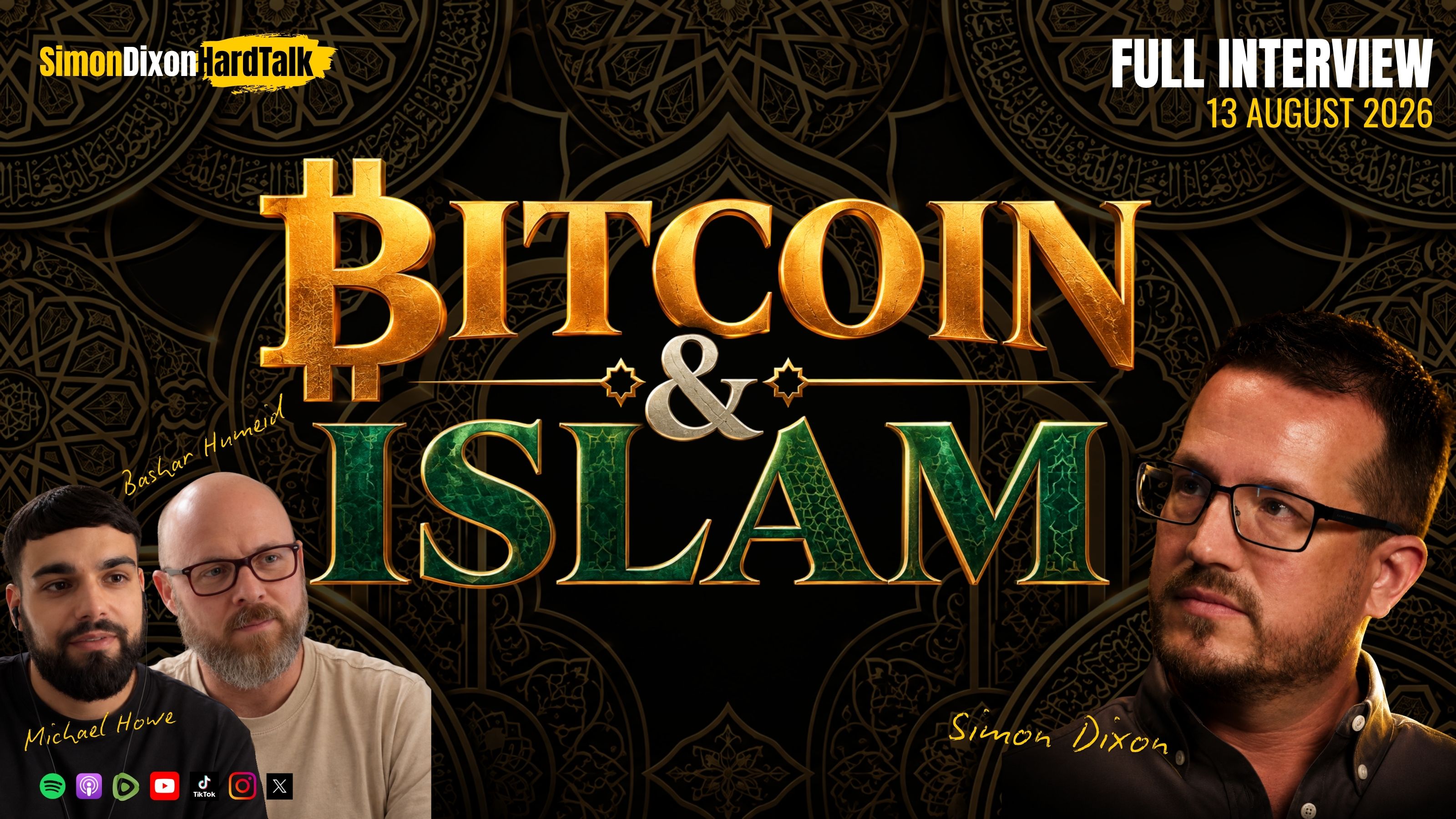
Prefer to Listen? Available on Apple Podcasts & Spotify
Want the faster version of this article?
If you don’t have time to read or watch the full discussion, you can access the AI Summary and Whiteboard Explainer for this post inside the Simon Dixon Hard Talk Membership Portal.
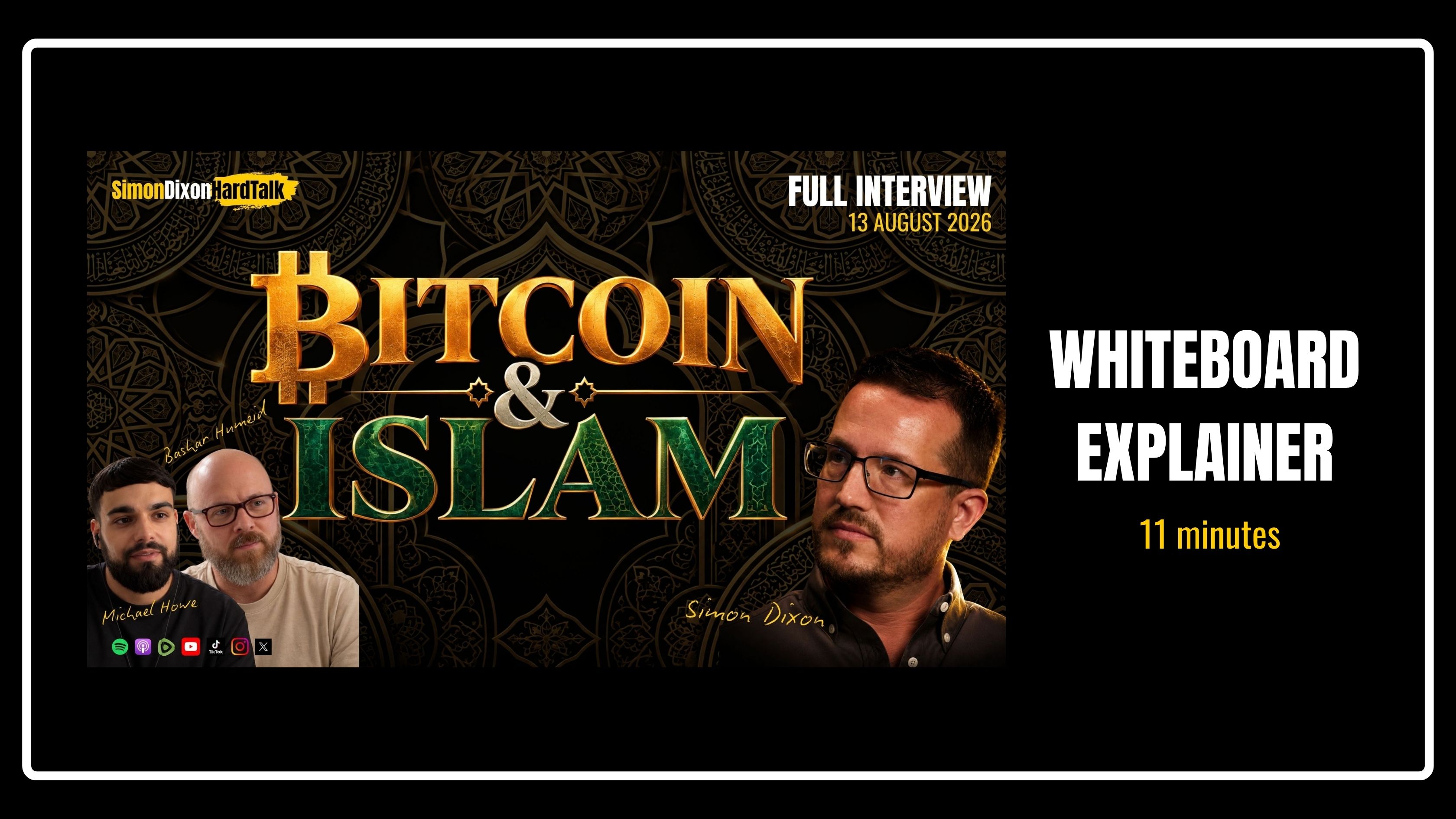
Already have your complimentary login? Simply sign in to access them.
Not a member yet? The portal is 100% complimentary to join and use.
You can also download a free PDF copy of Simon’s 2011 book and access the full archive of Simon Dixon Hard Talk LIVE episodes, interviews, long-form conversations, AI summaries and explainer videos.
Simon does not ask you to buy anything.
- No membership fees.
- No upsells.
- No sponsors.
- No ad revenue.
- No products being pushed.
The portal exists to build a sovereign community and independent archive that does not depend entirely on YouTube, X or any other social platform to stay connected.

Disclaimer: This blog post is provided solely for educational and informational commentary and reflects personal opinion. It does not constitute financial, investment, legal, or tax advice.