Was Bitcoin Hijacked? | SimonDixonHardTalk LIVE
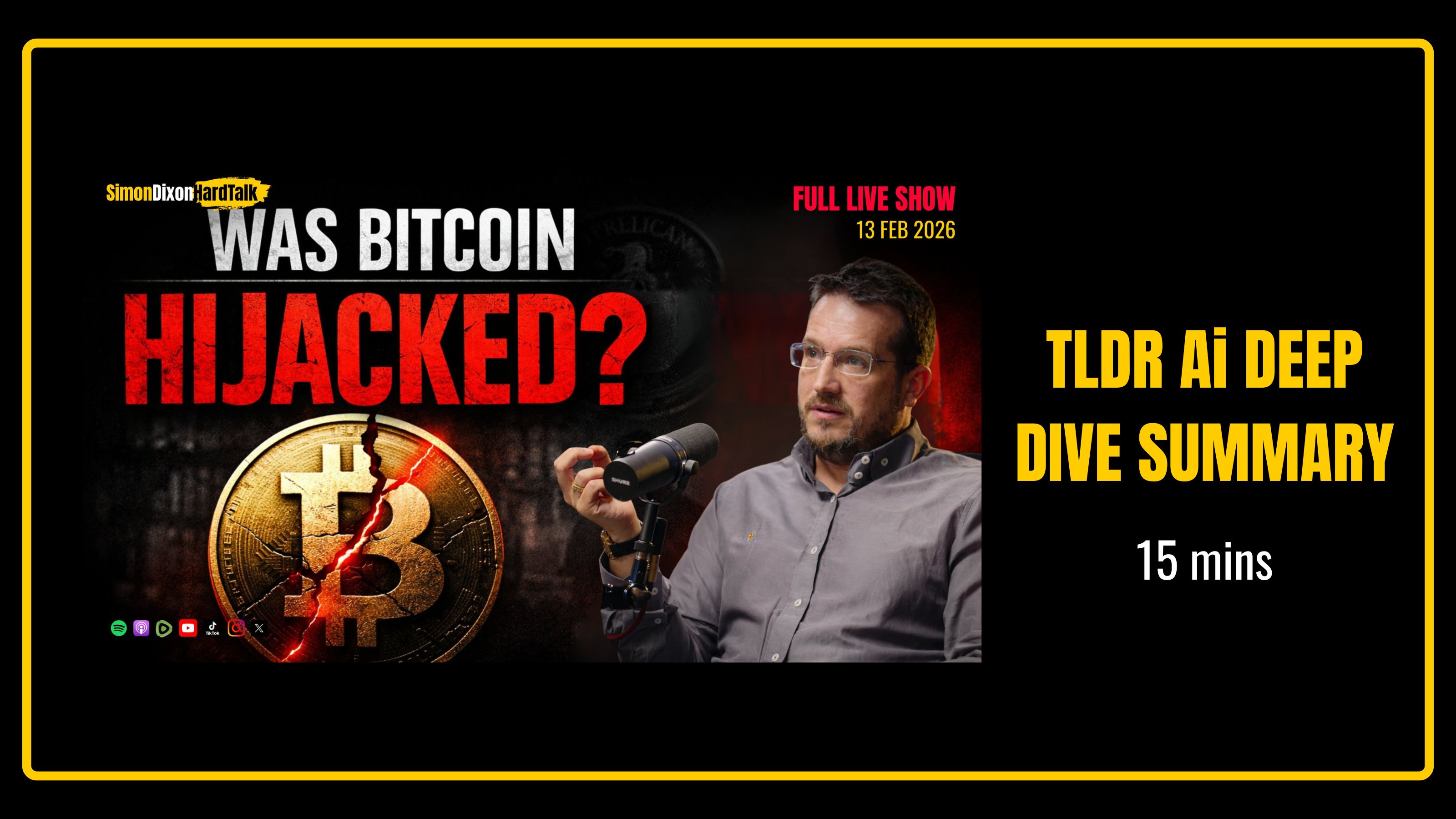
Feb 13, 2026No time for the full 3h 50m video? Watch the 15-minute AI-generated TL/DR Podcast Style Discussion instead. Or watch the Whiteboard Explainer video.

Hey hey Sovereign Wealth Builders,
The question resurfaced again this week after the release of the Epstein files:
Was Bitcoin hijacked?
After nearly four hours of analysis, debate, and historical review, my conclusion remains consistent:
Bitcoin has not been hijacked.
But it has faced — and continues to face — multiple hijack attempts.
This is your complete strategic breakdown of the 3 hour and 50 minute show — structured into three parts:
- The infiltration operations
- The BTC vs BCH divide & conquer debate
- The Knots vs Core governance war
And most importantly — what it means for your sovereignty.
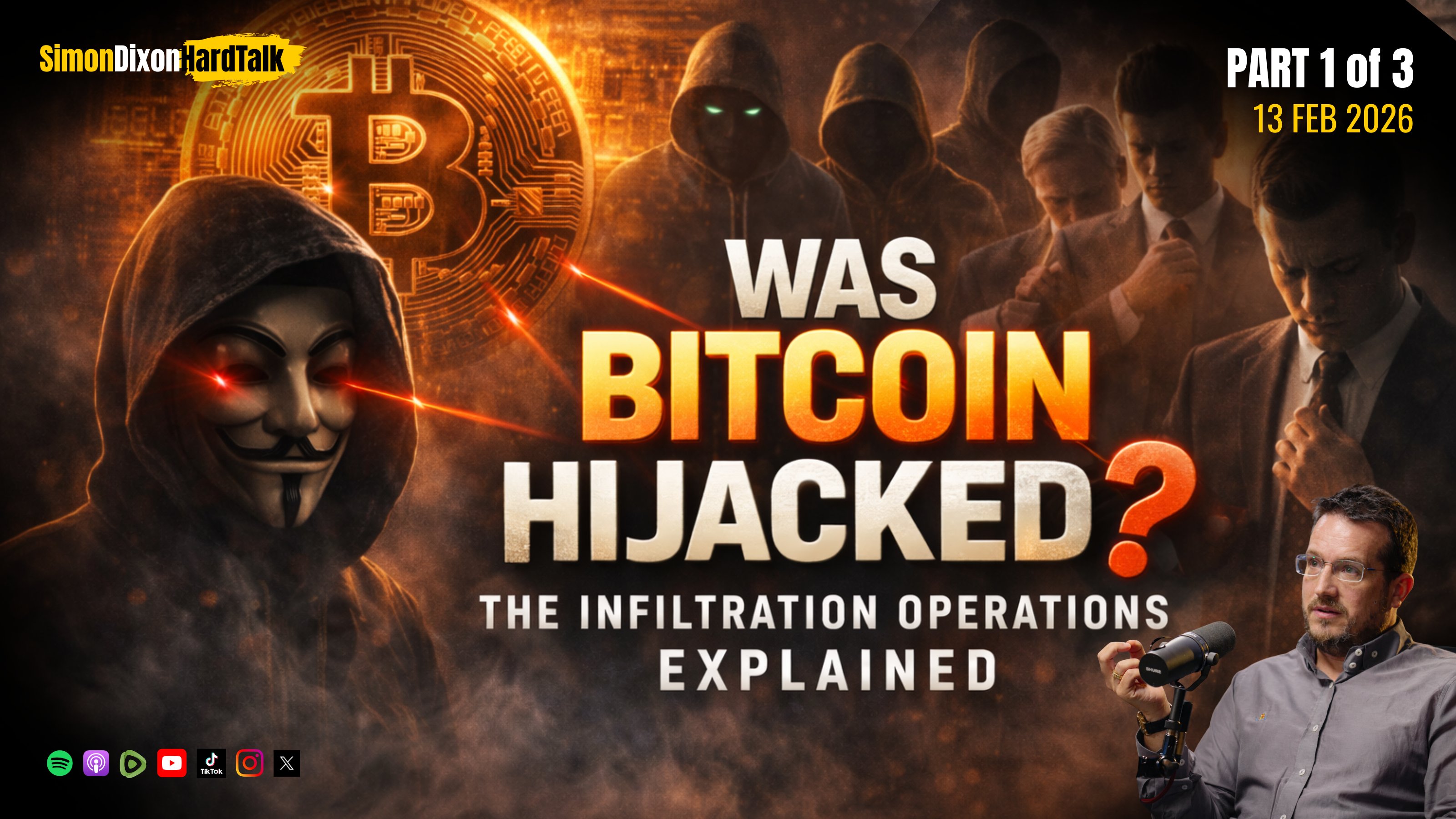
Part 1: Was Bitcoin Hijacked? The Infiltration Operations Explained
Bitcoin survives because power is distributed.
Three pillars hold the system together:
- Developers – maintain open-source code and Bitcoin Improvement Proposals (BIPs)
- Miners – secure the chain and add blocks
- Nodes – enforce the rules and validate consensus
No single actor controls Bitcoin.
That architecture is why it has resisted capture.
But that doesn’t mean it hasn’t been targeted.
The Intelligence Question
Some researchers have long speculated that Bitcoin may have emerged from or intersected with earlier intelligence-adjacent digital cash experiments. There is no conclusive proof of state origin — but the overlap between cryptography, academia, and intelligence research historically is well documented.
I DID A FULL ANALYSIS ON THIS PREVIOUSLY HERE
Publicly released communications from the Epstein investigations show that Jeffrey Epstein expressed interest in Bitcoin and attempted to engage with early developers. Emails also show communications between Epstein and technology investors discussing Bitcoin’s narrative direction — including the “store of value vs medium of exchange” framing.
Those records do not prove coordinated infiltration.
But they demonstrate that powerful political and financial networks were paying attention to Bitcoin very early and potentially tried to hijack it.
That matters.
Bitcoin was never ignored by the establishment.
I COVERED ALL MENTIONS OF BITCOIN & BITCOIN DEVELOPERS IN THE EPSTEIN FILES HERE
The Four Strategies of Infiltration
Across Bitcoin’s history, four major capture vectors have emerged.
Strategy One: Developer & Narrative Influence
When venture capital entered Bitcoin development around 2013–2014, incentives changed.
Funding structures introduced fiduciary duties.
Public reporting shows that entities connected to Silicon Valley capital — including Digital Garage and investors such as Reid Hoffman — were linked to development funding and key company funding during this period. Some of those networks later appeared in Epstein-related disclosures.
That does not prove wrongdoing.
But it does highlight how quickly Bitcoin companies became embedded within elite capital structures.
The narrative battle over “digital gold” versus “peer-to-peer electronic cash” intensified during this time — a debate that later exploded into the scaling wars.
Influence does not require control.
Sometimes it only requires proximity.
Strategy Two: Divide & Conquer (2015–2017)
The blocksize war fractured the ecosystem:
- Small blockers vs big blockers
- Developers vs miners
- Store of value vs medium of exchange
Many believe only one side was compromised.
My view is more pragmatic.
In complex political environments, sophisticated actors rarely choose just one faction.
They exploit division.
And yet — despite years of conflict — Bitcoin’s consensus rules held.
SegWit activated.
The 21 million cap remained untouched.
Bitcoin Cash forked rather than overwriting Bitcoin.
That is not a hijack.
That is resilience under pressure.
Strategy Three: The Gateway to Stablecoins & CBDCs
Bitcoin normalized digital wallets, digital signatures, and cryptographic settlement.
Now we see:
- Stablecoin dominance
- Tokenized real-world assets
- CBDC pilots
- Increasing regulatory frameworks defining “acceptable” digital money
Some argue Bitcoin has functioned as a gateway — acclimatizing the public to digital monetary infrastructure that can later become programmable and permissioned.
That risk is real.
But there is a critical distinction:
Self-custodied Bitcoin is radically different from state-issued programmable currency.
To the average observer, they look similar.
Systemically, they are opposites.
Strategy Four: Wall Street Custodial Centralization
This is today’s primary attack vector.
Through:
- ETFs
- Treasury companies
- Derivatives markets
- Public miners
- Institutional custody
Bitcoin is increasingly financialized inside the traditional system.
History gives us precedent.
Gold was not destroyed — it was neutralized through paper claims and rehypothecation.
If Bitcoin becomes predominantly custodial, the asset can be absorbed into the same financial architecture it was designed to challenge.
Fortunately as Bitcoin is proof of work rather than proof of stake nodes are able to resist such hijack attempts.
The protocol is difficult to capture as ownership does not equal governance control.
Custody is not.
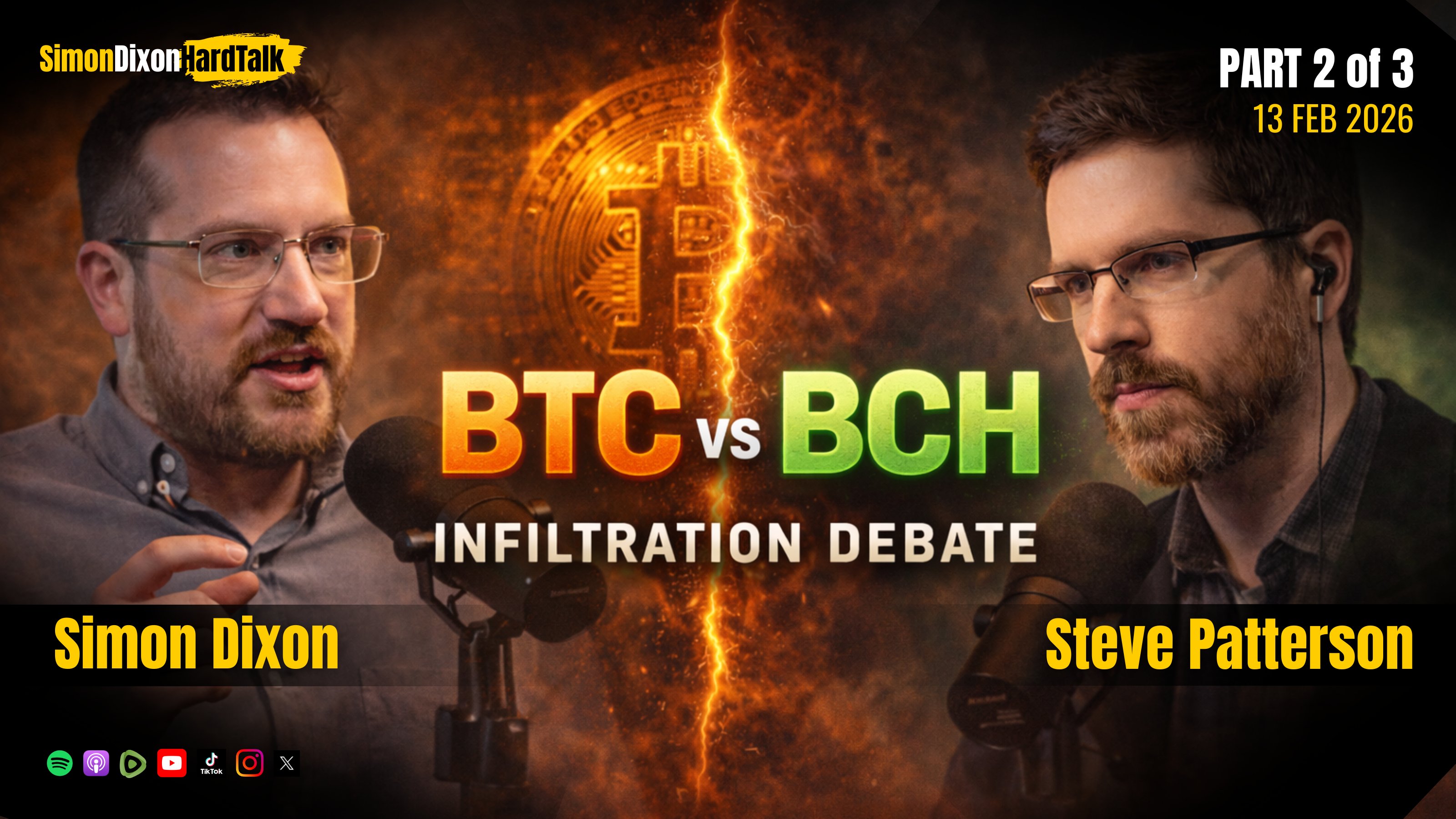
Part 2: Hijacking Bitcoin? Simon Dixon vs Steve Patterson – BTC vs BCH Infiltration Debate
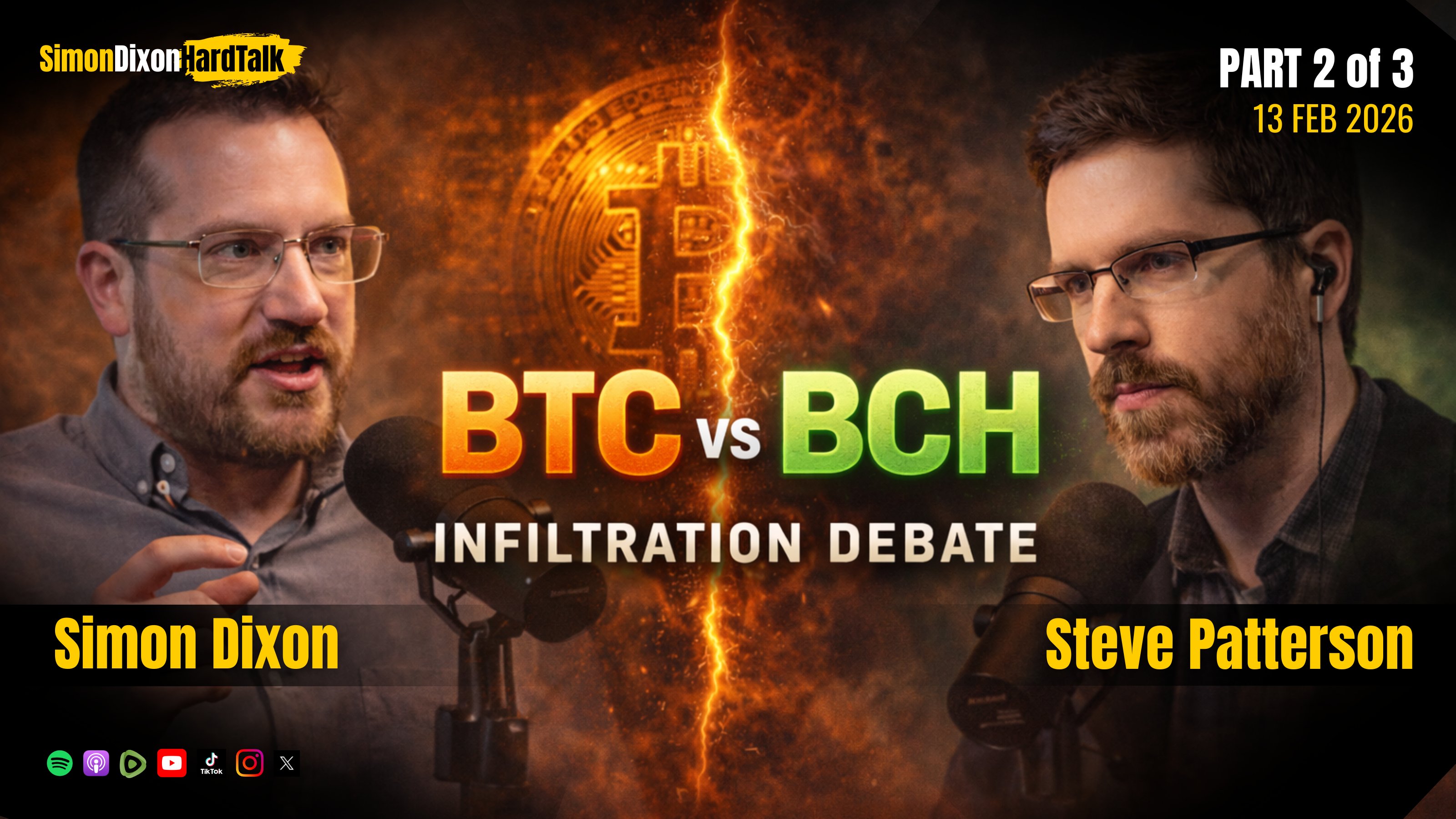
In my debate with Steve Patterson, co-author of Hijacking Bitcoin, we explored whether the 2017 fork represented a successful compromise.
Steve argues Bitcoin was hijacked at the development layer.
My view is more nuanced.
By 2014–2015, most major corporate entities in Bitcoin had venture capital backing.
- Coinbase
- BitPay
- Blockchain.info
- Blockstream
Venture capital introduces incentives aligned with regulatory compliance and corporate strategy.
That doesn’t equal corruption.
But it does alter alignment.
During our debate, we discussed:
- Publicly reported funding connections between development entities and elite capital networks
- The controversial role of individuals such as Brock Pierce and Craig Wright
- Gavin Andresen’s disputed validation episode
- The possibility that legal or regulatory leverage influenced certain actors
These remain contested issues.
Reasonable people disagree.
But here’s what is not contested:
The protocol rules did not change.
The 21 million cap survived.
SegWit activated through user pressure (BIP148).
Bitcoin Cash forked rather than replaced BTC.
That demonstrates distributed power.
Not centralized capture.
Custody: The Real Line in the Sand
Where Steve and I strongly agree:
Custodial Bitcoin is structurally vulnerable.
An ETF share is not the same as holding keys.
If Bitcoin becomes predominantly institutional IOUs, then it can be financialized, rehypothecated, and politically influenced.
Self-custody remains the exit.
Running a node remains verification.
Sovereignty requires participation.
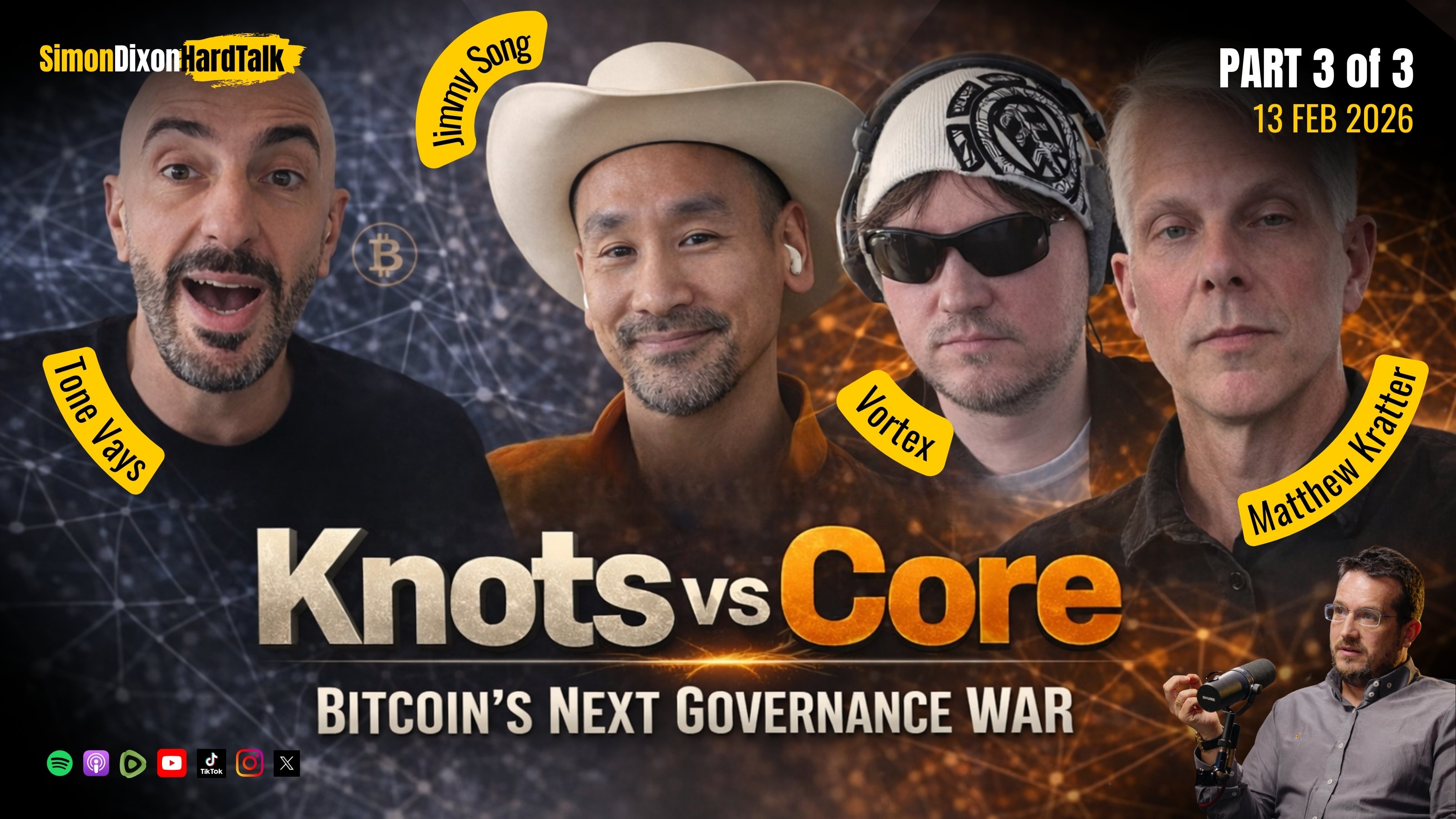
Part 3: Hijacking Bitcoin? Knots vs Core: Bitcoin’s Next Governance War (Core v30 & BIP 110)
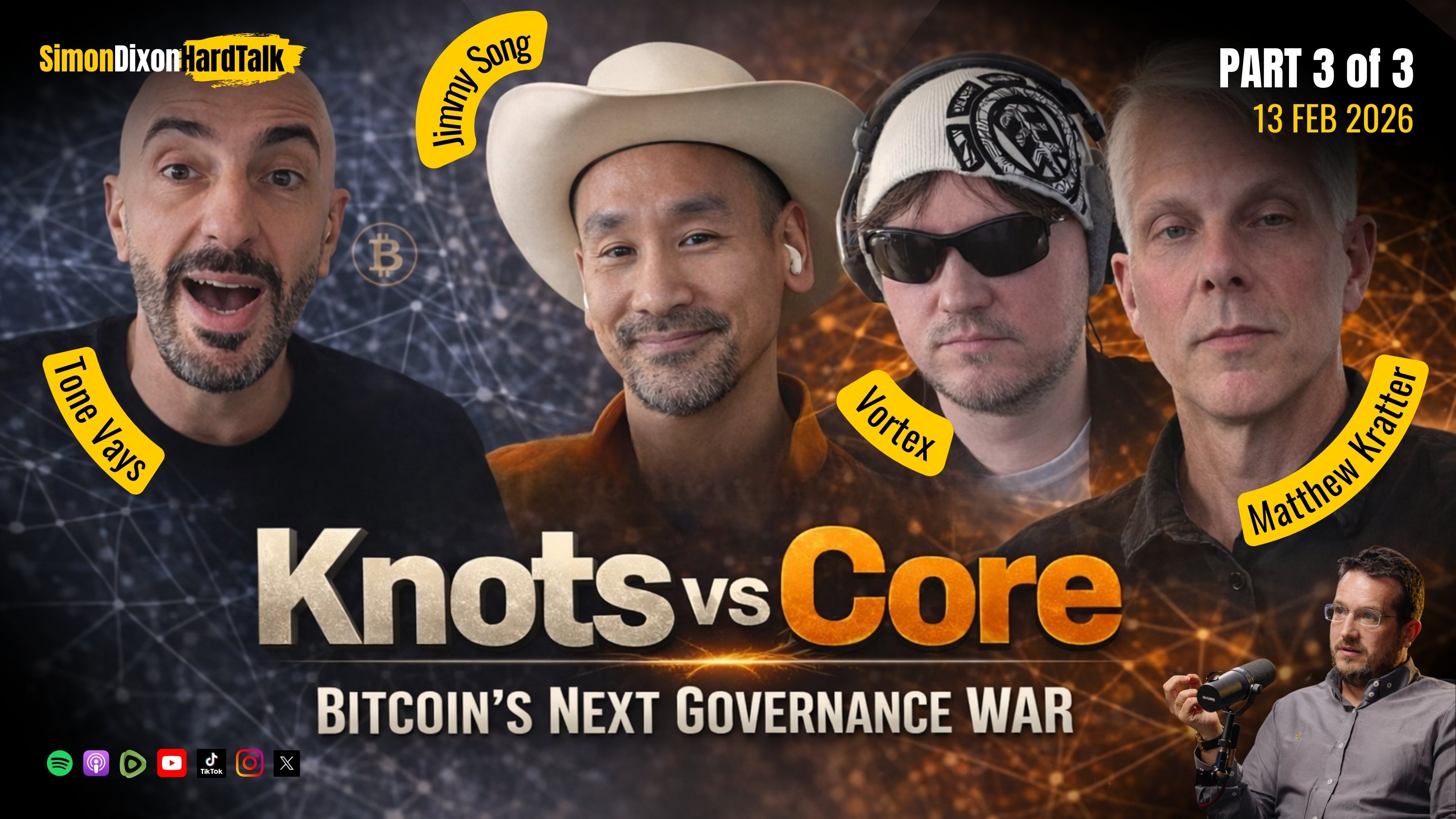
The current debate — Knots vs Core — is another stress test.
At issue:
- Ordinals and inscription policy
- OP_RETURN limits
- Core v30 mempool changes
- BIP 110 soft fork proposal
In Part 3, I go much deeper into this governance debate and include three short AI-generated whiteboard explainer videos that were presented during the live show. These summaries break down the key arguments from the longer discussions between Tone Vays and Jimmy Song, Tone Vays and Vortex, and Matthew Kratter of Bitcoin University — making the technical debate easier to understand and saving you hours of viewing time.



I believe all these perspectives reflect legitimate concerns.
But Bitcoin’s governance process matters more than personalities.
The soft fork pathway includes:
- MASF (Miner Activated Soft Fork)
- UASF (User Activated Soft Fork)
- Potential rejection mechanisms
- A one-year reversal clause in BIP 110
This is layered governance.
Not dictatorship.
Mining Centralization Concerns
Legitimate questions exist around:
- ETF concentration
- Public miners like MARA
- Large pools (Foundry, AntPool, etc.)
- Treasury accumulation strategies
But decentralization is dynamic.
We also see:
- Growth in home mining
- Sovereign mining in Bhutan, UAE, Kazakhstan, Iran
- Private capital diversification
The balance shifts constantly and new innovations in mining pools to segregate miners with their own templates adds an additional layer of mining distribution.
The Personal Controversies
Recent disclosures regarding personal relationships among developers and revoked signing keys have fueled speculation.
But individuals are not the protocol.
Consensus is enforced by distributed nodes.
Personal dynamics do not override consensus rules.
Final Verdict
Was Bitcoin hijacked?
No.
Has it faced coordinated attempts to influence its development, narrative, custody, and mining structure?
Clearly.
From early elite interest…
To venture capital alignment…
To ETF custody…
To mining consolidation…
Bitcoin has been tested repeatedly.
Each time, it adapts.
The real battle today is not block size.
It’s not personalities.
It’s custody.
If you hold your own keys, verify your own node, and understand the incentives at play — you remain sovereign.
If you outsource custody and verification, you re-enter the financial industrial complex.
Bitcoin is not immune to attack.
But it is resistant to capture.
The exit still exists.
For those willing to take responsibility for it.
Peace, love and unity.
See you next week.
Take Action & Follow the Money
If this breakdown helped you see the bigger picture, don’t keep it to yourself.
- Share this post. Most people are reacting to headlines. Very few are studying incentives. Help others understand what’s really happening beneath the surface.
- Subscribe to the Simon Dixon YouTube channel. Every week I go deep into geopolitics, macro, Bitcoin governance, and the financial industrial complex so you don’t have to piece it together from fragmented media narratives. Subscribe and turn notifications on.
- Find me on Rumble. This is my backup channel, independent from mainstream platform risk. Follow me there to ensure uninterrupted access to long-form content.
- Follow me on X @SimonDixonTwitt. I post real-time commentary, breaking developments, and rapid-response analysis throughout the week. If you want to understand events as they unfold, that’s where it happens. Follow me here.
- Follow me on Instagram. Short clips, key moments, and highlights are posted there for quick insight. Follow me here.
- Follow me on TikTok. Important segments and distilled breakdowns are shared for those who prefer short-form content. Follow me here.
- Visit SimonDixon.com. This is my permanent digital home and archive, independent of algorithm shifts or de-platforming risk. Join the free membership portal for direct updates and access to content in one place. Join here.
If you believe in sovereignty, take the next step. Run a node. Learn self-custody properly. Diversify your information sources. Study the incentives. Don’t outsource your thinking.
Support sovereign mining where possible. Understand where your Bitcoin is custodied. Ask hard questions about ETFs, treasury companies, and mining pools. Follow the money.
The future of Bitcoin is not decided by commentators. It is decided by participants.
If you want to remain sovereign, act like it.
Watch on YouTube
Prefer to Listen? Available on Spotify & Apple Podcasts
Other Related Blogs

Disclaimer
The content contained in this blog reflects personal opinions, analysis, and commentary based on publicly available information, historical research, and industry experience at the time of writing. It is provided for educational and informational purposes only and should not be interpreted as financial, investment, legal, tax, regulatory, or other professional advice. Readers should conduct their own independent research and consult appropriate licensed professionals before making any financial or legal decisions.
Certain topics discussed in this publication reference publicly reported events, disclosed communications, historical controversies, and widely debated interpretations within the Bitcoin and digital asset ecosystem. Where individuals, organizations, or historical events are mentioned, such references are based on publicly available records, media reporting, documented communications, and ongoing public debate. The inclusion of any names, entities, or historical episodes is not intended to assert criminal conduct, unlawful coordination, or malicious intent unless such findings have been formally established by a court of law. In many cases, interpretations of past events remain disputed, and alternative explanations may exist.
Discussions relating to alleged infiltration attempts, intelligence interest, funding structures, governance disputes, or influence within the Bitcoin ecosystem are analytical in nature and represent opinion-based interpretations of complex historical developments. These interpretations are not presented as definitive statements of fact but as perspectives intended to stimulate critical thinking and informed discussion.
Digital assets, including Bitcoin, are highly volatile and involve significant risk. Regulatory frameworks governing digital assets continue to evolve across jurisdictions and may materially impact market structure, liquidity, custody arrangements, taxation, and legal treatment. References to self-custody, exchange custody, ETFs, treasury strategies, mining operations, or governance mechanisms are not endorsements or recommendations but observations within an ongoing public debate regarding decentralization, sovereignty, and financial architecture.
Nothing in this blog should be construed as an offer, solicitation, or recommendation to buy, sell, or hold any digital asset, security, derivative, or financial instrument. Any forward-looking statements reflect opinion and are subject to uncertainty, market conditions, regulatory developments, technological changes, and unforeseen risks that may cause actual outcomes to differ materially.
Readers are encouraged to approach all financial and geopolitical analysis with critical evaluation and to recognize that interpretations of historical events, especially within emerging technologies, often evolve over time as new information becomes available.
By continuing to read this blog, you acknowledge that you are solely responsible for your own financial decisions and that the author assumes no liability for actions taken based on the information presented herein.