Did AI Become More Important Than War? Simon Dixon Hard Talk LIVE (Part One)
Jun 12, 2026Hey Hey Sovereign Wealth Builders.
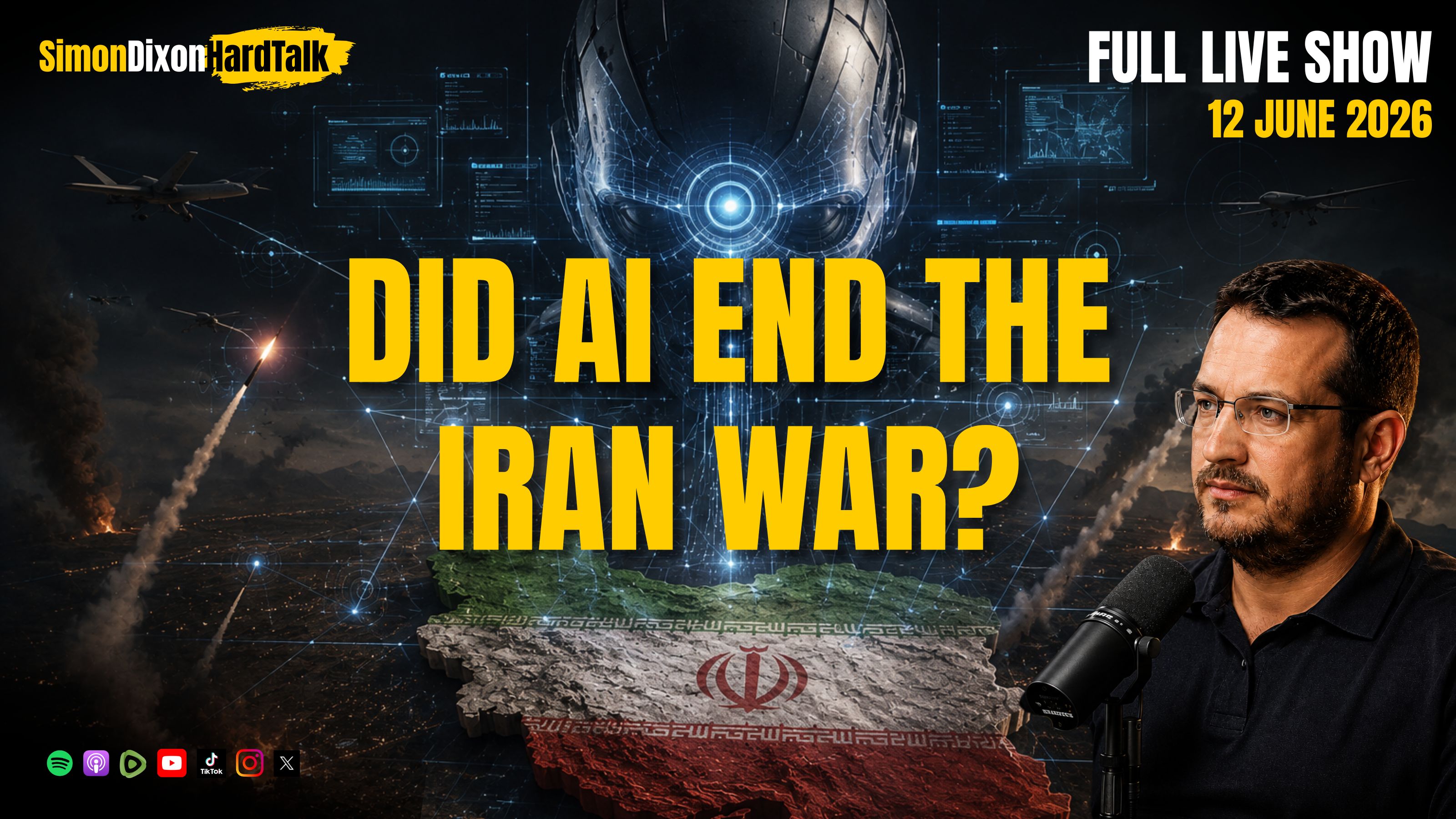
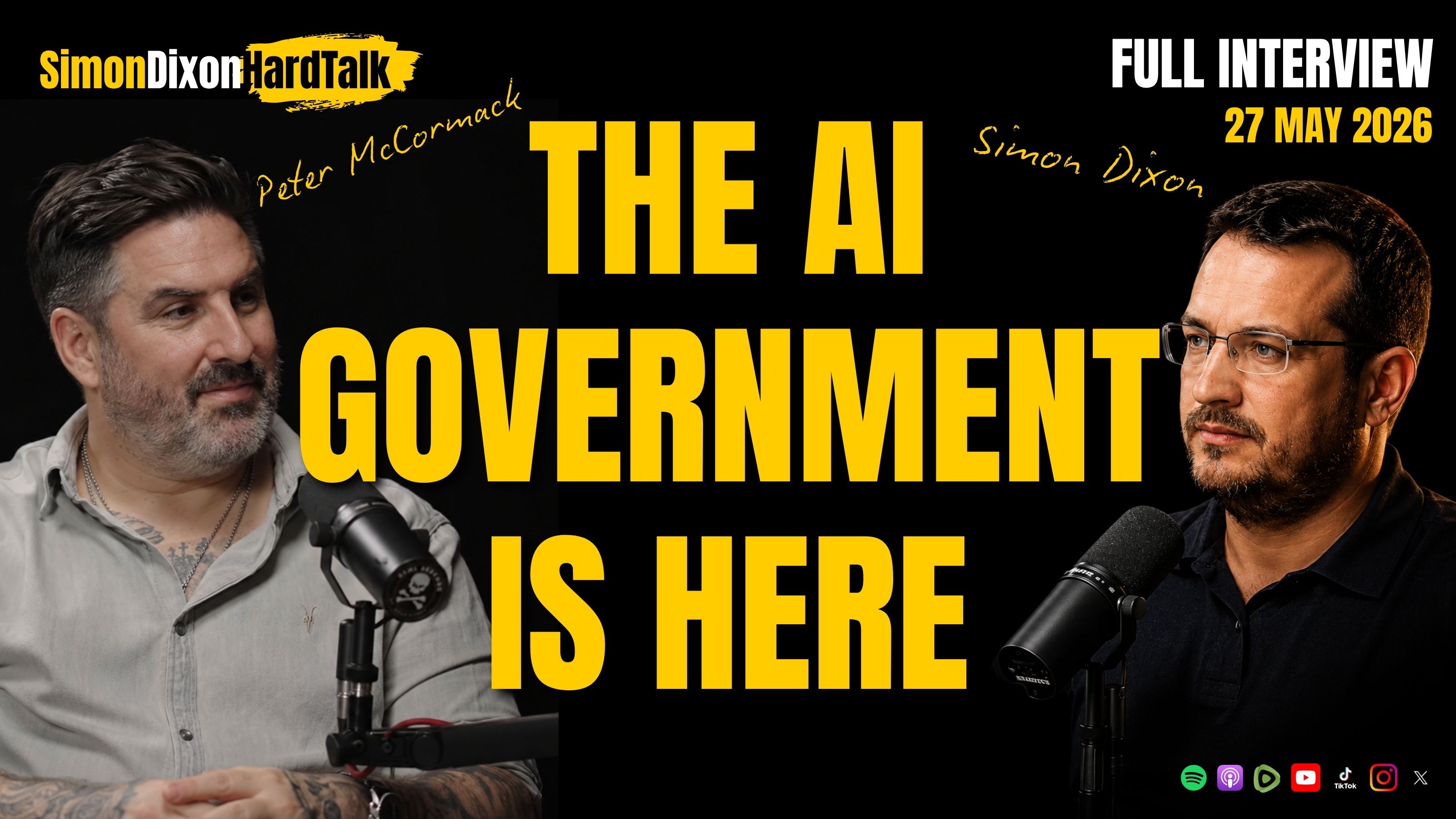
This post is a deep-dive synthesis of Part 1 of the livestream titled "Did AI End The Iran War? | Follow The Money | SIMON DIXON HARD TALK LIVE." We are breaking down the first segment, "Did AI Become More Important Than War?" from that 2 hour 9 minute session.
In my "Follow the Money" framework, I prefer to look at capital flows rather than ideology. In my opinion, what we are seeing in the Middle East may be influenced by portfolio management considerations. I believe current events could be driven by the significant liquidity requirements of the AI sector. While many predicted a regional escalation, I suggested that markets might require a period of stability. I suspect the AI capital cycle may have become a more significant factor than traditional military cycles.
The Liquidity Shift: From the MIC to the FIC
To understand the shift in the world order, you have to distinguish between two competing power structures:
- The MIC (Military-Industrial Complex): The traditional players who profit from bombs, destruction, and perpetual escalation.
- The FIC (Financial-Industrial Complex): The bankers and tech titans who profit from rebuild contracts, IPOs, and massive technological infrastructure more the war funding.
I believe we may be seeing the FIC influence the MIC. In my view, the global order could be shifting from war-based models to rebuild-focused models. I suspect the AI capital relocation—potentially involving the SpaceX IPO, OpenAI, and Anthropic—is of such a scale that it may require substantial liquidity.
To fund this, it is possible the FIC seeks stability rather than a widening conflict that could impact oil prices and the bond market. I believe we may be seeing a "circular economy of contracts" where technology companies sign agreements that could support growth figures and justify capital needs for data centers. It appears that market observers are signaling that liquidity remains a priority. In my opinion, the FIC may be leveraging the promise of AI productivity in an attempt to address challenges within the debt system.
The Iran "Theater": The Three Layers of Conflict
I believe the tension between Iran and Israel could be viewed as a managed transition—a "bounded escalation" that might be designed to facilitate a deal. In my opinion, a complex relationship with Iran may be more useful to certain interests than a simple one, when considering the Three Layers of Conflict:
- Layer 1 (Genuine Resistance): These are the victims on the ground defending their homes.
- Layer 2 (Weaponized Ideology): The religious and political narratives used to radicalize the "soldiers" into fighting for the cause.
- Layer 3 (State Bargaining/Realpolitik): This is the top level. It’s not ideological; it’s business. At this layer, conflict is traded for leverage.
I believe a hostile relationship can sometimes provide a more consistent justification for arms sales and the petrodollar system than a friendly one.
The current narrative of strikes might be part of an exit strategy. Allegedly, a 14-part deal known as the Islamabad Accords is being finalized. In my view, this could involve a $300 billion investment fund for rebuild contracts. It is possible that various political actors are playing specific roles to facilitate this. I believe the objective may be regional stability to allow major IPOs to absorb capital moving away from traditional bonds.
Macro Reality: PPI, CPI, and "TV Show" Economics
In my opinion, recent macro data suggests significant systemic challenges.
- PPI (Producer Price Index): 6.5%, the highest since the oil crisis and the Russia-Ukraine escalation.
- CPI (Consumer Price Index): 4.2%, well above the 2% target.
In my view, the 2% inflation target may be more of a narrative than a hard scientific requirement, potentially adopted by central banks to justify specific policies. I believe it could be interpreted as sponsored science.
I suspect the current levels of national debt present structural difficulties. It appears the Federal Reserve may be moving toward "Fiscal Dominance"—potentially inflating away debt while managing real yields. In my opinion, this path might rely on the productivity increases that AI is theorized to provide.
The Subordination Industrial Complex (SIC)
I believe we may be entering a period of wealth transfer from labor to capital. As AI automates tasks, I suspect profits may increasingly accrue to asset owners rather than being shared through wages.
I refer to this as the Subordination Industrial Complex (SIC). I believe the trend is moving away from individual ownership. In my opinion, Universal Basic Income (UBI) may serve as consumption support rather than true wealth, potentially involving programmable money designed to keep consumption within specific ecosystems. I suspect the data showing rising revenue per employee for AI owners versus falling revenue for traditional labor supports this view. I believe ownership of intelligence may be a key factor in maintaining independence.
Ownership as the Ultimate Boycott
In my opinion, if you don't own assets, you may primarily be a "consumption supporter" for the FIC. During market cycles, I believe the FIC may use algorithms to move liquidity out of Bitcoin and into the AI sector, which might explain recent price corrections.
In my view, there is a distinction between different forms of Bitcoin.
- Paper Bitcoin: This is the FIC’s version. It’s the ETFs, the MicroStrategy STRC yield products, and the Proof of Stake tokens. These are centralized wrappers designed to keep your wealth in their system.
- Real Bitcoin: This is Proof of Work and self-custody.
Considerations for Strategies:
- DCA into Bitcoin: Buy into weakness. This may be a great accumulation period for those who understand the long-term play.
- Self-Custody is Mandatory: If you don't hold the keys, you are just holding a "Paper Bitcoin" promise that the FIC can manipulate or margin call.
- Avoid Leverage: The FIC uses derivatives to trigger margin calls and seize your collateral. Stay away from the gambling tools.
Final Thoughts: Assessing the Changes
While AI may not have directly ended the conflict, I believe the AI capital cycle has become a significant force in geopolitics. In my opinion, the need for stability to fund technological infrastructure may be overriding other incentives for escalation.
I suspect we are in a notable market cycle where some may be moved toward subordination through UBI. To navigate this, I believe it is worth considering a move from consumer to owner. In my opinion, focusing on sovereign wealth and self-custody is a prudent approach to the current environment.
Stay sovereign.
Call to Action
- Share this post. Share this blog post to expose the "divide and conquer" trap.
- Subscribe to the Simon Dixon YouTube channel. Get my weekly deep dives into geopolitics, macro, and Bitcoin. Subscribe to my YouTube channel.
- Find me on Rumble. This is my backup channel, safe from censorship. Follow me on Rumble.
- Follow me on X @SimonDixonTwitt. I post real-time updates and analysis on X and am highly active there. Follow me on X.
- Follow me on instagram. Usually short clips are posted here.
- Follow me on TikTok. Usually short clips are posted here.
- SimonDixon.com. This is my personal site and an archive of all my content, safe from de-platforming. Join the free membership portal.
No time for the full 2h8m video? Watch the AI-generated TL;DR Podcast Style Discussion instead (22m). Or watch the whiteboard explainer — a more visual breakdown of the full discussion (6m).
Watch on YouTube
Prefer to Listen? Available on Spotify & Apple Podcasts

Read Other Related Blogs
DISCLAIMER
The content provided in this episode is based on Simon Dixon's long-term thesis and personal analysis of macroeconomic trends. While Simon shares his personal approach and what he does during these events, he explicitly states, "I don't want you to trade upon this". Market timing is extremely difficult, and short-term trading is a game designed for insiders to win, often leaving those in the middle "holding the bag" as exit liquidity. Simon does not encourage trading or speculating on short-term price movements. This analysis is intended to help you follow the money rather than the narrative. All strategies discussed—such as dollar-cost averaging into hard assets and utilizing self-custody—reflect Simon's personal strategy to boycott the traditional financial system, not formal financial advice. As a reminder, we are living through "one of the scariest interesting and most exciting times in financial history," where some will get wrecked while others who properly position themselves as asset owners will do very well. Please assess your own sovereign wealth strategy carefully.