I’ve Been in Bitcoin Since the Beginning. Here’s Who I Think Satoshi Nakamoto Is.
Jun 11, 2026Hey hey Sovereign Wealth Builders,
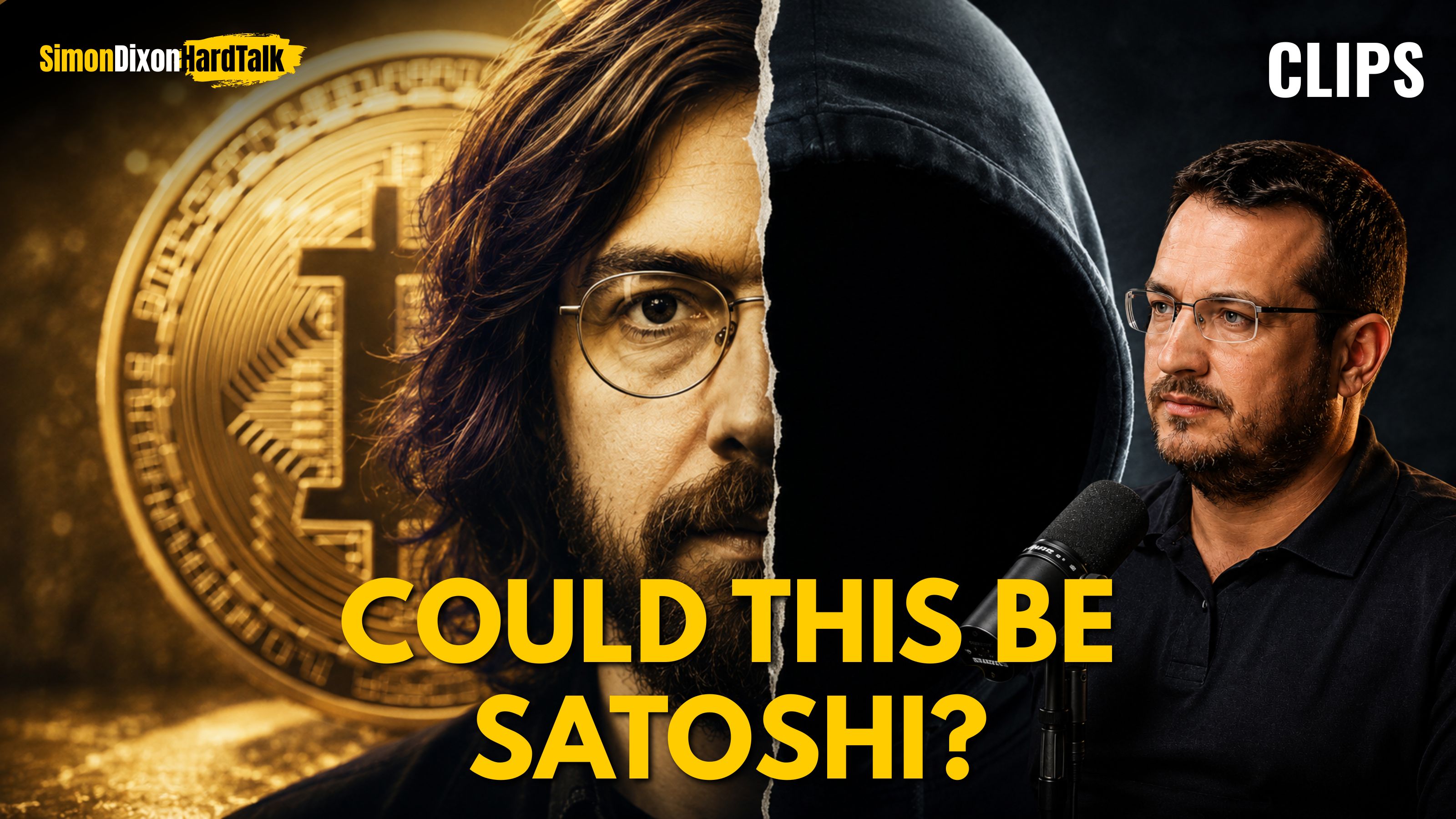
The mystery of Satoshi Nakamoto has fueled over a decade of speculation, but most perspectives overlook the critical context of its birth. On May 28, 2026, I sat down with Tom Bilyeu on Impact Theory to discuss a perspective I’ve developed from being involved in this industry since the beginning.
Is the identity of Satoshi just a fun puzzle, or does it reveal a deeper truth about the "Breakaway Project" we now call Bitcoin? To understand where we are going, we have to look at whether a project originating within an intelligence framework evolved—or "broke away"—to become the ultimate tool for financial freedom. This isn't just about a name; it’s about understanding how the code itself became an act of defiance against the systems of control.
From DigiCash to University Research Environments
Bitcoin did not emerge from a vacuum. Its lineage begins with David Chaum and DigiCash. Chaum’s goal was privacy, but because his system relied on existing banking infrastructure, the traditional system eventually crushed it. Following that failure, the project didn't die; it moved into the university system in the Netherlands.
Specifically, the research transitioned to COSIC (Katholieke Universiteit Leuven). In my opinion, institutional structures often act as environments designed to funnel intellectual capital into specific outcomes. It was within this academic framework, under the supervision of figures like David Chaum and Bart Preneel, that the foundations for a new kind of digital currency were laid.
"I think the story of Satoshi...I do think it actually came from intelligence really... but something didn't go as it was meant to go."
The "Satoshi" Candidates: Why the Links are Stronger Than You Think
I have held the theory repeatedly over the years that Satoshi Nakamoto was likely Len Sassaman with the support of Hal Finney. In my view, these connections are documented within the cypherpunk and PGP communities.
The strength of this theory lies in the "PGP Triangle":
- Phil Zimmermann: The creator of PGP.
- Hal Finney: The principal PGP developer and the coder who performed the first-ever Bitcoin transaction.
- Len Sassaman: An OpenPGP contributor and PhD researcher at COSIC.
The academic link is the "smoking gun" of lineage: David Chaum was one of Sassaman’s doctoral advisors, alongside Bart Preneel. They even co-authored research together. While there isn't a single document showing a formal "Bitcoin Partnership" between these men, they operated in a tight-knit ecosystem of mailing lists, conferences, and shared cryptographic infrastructure. Finney had the engineering capability; Sassaman had the deep expertise in privacy networks and the writing profile that matches the White Paper.
The Significant Act: Developing the Project
This is the core of my analysis. I believe that digital currency research may have been intended to create a framework for Central Bank Digital Currencies (CBDCs) and later Stablecoins through MIT Digital Currency Innovation Lab.
However, I believe a transition occurred. A significant act by Sassaman was the decision to release the White Paper as Open Source code.
By designing a network of nodes, a distributed supercomputer, and open-source code, they ensured the project could not be retracted or controlled by its originators. While the roots of the project may have been an intelligence op, the execution was honest. The early mining was done transparently on what has become the world’s largest distributed supercomputer, where rules are enforced by nodes, not masters. Once that code was public, it became an independent project outside of any original agenda.
"Once it became sufficiently decentralized through nodes, miners, and open-source code, it became an independent project, which in my view makes the original intent less relevant."
The Great Departure: Why Satoshi Disappeared
The timing of Satoshi’s disappearance aligns perfectly with the moment the "independent path" lost its architects. It was triggered by two major events: Julian Assange using Bitcoin to bypass the WikiLeaks financial blockade, and Bitcoin developer Gavin Andresen announcing a meeting with the CIA to explain the technology.
At that moment, Bitcoin had reached a new stage. In my opinion, it became a tool for sovereignty. Tragically, this era also saw the end of the line for the likely architects: Len Sassaman’s alleged suicide occurred just one month after that CIA meeting, and Hal Finney soon succumbed to his battle with ALS. They left the code to us, but the creators vanished as state interest increased.
Why This Matters: The Battle for Your Sovereignty
For Sovereign Wealth Builders, this history suggests a need for caution. Because Bitcoin developed independently, I believe there are now ongoing potential risks designed to move users toward managed digital frameworks.
Watch out for these strategic moves:
- The Push Back to Centralization: Efforts to move users from self-custody into regulated platforms that may mirror traditional banking issues.
- Hard Forks: Attempts to dilute the mission and confuse the consensus.
- The Attack on Self-Custody: Coordinated regulatory efforts to force users back into traditional banking infrastructure.
Final Thought: Choosing Your Future
We are witnessing the deliberate winding down of the traditional American financial system. The digital transition is inevitable, but the type of digital future you inhabit is still a choice.
The original architects gave us a path to sovereignty by gifting us an open-source, decentralized breakaway project. They gave us the tools to opt out. The question is: Are you prepared for the digital transition, or are you being funneled back into the infrastructure of control?
Call to Action
- Watch the 3-minute clip: “I’ve Been in Bitcoin Since the Beginning. Here’s Who I Think Satoshi Nakamoto Is.”
- Watch the full 2-hour 21-minute interview on Impact Theory: “They're Deliberately Winding Down America — Here's the Plan for What Comes Next.”
- Share this post. Share this blog post to expose the "divide and conquer" trap.
- Subscribe to the Simon Dixon YouTube channel. Get my weekly deep dives into geopolitics, macro, and Bitcoin. Subscribe to my YouTube channel.
- Find me on Rumble. This is my backup channel, safe from censorship. Follow me on Rumble.
- Follow me on X @SimonDixonTwitt. I post real-time updates and analysis on X and am highly active there. Follow me on X.
- Follow me on instagram. Usually short clips are posted here.
- Follow me on TikTok. Usually short clips are posted here.
- SimonDixon.com This is my personal site and an archive of all my content, safe from de-platforming. Join the free membership portal.
Watch on YouTube
Read Other Related Blogs

Disclaimer:
The content of this post explores Simon Dixon's personal theories regarding the identity of Satoshi Nakamoto and the origins of Bitcoin, including speculative connections to intelligence frameworks, David Chaum, Len Sassaman, and Hal Finney. This discussion is explicitly not a critique intended to frame Bitcoin as an intelligence operation designed to trick people. Instead, it serves to highlight how Bitcoin transitioned into an open-source, decentralized "breakaway project" that became independent of any original centralized agendas. The historical narratives presented are personal beliefs meant to explore Bitcoin's evolution and resilience.
General Disclaimer: The views, thoughts, and opinions expressed in this blog, including references to infiltration operations and the digital financial transition, reflect the personal opinions and theories of Simon Dixon. These insights are drawn from his decades of experience in the fintech and Bitcoin industries. The material provided is intended to help Sovereign Wealth Builders understand the broader macroeconomic landscape and the importance of self-custody in the face of a changing financial system. (Note: While not explicitly stated in the source text, it is standard practice to add that such general material is for educational and informational purposes only, which you may want to independently verify and include).
Legal Disclaimer: This content is not financial or legal advice. Readers must always perform their own due diligence before making any financial decisions or engaging with digital assets.