Setting The Record Straight
Oct 22, 2026
Several claims about me and my businesses are being shared online. Almost all of them are false, and none of them uncovers anything hidden: I have documented my journey publicly since 2007, when I published my first book, and since 2009 on YouTube and social media. Rather than argue thread by thread, I've put the facts in one place: first my background in brief, then each claim with the facts and sources.
For twenty years my work has had one aim: to find a way around the financial industrial complex, by working within its rules, by reforming it, by building alternatives to it, or by investing in companies that could bypass it.
I studied economics to master's level, then worked in stockbroking, market making and investment banking, where I saw how the system really works in practice, rather than in theory, including how banks create money as debt. In 2006, two years before the financial crisis, I left.
I built a business teaching banking students and graduates how the system works and why it needs reform, and in 2007 wrote my first book for them, “Student to CEO”. Through that business I campaigned for banking reform. A member of my team there took that work forward and set up Positive Money, a not-for-profit banking reform campaign, which I then supported publicly, including in my 2011 book “Bank to the Future: Protect Your Future Before Governments Go Bust”.
Reform from within didn't work, so I tried to build an alternative: a full-reserve bank that would not create money out of debt. From 2009 to 2011 we pursued a banking licence, winding down the training business in an orderly way to focus on it. The licence never came, because under the current system such a bank is impossible to implement by design.
In 2011 I joined the Bitcoin community and began advocating for it publicly, and that November I spoke at the first Bitcoin conference in Europe, in Prague. I have encouraged people to hold Bitcoin in self-custody ever since, as a way to boycott the banks. We rebuilt the business as Bnk To The Future, a multi-jurisdictional regulated platform that helped Bitcoin and financial-technology companies raise money from individual investors instead of depending on venture capital. In 2015 we added Bitcoin Capital, a venture fund in the sense that it backed early companies. It was raised entirely from our own platform investors, invested in Bitcoin, Bitcoin mining and companies that raised money on the platform, and has been fully invested for years. Both were funded by their own investors, and neither ever took venture capital investment: no venture capital firm has ever owned shares in either.
Bitcoin began as a grassroots movement against the banks, and we and our investors were part of it from the start. Through Bnk To The Future we invested in more than a hundred Bitcoin and financial-technology companies, some of which became the largest in the industry. Many went on to become public companies, including Coinbase, Circle, Robinhood and Exodus. As the industry grew, it was drawn steadily into the financial industrial complex, through later venture rounds, stock market listings, licensing and banking. In 2018 we sold our own US broker-dealer to Coinbase. Bnk To The Future stayed licensed in other jurisdictions and carried on.
One of the companies we helped raise money for, in 2020, was Celsius. I later learned how closely its leadership was tied to pro-Israel military and political institutions, from its founder's service in the Israeli army to senior figures' roles in pro-Israel advocacy. That led me to look much more closely at who owns and influences the companies in our industry. It wasn't because I believed they shared those ties, but because I realised ownership and control mattered far more than I had understood. It was the start of my framework of the financial, military and technical industrial complexes (FIC, MIC, TIC).
When Celsius collapsed, I was identified as its seventh-largest creditor. My personal holdings there were worth around $45 million at the market's peak, but the bankruptcy fixed my claim at around $20 million, their value on the day it was filed. I challenged its founder, Alex Mashinsky, publicly and repeatedly, on the record and to his face. He is now serving a twelve-year prison sentence, which began in September 2025. Our business spent more than $1 million on lawyers and advisers in that process. I spent two years in the bankruptcy courts arguing for the estate to keep its Bitcoin rather than sell it for dollars, as happened in other collapses such as FTX, and for a faster exit, because every month of delay was costing creditors an estimated $20 million. Creditors were paid in Bitcoin and Ether, and in December 2023 the court approved the exit plan I had supported. In February 2024 the court found that my work in persuading Celsius to keep its crypto had significantly expanded the estate and led to higher-than-projected distributions to creditors, and that I had helped design the plan structure that was implemented.
In October 2023, as the genocide in Gaza began and my court work drew to a close, I started advocating for Palestine and published my first videos on it. I joined the live discussions on X, often almost daily, giving them countless hours and applying my frameworks on sovereignty to try to help the cause. I also quietly supported initiatives that came out of them. I had long been financially independent and was at the end of my business career, with no interest in new ventures. For me the cause was never a business, so I was uncomfortable at being asked, again and again, to fund rooms, introduce investors and sponsors, and advise on monetising them. Over time, some of those rooms seemed to me to drift from the cause towards what felt like state-sponsored propaganda. In 2025 I stepped back, and that is when the smear campaign began. I kept working for the cause through my YouTube channel and my book, and as that work reached larger audiences, the smears escalated.
We stopped raising money for companies in 2022, before any of my advocacy began, and Bnk To The Future moved into holding mode, with no promotion. The only activity was investors, mostly existing ones, buying shares from others who wanted to sell and move into Bitcoin held in self-custody. In 2024, as we developed a boycott strategy, we closed to new investors altogether. Today we hold our investments to maturity. Investors who want to leave can sell their shares to other existing investors, convert the proceeds to Bitcoin and hold it themselves, with no further dependence on us or any other platform.
I don't monetise any of my channels. I have no sponsors, sell nothing, take on no customers and raise no money. My earlier books went through a publisher, which receives almost all of their revenue. They are still sold on Amazon, but I arranged to give “Bank to the Future” away free inside my free membership portal. Learning from that, I am writing “The Game of Money” without a publisher, so that it stays fully independent. When it is finished, it will have a free, open-source edition, so anyone can use its framework for sovereignty, including how to boycott the system.
The pattern is simple. I worked inside the system, tried to reform it, then tried to build around it. As regulation tightened across the sector, it became clear that no business could escape the system. So I turned to helping people, companies and countries become more sovereign, and to applying what I have learned to the Palestinian cause.
The Claims And The Facts
Below are the claims being circulated, each followed by the correct information and its sources.
Smear Campaign #1: My career was launched by “defence capital” through Peter Hargreaves.
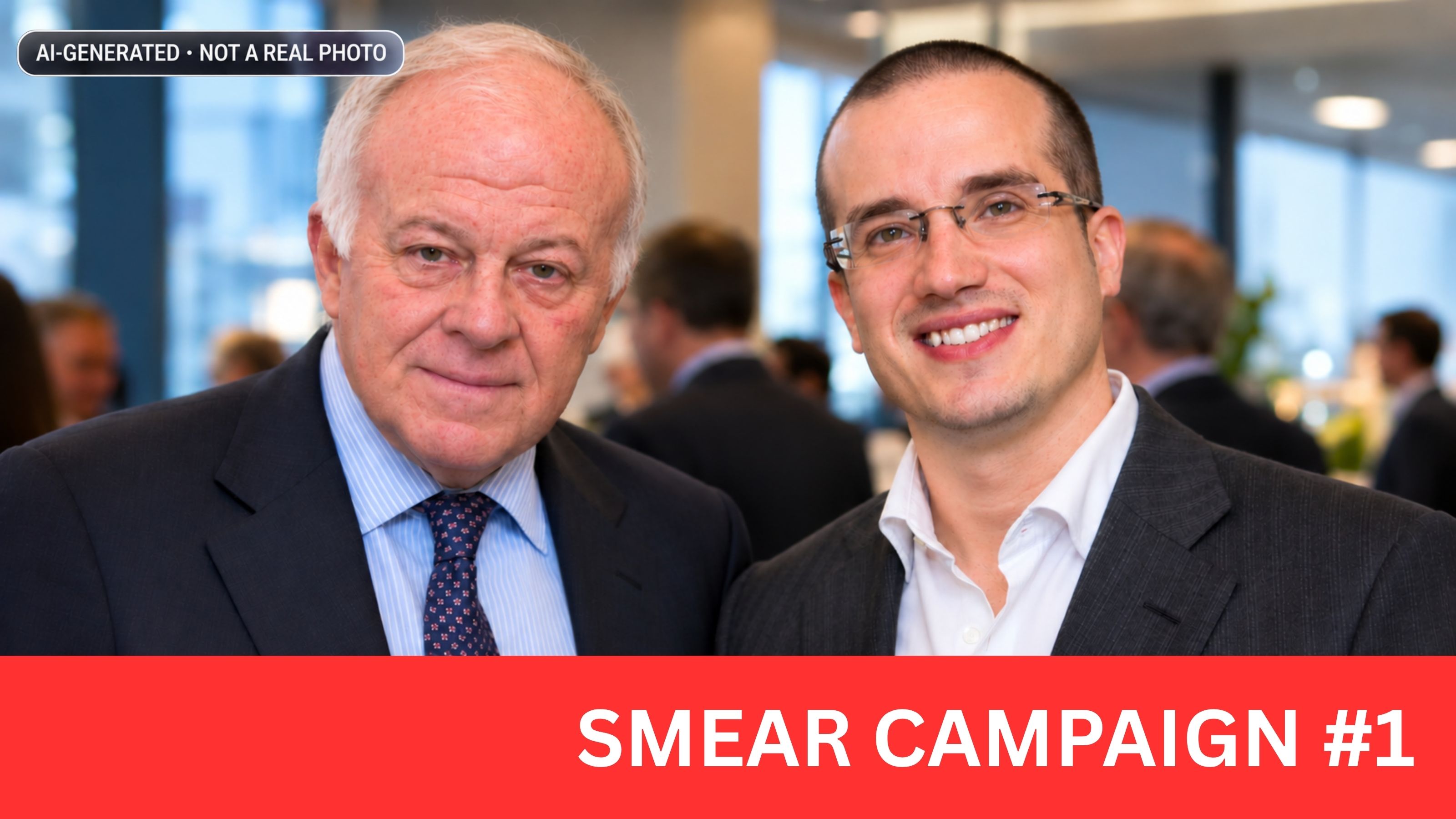
My career began in banking, as described above. After I left, Peter Hargreaves, co-founder of Hargreaves Lansdown, made an angel investment in 2007 in my first business venture, the training company. That is the whole of the connection. He did not invest in Bnk To The Future, Bitcoin Capital or any company I founded later; Bnk To The Future was funded by its own investors through equity crowdfunding. The training company ceased operations in 2011, and I have no financial relationship with him.
The investment was never hidden. I have named him as an early backer in interviews and press releases since at least 2013, and he mentions it in his own book, “In for a Penny”, published in 2009. A quote of mine about learning from my business angel is sometimes cited; it was about building a business without debt.
Hargreaves Lansdown is the UK’s largest platform for individual investors, where customers choose their own funds and shares from across the market. Its income came from fees on whatever its customers chose to invest in, defence companies included, as at every UK investment platform, pension fund and bank. Calling that “defence capital” would make almost any money in Britain defence capital. It was listed on the London Stock Exchange from 2007 and was taken private by a private-equity consortium in 2025. The later investments sometimes cited, including Blue Whale Capital, the fund management firm he backed in 2017, came ten years after he invested in my training company and six years after it closed. His later investments and political donations were his decisions, not mine. In 2007 I wasn’t yet boycotting investments linked to the arms trade, and I’ve never claimed otherwise; my boycott of the military industrial complex began in 2023. I have no connection to him to protect, so I’ll say it plainly: I condemn investment that supports Israel’s military or its occupation, by anyone, and I have no problem with anyone choosing to boycott Peter Hargreaves, Blue Whale Capital or Hargreaves Lansdown because of their investment connections. Exposing that kind of investment is the purpose of my framework.
Sources: 2013 press release and Crowdfund Insider interview naming him as angel investor; “In for a Penny” (Harriman House, 2009); reporting on Blue Whale Capital’s 2017 launch and the 2025 sale of Hargreaves Lansdown.
Smear Campaign #2: Bnk To The Future was built on Peter Thiel’s venture money.
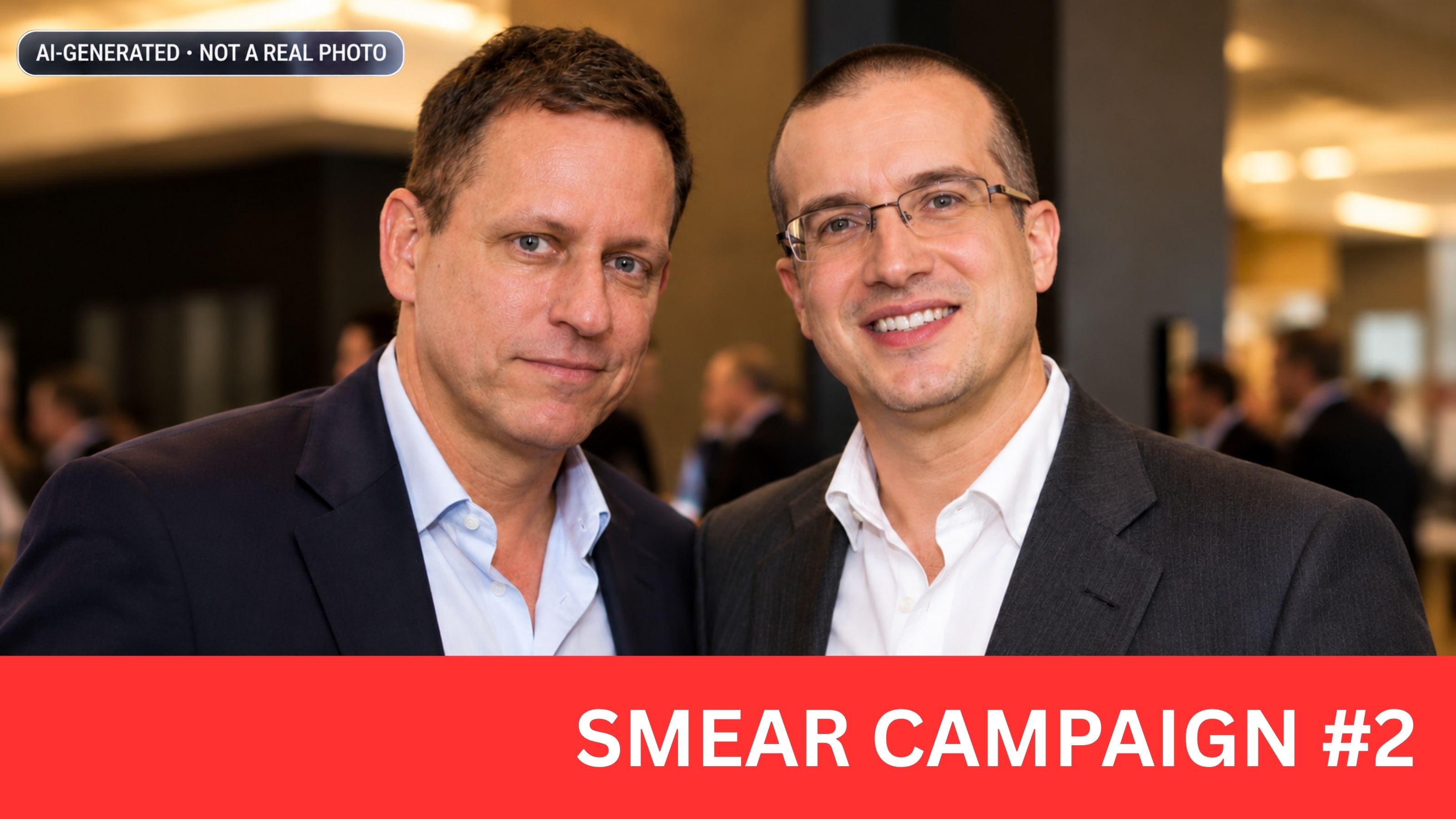
I have never met Peter Thiel, spoken to him or had any dealings with him. Neither he nor his fund, Founders Fund, has ever invested in Bnk To The Future, Bitcoin Capital or any company of mine.
Through Bnk To The Future and Bitcoin Capital, our investors backed more than a hundred companies. Only two of them, BitPay and Layer1, are known to have had Thiel or Founders Fund among their investors. Investing in the same company as a venture fund is not taking its money. The purpose of the platform was to give individual investors access to companies that were otherwise open only to venture capital, and most of the Bitcoin industry’s leading companies had venture investors whose names were public.
BitPay: Bitcoin Capital, launched in 2015, later bought existing shares from an early investor. It took no part in BitPay’s 2014 funding round, which was led by Index Ventures, not Founders Fund.
Layer1: raised money from our investors through an equity crowdfunding round.
Neither Thiel nor Founders Fund appears in the published investor records of Kraken or Robinhood, two other deals sometimes cited. In 2015 Bitcoin Capital invested in Kraken through a convertible note that converted into Kraken shares in 2016, and in 2019 Kraken raised $13.5 million through the platform from more than 2,000 individual investors. Our investors bought existing Robinhood shares from earlier shareholders. We have never had any involvement with Stripe.
On fees: when a company raised money on the platform, the company paid us 5%. Investors paid nothing to invest in those rounds; the platform took 5% of any dividends and exit proceeds they later received, so investors paid only when an investment succeeded. On secondary purchases of existing shares, such as Robinhood, investors paid a 5% fee when they bought in. Bitcoin Capital earned its fees from a share of the fund’s dividends and exits, as set out in its fund documents. In 2026 we introduced a custody fee on all holdings, which is waived for investors who place a sell order, to encourage them to sell and move into Bitcoin held in self-custody. Our full fee schedule is published in the fees section of the platform.
I have never been a Palantir shareholder. I criticise it and the surveillance industry publicly, and I encourage people to boycott them. When our investors backed a company, they had no say over who else owned shares in it. Two companies out of more than a hundred, among many other shareholders, having his fund on their register does not make me a supporter of his investments or politics.
Sources: reporting on BitPay’s 2014 Series A and Kraken’s 2019 round on Bnk To The Future; published investor records for Kraken and Robinhood.
Smear Campaign #3: I profited from Celsius while my investors lost everything, then turned a forced shutdown into a “boycott”.
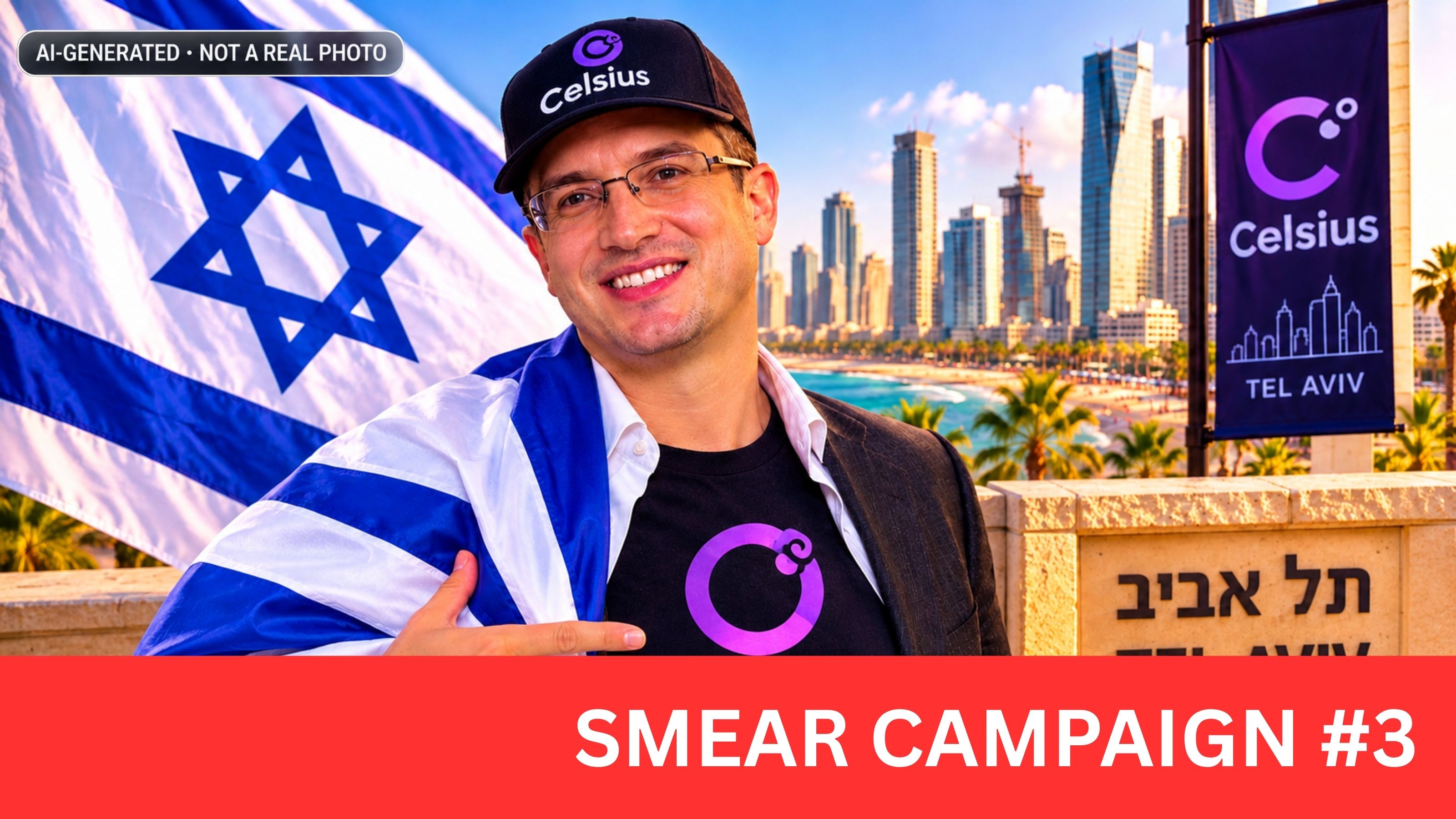
In 2020 Celsius raised about $20 million in an equity round. Tether led it with $10 million, and the rest came from qualified investors on Bnk To The Future, who had passed a test showing they understood the risks. I invested in the same round myself.
When Celsius collapsed in 2022, its shareholders, including me, received nothing. In a bankruptcy, shareholders rank behind creditors, and Celsius owed its customers billions. I was also one of its largest creditors, as described above. Figures sometimes quoted for my own loss, such as 289 Bitcoin, are only part of it: that was collateral Celsius had recorded against a loan it never made, and I had to prove it in court before it was restored to my claim. My total claim was far larger. Early-stage investing carries this risk: research by Harvard’s Shikhar Ghosh found that about three-quarters of venture-backed companies fail to return their investors’ money, which is why rounds like this are open only to qualified investors.
Celsius paid the platform a 5% fee on the money our investors put in, as every company raising money on it paid a fee. Investors paid nothing to invest, and because investor fees come only from dividends and exits, which Celsius never produced, they paid no fees at all. The platform kept that fee, as any platform does when a company later fails. After the collapse, our business spent more than $1 million on lawyers and advisers working for creditors, far more than it earned from the raise. The court later recognised that work as a substantial contribution to the case and reimbursed $127,444.50 of those costs. Each investor’s agreement is private between them and the platform, as with any investment, but the platform’s terms and full fee schedule are published for anyone to read.
Bnk To The Future is regulated in every jurisdiction where it operates. Its private equity business is regulated by the Cayman Islands Monetary Authority, its virtual asset business by the British Virgin Islands Financial Services Commission, and its public shares by the Financial Services Commission of Mauritius. It also holds a stake in a US-registered broker-dealer, and its offerings were filed with the US Securities and Exchange Commission and appear on the SEC’s public EDGAR database. No regulator has ever taken enforcement action against it.
The timeline also contradicts the “forced shutdown” story. We stopped raising money for companies in 2022. In February 2023 we stopped accepting new US investors, because US rules at the time made it very difficult for broker-dealers to hold crypto-related securities for customers, and existing US investors kept their holdings. Those rules were relaxed only in May 2025. My advocacy for Palestine began in October 2023, and we closed to all new investors in 2024.
Sources: reporting on Celsius’s 2020 equity round; the Celsius bankruptcy court record on the restored 289 Bitcoin; Chief Judge Glenn’s opinion of 29 February 2024 on substantial contribution applications; Shikhar Ghosh’s research on venture outcomes; the SEC’s EDGAR database; SEC statements of 2019, 2020 and May 2025 on broker-dealer custody.
Smear Campaign #4: I warn people about leaving crypto on exchanges, while my company partnered with Binance.
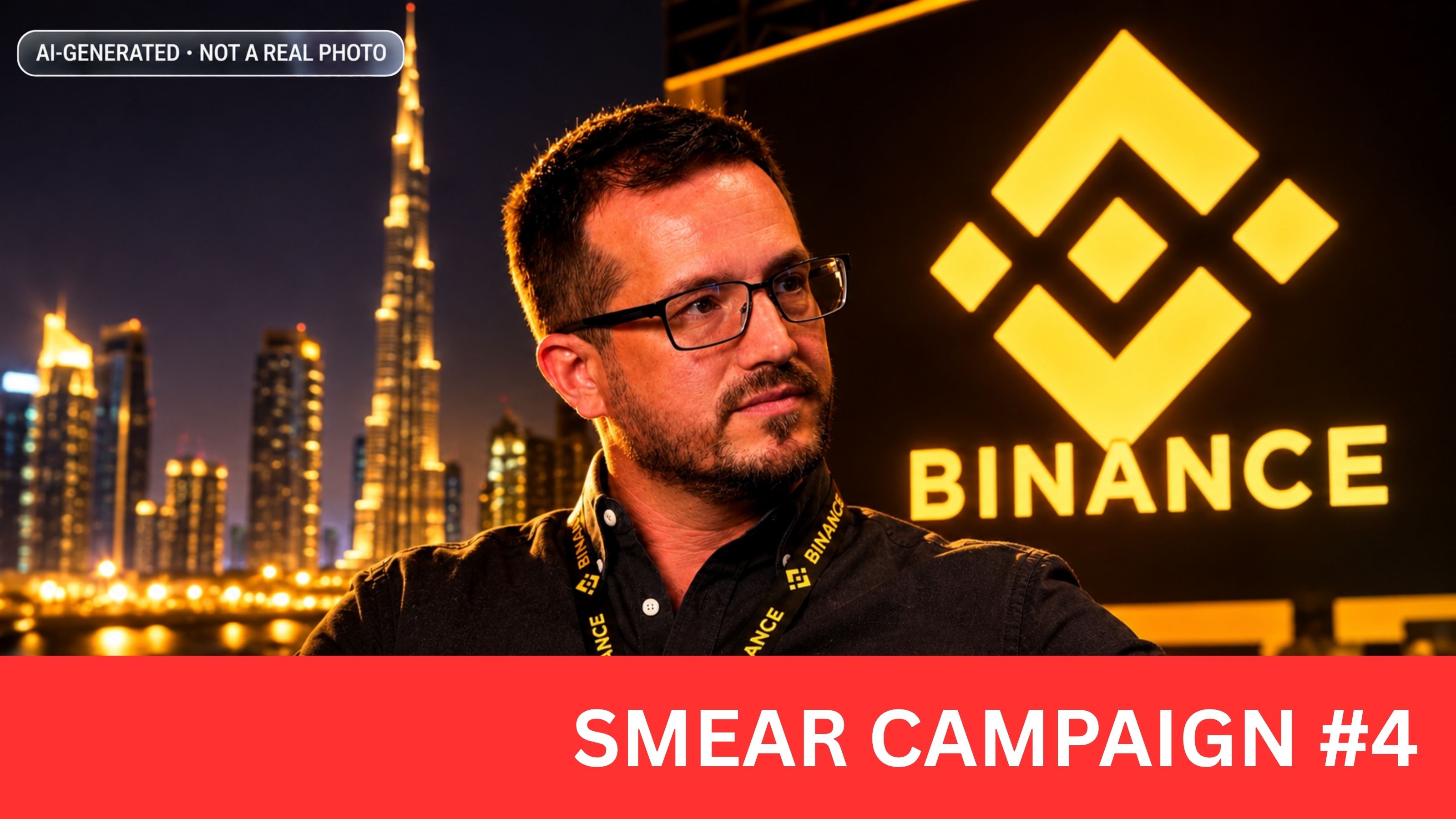
In 2021 Bnk To The Future connected its platform to Binance’s trading system and announced it publicly at the time. It is one of several exchange integrations we use. Their only purpose is to let investors convert their dividends, exit proceeds or share sales into Bitcoin at the best available price, so they can withdraw it into self-custody.
Investors’ money is never held on Binance, and we don’t promote Binance or encourage anyone to keep funds there. The exchanges provide trading liquidity, nothing more. Bnk To The Future does not receive a share of Binance’s trading fees; better prices are passed on to our investors. We charge investors our own trading fee, which is set out in our published fee schedule.
That is exactly what I teach: an exchange is a place to trade, not a place to store your Bitcoin. Buy at the best price, then take it into your own custody.
Sources: Bnk To The Future press release, 11 May 2021; the platform’s published fee schedule.
Smear Campaign #5: My framework was taken from others, and I use it to avoid naming Israel.
I have never claimed the label “financial industrial complex” as my own. I first saw the phrase in another writer’s work, recognised it as a better name for what I had been describing for years, and credited it publicly when I started using it. My book does the same. The analysis built underneath it is my own, and it began with Celsius in 2022, before I joined any discussions on X. The older term it echoes, the “military-industrial complex”, goes back to President Eisenhower in 1961.
The framework does not hide Israel. I name Israel, its military and the institutions that support it throughout my work, including the Celsius account above, and my blog and videos are a public record of that. The framework shows how financial, military and technical power work together, and Israel’s war machine is one of its clearest examples, not an exception to it.
Sources: my blog and YouTube channel.
Smear Campaign #6: I turned to Palestine in October 2023 to protect my business.

The dates show otherwise. Bnk To The Future stopped raising money for companies in 2022 and was already in holding mode before my advocacy began. I began speaking about Palestine in October 2023, and that year extended my boycott to the military industrial complex. I didn’t have to change how I live. Since 2011 I have taught people to keep their savings outside the banks and pension funds through which most people’s money ends up financing the arms trade, by holding Bitcoin in self-custody and building their own pensions, and I practise what I teach. I have never held shares in arms companies. The business followed in 2024: a company boycott strategy needed board approval and regulatory review, and once it was in place we closed to new investors altogether. None of my work for the cause earns me anything: I don’t monetise my channels, take sponsors, sell anything or raise money, and my book will have a free edition.
Smear Campaign #7: Bnk To The Future was bankrolled by Hummingbird Ventures, a venture firm tied to Israeli tech.
Hummingbird Ventures has never invested in Bnk To The Future, Bitcoin Capital or any company of mine, and no venture capital firm has ever owned shares in Bnk To The Future. From the start, Bnk To The Future was funded by its own investors through equity crowdfunding.
The only connection is Kraken. Hummingbird led Kraken’s Series A in 2014. In 2015 Bitcoin Capital invested in Kraken through a convertible note, offered to us directly by its founder and designed to convert into shares, which it did in April 2016. We weren’t told who else was involved, and as with every company we backed, we had no say over its other shareholders. Our marketing at the time listed well-known funds that had invested in the same companies as “co-investors”. That meant they had backed the same companies, not that they had invested in us.
Claims that this placed us inside networks funding Israeli military or intelligence technology name no company, deal or date, and I know of none. What any other Kraken shareholder invests in elsewhere is its own decision, not mine. I’ll say it as plainly as I have about others: if any investor in any company we backed funds Israel’s military or its occupation, I condemn it.
Sources: Kraken’s 2014 Series A announcement; Bnk To The Future’s 2013 announcement of its crowdfunded launch.
Smear Campaign #8: I launched a crypto coin, “rug pulled” my community and kept the $33 million.
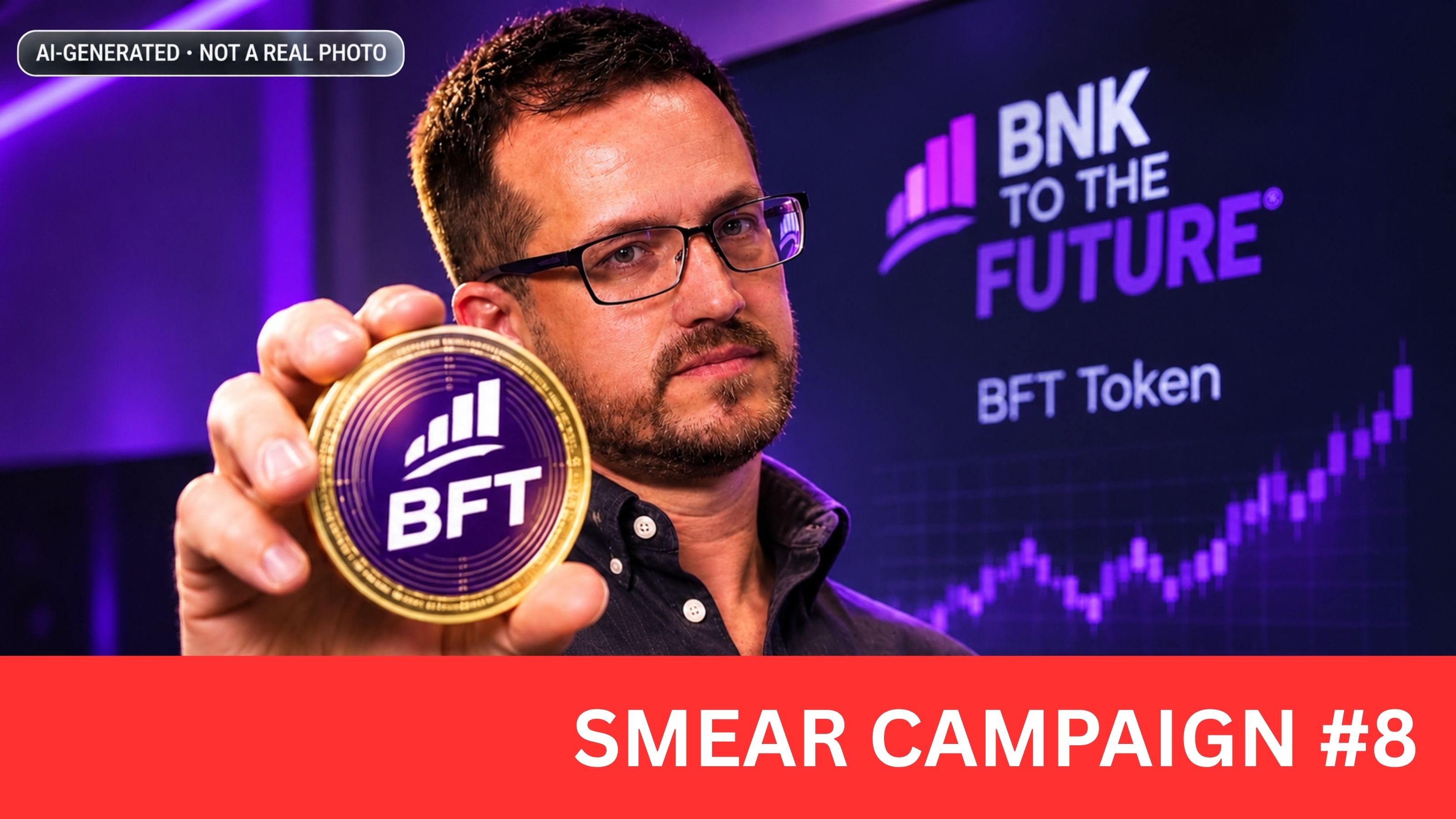
In 2018 Bnk To The Future sold BF Token (BFT), a membership token for its platform. The sale was made as a securities offering under an SEC filing, restricted to qualified investors, at a time when most token sales claimed to fall outside securities law. Most buyers were existing Bnk To The Future members and shareholders, and a handful of crypto investment funds took part on the same terms and price as everyone else, with every buyer capped at $1 million. Every buyer, in the presale and the public sale, paid the same $0.10 per token: there were no discounts, bonuses or special terms for early or large buyers, which is how insiders usually set up a rug pull. The offer stated plainly that BFT was not equity and gave holders no shareholder rights. Holding BFT gave members priority access to deals and discounted fees on our secondary market. Basic access to the platform never required it.
The $33 million went to the company, not to me. I have never personally sold any BFT. At launch, 670 million of the 1 billion tokens were allocated to four pools: 300 million for the company, 200 million for user rewards, 100 million for shareholders, advisors and founders, and 70 million for sale costs. Anyone can see on the blockchain that the four largest BFT holdings today are still those exact amounts, untouched since 2018, and we have committed never to move or sell them. A rug pull means insiders selling their tokens on to buyers. That never happened. Most buyers were also Bnk To The Future shareholders, and the company has since paid dividends to its shareholders.
Some exchanges listed BFT in 2018, and after listing it traded well above its sale price. As regulators began treating tokens as securities, exchanges without securities licences delisted it, and like most tokens of that era its price collapsed. No regulator has ever taken action over BFT.
Sources: BFT offer terms; the BFT smart contract and holder list on Etherscan.
A request
I won't be responding to these claims individually. This page is my answer, and I'll keep it up to date. Replies correcting the claims are often hidden or deleted, so if you value my work and come across these accusations, I'd be grateful if you shared a link to this page beneath them. There's no obligation. And if you see a claim that isn't covered here, please let me know, and I'll add the facts.
If you have evidence that anything on this page is wrong, please send it to me and I will correct it publicly. This page sets out the facts as I know them, and I reserve all my legal rights.