
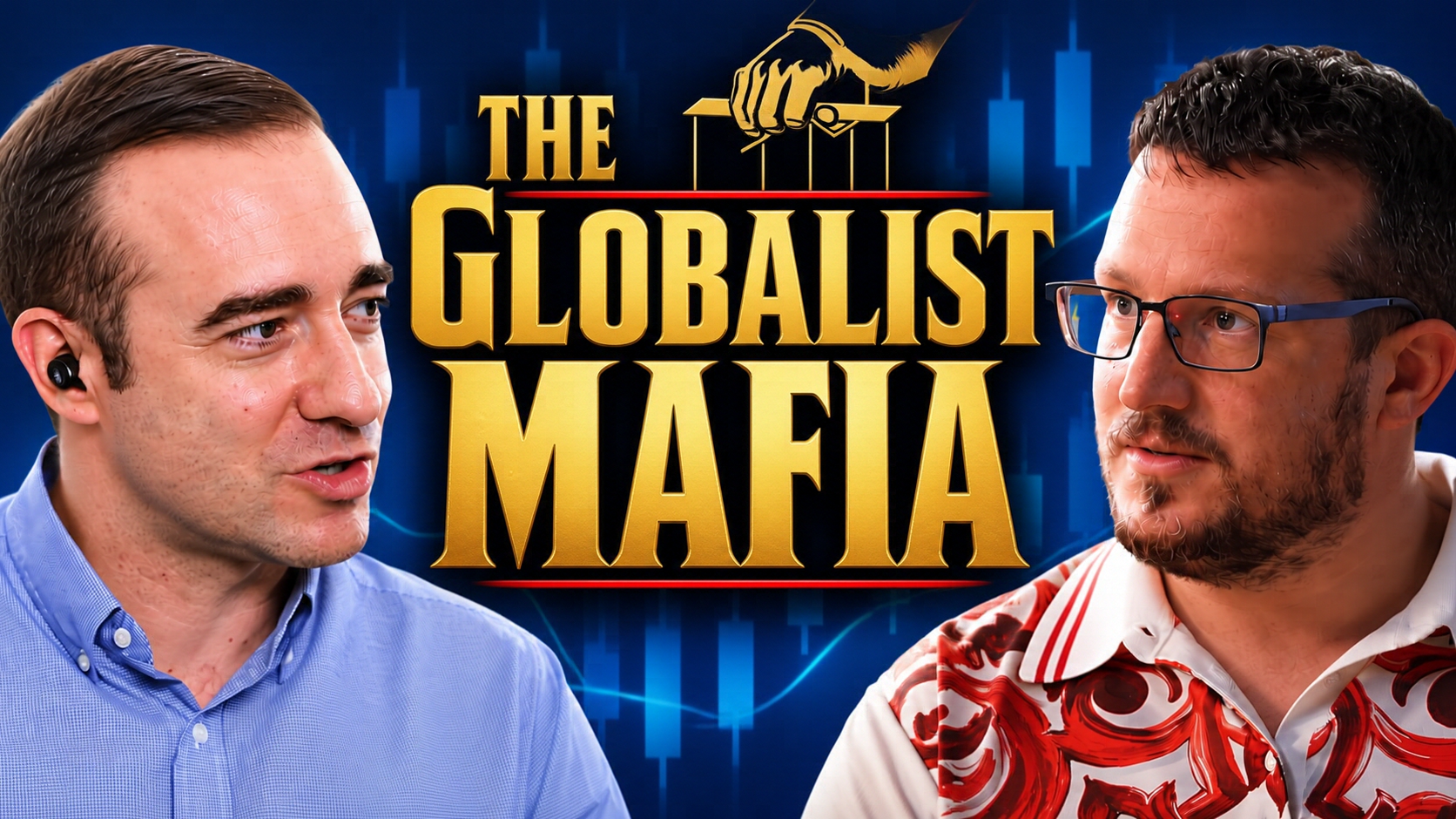
"The Global Mafia Running the World and Why They Need Forever Wars" | Simon Dixon on Commodity Culture w/ Jesse Day
Nov 06, 2026Context & Background
This briefing document provides an exhaustive, structured synthesis of the interview titled "The Globa Mafia Running the World and Why They Need Forever Wars: Simon Dixon", hosted by Jesse Day on the YouTube channel Commodity Culture.
- Guest: Simon Dixon
- Host: Jesse Day
- Platform/Channel: Commodity Culture (YouTube)
- Interview Type: Debut appearance by Simon Dixon on Commodity Culture
- Date of Recording/Release: 2 November 2026
- Duration: 47 minutes
Executive Summary
During his debut appearance on Commodity Culture, Simon Dixon outlined a comprehensive framework explaining global geopolitical events, economic crises, and military conflicts. Dixon argues that mainstream geopolitical narratives—such as wars fought for religion, human rights, or democracy—are functional propaganda designed to obscure underlying financial, technological, and resource-driven incentives.
Rather than viewing global affairs through a political lens (left vs. right) or attributing outcomes to a centralized secret cabal, Dixon asserts that global governance operates via three interconnected, self-reinforcing power structures: the Financial Industrial Complex (FIC), the Military Industrial Complex (MIC), and the Technical Industrial Complex (TIC). In Western nations, state power is subordinate to these corporate complexes.
Dixon highlights how perpetual warfare serves as a business model structured around portfolio optimization (hardcore wars, defense subscription models, and forever wars) combined with a destruction-and-rebuild model that indebts sovereign nations and concentrates wealth upward. He further details how civil unrest in Europe is being driven by demographic shifts, overleveraged pension systems, energy de-industrialization, and manufactured crises designed to implement a technocratic control grid (consisting of AI surveillance, CBDCs, programmable stablecoins, and asset tokenization).
Regarding monetary history and asset markets, Dixon maintains that returning to a gold standard is insufficient to check state expansion, as governments historically abandon monetary pegs during crises. Instead, he advocates for a personal asset allocation strategy grounded in hard, decentralized assets (such as self-custodied Bitcoin and physical Gold) to hedge against continuous currency debasement and sovereign debt bailouts.
High-Level Overview
- Main Subject: Deconstruction of global geopolitical power dynamics, the corporate war economy, manufactured civil unrest, and the transition toward a multi-polar financial system and technocratic control grid.
- Framing: Geopolitics is framed not as a conflict between sovereign democratic nations or competing ideologies, but as a system of capital allocation, narrative control, and corporate subordination of state governments.
- Core Thesis: Wars, economic crises, and political shifts are incentivized mechanisms managed by three overarching complexes—FIC, MIC, and TIC—that socialize economic losses onto populations while privatizing capital gains into centralized stock markets and asset management funds.
Key Arguments Made by Simon Dixon
1. Media Manipulation and the Reverse-Engineering Methodology
- Media as Propaganda: Dixon asserts that virtually all mainstream and algorithmically driven media function as propaganda, funded by shareholders, corporate sponsors, and state intelligence apparatuses.
- Analytical Framework: Rather than assessing whether a media report is factually true, Dixon evaluates news by asking: "Who wants me to believe this?" He advocates following shareholder structures, corporate affiliations, and funding sources to reverse-engineer actual motives.
- Reframing Conflict: Geopolitical conflicts are rarely about religion, human rights, or democracy; Dixon characterizes those explanations as cover narratives designed to recruit soldiers and secure public consent. The actual drivers are control over energy, strategic trade choke points, and financial transactions.
2. Taxonomy of Global Power and the Three Complexes
Dixon contrasts global governance structures across a spectrum:
- China: Corporate power is fully subordinate to state/governmental authority.
- The West (US, UK, EU, Canada, Australia): Governmental authority is subordinate to private corporate power and lobby groups.
- Sovereign Resource States: Nations that retain sovereign control over energy sell it to build Sovereign Wealth Funds, allowing them to negotiate between Western corporate power and Chinese state power.
Dixon argues that Western governance is dominated by three main complexes (operating like a corporate mafia with institutional processes for leadership selection and advancement):
GLOBAL POWER MATRIX
|
Complex |
Components & Key Players |
|---|---|
|
FINANCIAL INDUSTRIAL COMPLEX (FIC) |
• Asset Managers: BlackRock, State Street • Investment Banks: JP Morgan • Retail/Commercial Banks: Bank of America, Chase, Citi, Barclays, HSBC • Hedge Funds & Capital Allocation Networks |
|
MILITARY INDUSTRIAL COMPLEX (MIC) |
• Transnational Contractors: Lockheed Martin, BAE Systems, General Dynamics, Elbit Systems • Intelligence Apparatus / Deep State Networks |
|
TECHNICAL INDUSTRIAL COMPLEX (TIC) |
• Tech Giants: Google, Meta (Facebook), SpaceX, Palantir • Algorithmic Data Manipulation, Cyber Security, AI & Surveillance |
3. The Business Model of Perpetual Warfare
Dixon contends that defense contractors and financial institutions manage conflict like an investment portfolio to optimize revenue:
- War Portfolio Breakdown:
- Hardcore War: High-intensity weapons manufacturing and immediate sales to governments.
- Defense Contracts: Protection-racket-style subscription models providing steady regional defense sales.
- Forever Wars: Prolonged, lower-intensity conflicts designed to maximize long-term expenditure. (e.g., Dixon notes that spending $2 trillion over 20 years in Afghanistan to ultimately replace the Taliban with the Taliban was an optimized revenue-generation strategy for defense contractors).
- Destruction and Reconstruction Model: Financial entities fund military operations, which destroy infrastructure. Post-conflict, financial entities issue loans to governments to finance reconstruction. This indebts sovereign states, yields high debt returns for bondholders, and opens domestic infrastructure to private equity acquisition and long-term tech subscription contracts.
4. Systemic Selection vs. Malicious Conspiracy
- Behavioral Selection: Dixon rejects simplistic conspiracy theories involving a single cabal in favor of a systemic selection process. Upward mobility in investment banking, corporate leadership, and politics requires individuals to display specific behaviors.
- Corporate and Political Capture: Based on his background in market making and investment banking, Dixon notes that client entertainment and corporate promotion select for individuals willing to engage in increasingly degenerate activities. This dynamic provides institutional leverage and blackmail capabilities over executives and politicians.
- Politicians as Lobbies' Servants: In Dixon's view, politicians are groomed by think tanks and non-governmental organizations (NGOs). Their primary function is to serve private lobby interests while maintaining an illusion of public representation. Politicians who prioritize the public over lobby capital are denied the funding required to advance.
- Analysis of Donald Trump: Dixon uses Donald Trump as an example of a political figure with a populist base who nonetheless serves core corporate complexes due to his primary financial backers: Elon Musk (TIC), the Mellon banking family (FIC), Miriam Adelson (connected to Israel/MIC node), and private investment ventures funded by Gulf capital (Affinity Partners).
5. Manufactured Civil Unrest and the De-Industrialization of Europe
- Deconstructing European Unrest: Dixon attributes European civil unrest to a combination of demographic pressures (retiring Boomers creating a pension crisis), hyper-leveraged pension funds (e.g., UK pension guilt portfolios managed with high leverage by BlackRock), rising national debt-to-GDP ratios, and inflation resulting from currency creation.
- Algorithmic Radicalization: Algorithms capitalize on public dissatisfaction by reinforcing individual biases—framing issues around race, religion, or immigration for example—to divide populations and prevent unified opposition to underlying corporate structures.
- Surveillance State Justification: Civil violence creates public demand for pre-crime technologies, digital tracking, and heightened policing, directly benefiting technology and security companies.
- Energy De-Industrialization: The pivot of military profits from the Middle East to Europe involves deliberate energy disruption (e.g., shutting down nuclear plants, the destruction of the Nord Stream pipeline). Higher energy costs subordinate European governments to private corporate entities, forcing asset sales to private equity firms.
6. Conflict Zones as Technology Testing Grounds
Dixon highlights that ongoing military conflicts serve as active research and development fields for integrated defense and tech systems:
- Gaza: Functioned as an environment for operationalizing AI-driven target selection and automated surveillance systems (e.g., Palantir technologies).
- West Bank: Serves as a deployment model for managing civilian populations through digital and physical containment technologies.
- Ukraine: Functions as a testing ground for integrated drone warfare, Starlink satellite infrastructure, and AI battlefield orchestration software.
7. The Emerging Technocratic Control Grid
Dixon argues that global leaders are preparing a consolidated control infrastructure consisting of:
- Central Bank Digital Currencies (CBDCs) and programmable fiat stablecoins.
- Comprehensive asset tokenization on blockchain rails (promoted by asset managers like BlackRock).
- Social credit mechanisms embedded within digital communications networks (e.g., platforms permitting freedom of speech while algorithmically constraining "freedom of reach").
8. Critique of the Gold Standard and the Monetary Evolution
- Limits of Gold Standards: Dixon notes that historical gold standards failed to halt systemic expansion because sovereign powers routinely suspended convertibility during wars or fiscal insolvencies (e.g., the creation of the Federal Reserve, the 1944 Bretton Woods agreement transferring gold to Fort Knox, and Nixon’s 1971 unpegging of the US Dollar from gold).
- The Petro-Dollar Transition: Following 1971, the petro-dollar system replaced gold by requiring global energy to be priced in USD, with surplus Saudi Aramco revenues recycled into US Treasuries to purchase American military hardware.
- Current Multipolar Shift: Dixon believes the petro-dollar framework is breaking down (highlighted by events around strategic maritime transit corridors such as the Strait of Hormuz). Foreign central banks selling US Treasuries drives yields up, further subordinating sovereign governments to financial power as the global economy transitions into regional trade blocs (BRICS, GCC, ASEAN, SCO).
9. Investor Allocation Framework
Dixon outlines a defensive capital allocation strategy designed for high-inflation, high-volatility environments:
- Spending Capital: Liquid fiat held in conventional banking channels strictly for short-term operational liabilities.
- Savings (Hard Money): Assets chosen for their high stock-to-flow ratios to preserve long-term purchasing power—specifically self-custodied Bitcoin and Gold (followed by Silver).
- Investment Assets: Equities and real assets that benefit from corporate capital concentration, acknowledging that central banks will routinely bail out broad equity indices despite macroeconomic imbalances.
- Decentralization Strategy: Active investment in personal sovereignty, including self-custody of digital/physical assets, sovereign identity management, and running open-source local Large Language Models (LLMs).
Key Arguments Made by Other Participants (Jesse Day)
- Media Disconnect: Expressed growing skepticism that mainstream geopolitical narratives are authentic, positing that media-reported events appear entirely staged or falsified.
- Destruction for Profit: Referenced Naomi Klein’s book, The Shock Doctrine, to reinforce Dixon's point regarding how man-made disasters and military conflicts are leveraged to push private sector redevelopment contracts and free-market policy overhauls.
- Psychological Profile of Elite Leadership: Questioned whether the global elite operating these financial structures are fundamentally cold-blooded psychopaths, given their willingness to trade human life for capital accumulation.
- Nature of European Unrest: Inquired whether civil unrest in Europe is an organic reaction to debt-driven cost-of-living increases or a manufactured crisis intended to impose restrictive security legislation.
- Role of Sound Money: Posed the question of whether reintroducing a gold standard or hard money backing could effectively halt perpetual war and government overreach.
- Equity Market Risks: Raised concerns regarding potential broad market crashes due to historically stretched valuations, questioning how long market intervention can sustain inflated asset prices.
Points of Agreement
- Inauthenticity of Mainstream Narratives: Both participants agree that conventional explanations for geopolitical conflicts (human rights, religious disputes, defending democracy) serve as superficial narratives hiding economic motives.
- Reconstruction Business Model: Both agreed on the accuracy of The Shock Doctrine model, where physical destruction creates lucrative post-war capital deployment opportunities for private contractors and high-yield debt issuance for financial institutions.
- Failure of Partisan Politics: Both concurred that replacing left-leaning political figures with right-leaning figures (or vice versa) does not alter global power structures, as both factions rely on funding from the same corporate complexes.
- Inevitability of Centralized Systemic Interventions: Both acknowledged that global power structures consistently use crises to justify expanding surveillance, pre-crime policing, and wealth concentration.
Points of Disagreement / Nuance
- Efficacy of the Gold Standard: Jesse Day raised the possibility of a gold standard as a structural solution to halt perpetual warfare. Simon Dixon clarified that historically, gold standards fail as absolute checks because governments predictably break convertibility agreements whenever military conflicts or national debts threaten system stability.
Important Data, Claims, and References Mentioned
Institutional & Corporate Entities
|
Category |
Entity Name |
Stated Role / Significance in Discussion |
|
Financial (FIC) |
BlackRock, State Street |
Asset management firms controlling guilt collateral, real estate funds, and corporate capital structures. |
|
Financial (FIC) |
JP Morgan |
Key investment banking institution sitting at the top of capital distribution. |
|
Financial (FIC) |
Bank of America, Chase, Citi, Barclays, HSBC |
Commercial/retail banking apparatus managing access to standard capital channels. |
|
Military (MIC) |
Lockheed Martin, BAE Systems, General Dynamics, Elbit Systems |
Transnational defense contractors supplying hardware and securing recurring state contracts. |
|
Technology (TIC) |
Google, Meta (Facebook), SpaceX, Palantir |
Tech firms providing algorithmic data manipulation, battlefield AI, and surveillance systems. |
|
Private Equity |
Affinity Partners |
Investment fund managed by Jared Kushner, backed by billions in Gulf sovereign capital. |
Historical & Legislative References
|
Reference |
Context & Description Cited by Participants |
|
Operation Ajax (1954) |
Cited by Dixon as a covert CIA/MI6 operation in Iran to manufacture civil unrest, overthrow a democratic leader, and install the Shah to secure energy access for British Petroleum (BP). |
|
Bretton Woods (1944) |
Agreement establishing the post-WWII financial order; backed by 20,000 tons (75%) of global gold held in Fort Knox by the US. |
|
Nixon Shock (1971) |
Unilateral decision by the US government to remove the US Dollar from gold convertibility, leading to the creation of the petro-dollar system. |
|
The Shock Doctrine |
Book by Naomi Klein cited by Jesse Day to illustrate how crisis exploitation and physical destruction enable private sector asset acquisition. |
|
Afghanistan War |
20-year, $2 trillion intervention cited by Dixon as an optimized "forever war" business model that ultimately replaced the Taliban with the Taliban. |
Notable Quotes and Strategic Framing
- On Media Analysis:
"Whenever I see something in the media I don't ask whether it's true, I ask who wants me to believe this." — Simon Dixon
- On War Motivations:
"Whenever you see a narrative around what a war is—i.e. it's a religious battle, or to try and save women's rights, or human rights, or defending democracy—all of that is BS. What it actually is, is controlling access to strategic choke points, energy, and financial transactions." — Simon Dixon
- On Political Structure:
"I don't call America a country, I don't call Canada a country, I don't call UK a country... On one extreme you have China where all corporate power is subordinate to the government, and on the other extreme you have the West where all governmental power is subordinate to corporate power." — Simon Dixon
- On Political Figures & Leadership Selection:
"The job of a politician is to serve real power—i.e., the lobbies of different groups—while making people believe you work for the people. If you keep working for the people, your career just doesn't progress because you don't get access to the capital you need." — Simon Dixon
- On Wealth Concentration:
"Every crisis is an opportunity to concentrate wealth upwards." — Simon Dixon
- On Algorithmic Control:
"Elon moving from cancellation to freedom of speech, but not freedom of reach." — Simon Dixon
Open Questions and Unresolved Issues
- Conscription and Population Resistance: The extent to which European nations can successfully reintroduce military conscription for potential conflicts without triggering unmanageable domestic pushback remains unresolved.
- AI Bubble Duration: While Dixon asserts that technology and AI companies are in a valuation bubble, the exact timeline for a market correction remains uncertain due to these firms being designated as "too big to fail" by national security interests.
- Transition Velocity to Multipolarity: The exact speed at which foreign central banks will divest from US Treasuries, and how rapidly regional trade blocs (BRICS, GCC) will fully bypass Western financial rails, remains an ongoing structural transition.
Call To Action
- Share this post. Share this blog post to expose the "divide and conquer" trap.
- Subscribe to the Simon Dixon YouTube channel. Get my weekly deep dives into geopolitics, macro, and Bitcoin. Subscribe to my YouTube channel.
- Find me on Rumble. This is my backup channel, safe from censorship. Follow me on Rumble.
- Follow me on X @SimonDixonTwitt. I post real-time updates and analysis on X and am highly active there. Follow me on X.
- Follow me on instagram. Usually short clips are posted here.
- Follow me on TikTok. Usually short clips are posted here.
- Follow me on NOSTR.
- Subscribe to my Substack.
- SimonDixon.com This is my personal site and an archive of all my content, safe from de-platforming. Join the free membership portal.
Watch On YouTube (1 hour preview)
Prefer to Listen? Available on Apple Podcasts & Spotify

Want the faster version of this article?
If you don’t have time to read or watch the full discussion, you can access the AI Summary and Whiteboard Explainer for this post inside the Simon Dixon Hard Talk Membership Portal.
Already have your complimentary login? Simply sign in to access them.
Not a member yet? The portal is 100% complimentary to join and use.
You can also download a free PDF copy of Simon’s 2011 book and access the full archive of Simon Dixon Hard Talk LIVE episodes, interviews, long-form conversations, AI summaries and explainer videos.
Simon does not ask you to buy anything.
- No membership fees.
- No upsells.
- No sponsors.
- No ad revenue.
- No products being pushed.
The portal exists to build a sovereign community and independent archive that does not depend entirely on YouTube, X or any other social platform to stay connected.
Disclaimer: This blog post is provided solely for educational and informational commentary and reflects personal opinion. It does not constitute financial, investment, legal, or tax advice.
