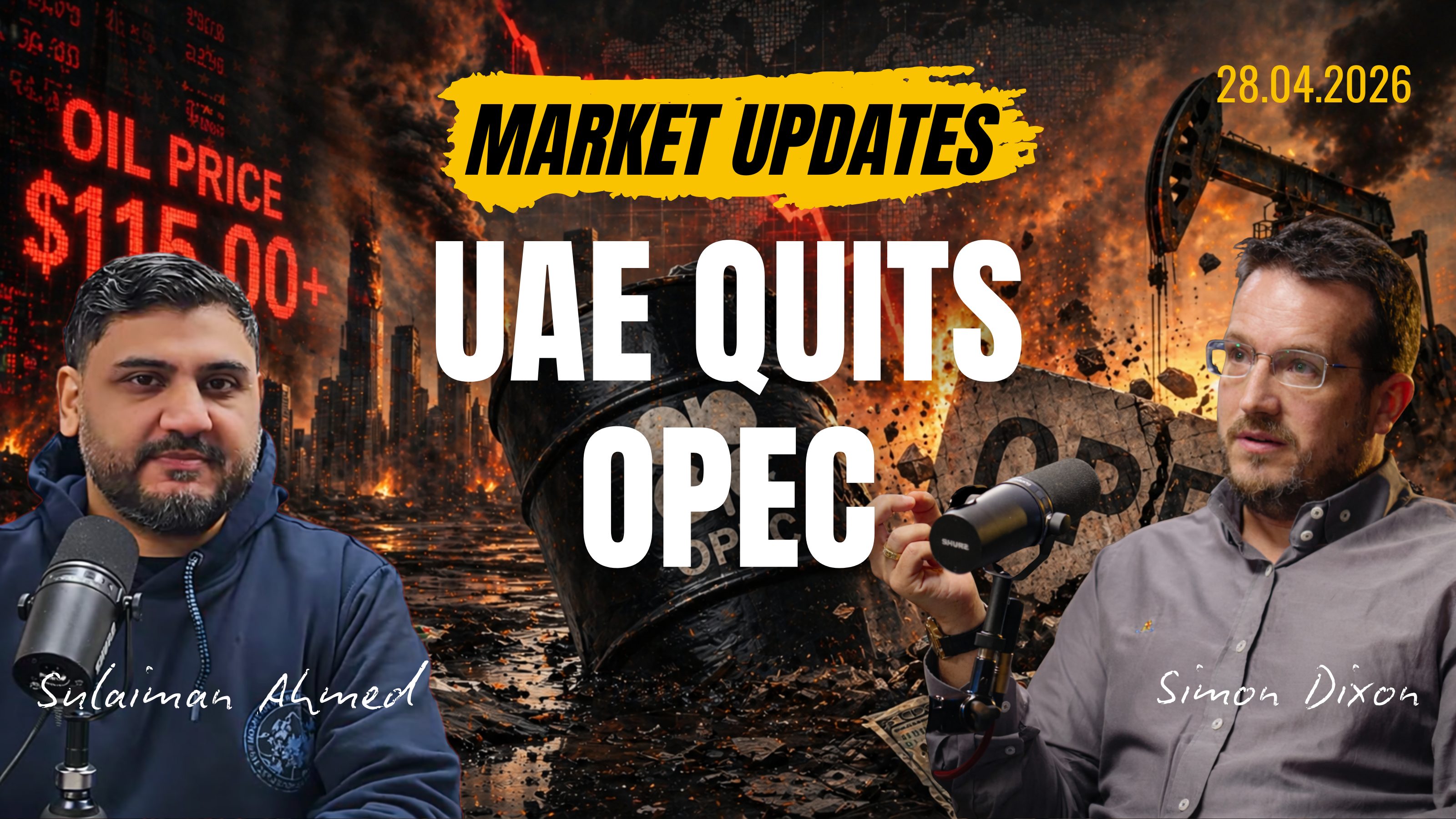
🇦🇪🇸🇦 UAE LEAVES OPEC, Is This The End Of Saudi Arabia and OPEC Countries? | Market Update
Apr 28, 2026Executive Summary
This briefing analyzes the strategic implications of the United Arab Emirates (UAE) deciding to leave OPEC, as discussed in the April 18, 2026, interview between host Sulaiman Ahmed and financial expert Simon Dixon. The core takeaway is that the UAE’s departure is not an isolated event but the culmination of a multi-year strategy to pivot from a traditional oil producer to a global financial intermediary and energy powerhouse. By leveraging alternative payment systems (Mbridge, CIPs), becoming a hub for Bitcoin mining and crypto, and negotiating FX swap lines with the Federal Reserve, the UAE is positioning itself to survive and profit from a shifting world order. The discussion suggests that while this move weakens Saudi Arabia's grip on oil prices, it may be part of a coordinated "good cop/bad cop" strategy within the GCC to navigate the transition between Western financial dominance and the emerging BRICS-aligned multipolar system.
High-Level Overview
The discussion frames the UAE’s exit from OPEC as a pivotal moment in the "death of the petrodollar" and the end of the traditional oil monopoly. The conversation shifts from the immediate mechanics of oil production quotas to the broader monetary and financial architecture. The UAE has spent years building infrastructure to circumvent sanctions (particularly for Iran), integrating with Chinese payment systems, and establishing itself as a "crypto center" and top-tier Bitcoin mining nation. The overarching theme is the transition toward a multipolar world characterized by manufactured crises, a "K-shaped" economy, and the rise of a technocratic surveillance state.
Key Arguments Made by Simon Dixon
- Strategic Premeditation: The UAE’s departure is not spontaneous. It follows years of building "monetary and financial architecture," including the unpopular normalization of relations with Israel (Abraham Accords) and joining BRICS in 2024.
- The "Gold Corridor" and Sanction Circumvention: The UAE provides the financial infrastructure allowing Iran to circumvent sanctions. This involves a gold trade route: exchanging USD for gold, shipping it through the Strait of Hormuz to Shanghai, and receiving Chinese yuan (staying within China’s capital controls) to purchase exports and oil.
- Financial Leveraging of the U.S.: The UAE is seeking an FX swap line from the Federal Reserve. This allows them to print local currency (pegged to the dollar), deposit it with the Fed, and receive newly printed USD. This mechanism incentivizes the UAE not to sell its $1.4 trillion in assets, which would otherwise drive up U.S. yields and interest rates.
- The Mbridge Project: The UAE has taken over "Mbridge," a Bank for International Settlements (BIS) project. This is a network of Central Bank Digital Currencies (CBDCs) connecting Saudi Arabia, the UAE, Hong Kong, China, and Thailand to facilitate gold and oil trade outside traditional Western rails.
- OPEC as a Cartel: Dixon characterizes OPEC as a price-fixing cartel that engages in illegitimate wealth accumulation and suppresses alternative energy (like nuclear and solar) to protect "Big Oil" profits.
- GCC Coordination: Despite the apparent rivalry with Saudi Arabia, there is likely a high degree of coordination. Saudi Arabia acts as the "good cop" (final Israel normalization hold-out on the Palestinian cause and traditional oil ties) while the UAE acts as the "bad cop" (normalizing with Israel and integrating with Western financial interests).
- The "Escalate to De-escalate" Theory: The current high oil prices and geopolitical tensions may be part of a "theatrical endgame" or a "manufactured crisis" designed to lead to a global reset, benefiting military budgets, surveillance states, and the "financial industrial complex."
Key Arguments Made by Other Participants
Sulaiman Ahmed (Host) with Simon Dixon as guest
- Skepticism of UAE Capacity: Ahmed questioned whether the UAE has the physical capacity to challenge Saudi Arabia’s dominance. He cited data suggesting UAE pipeline capacity (via Fujairah) might only be 400,000 to 700,000 barrels—insignificant compared to Saudi’s 10 million barrel potential.
- Manufactured Financial Destruction: A massive financial collapse is being manufactured for 2026/2027, potentially worse than the Great Depression.
- Political Theater: He dismissed recent news, such as the alleged assassination attempt on Donald Trump, as a "clown show" that few people believe, suggesting the public has lost faith in mainstream narratives.
- Humanitarian Concern: He emphasized that the rising costs of energy (e.g., propane in India) and food are devastating the global "underclass," particularly in Southeast Asia and the West.
Points of Agreement
- OPEC is a Cartel: Both agree that OPEC is a price-fixing entity that harms consumers and suppresses innovation.
- Manufactured Crisis: Both participants believe current global instability is being intentionally directed to facilitate a "Global Reset."
- Impact on the Poor: Both agreed that the "K-shaped" economy is widening the gap between asset holders and a struggling underclass.
- Technocratic Surveillance: They aligned on the rise of a "Palantir-style" state where power is being handed over to AI and private tech entities for social credit and data aggregation.
Points of Disagreement
- UAE Oil Capacity: Ahmed suggests the UAE's capacity to circumvent the Strait of Hormuz is limited (400k-700k barrels), while Dixon cites analysts who believe the UAE has built infrastructure capable of pushing up to 4 million barrels.
- Nature of the Saudi-UAE Rivalry: Ahmed questioned if the UAE was "headbutting" Saudi Arabia, whereas Dixon leaned toward a "pre-agreed negotiation" or trade-off between the two powers.
Important Data, Claims, or References Mentioned
|
Category |
Details |
|
Financial Reserves |
UAE holds $270 billion in USD cash reserves and $1.4 trillion in total assets/treasuries. |
|
Oil Pricing |
Saudi production cost: 2-10/barrel; Saudi fiscal break-even: ~70/barrel; US break-even: ~50/barrel. |
|
Bitcoin Mining |
Top three countries: 1. Iran, 2. Russia, 3. UAE. |
|
Global Yield Targets |
Dixon's "breaking point" metrics: 30-year US Treasury at 5%; 10-year Treasury at 4.5%; WTI Oil at $115. |
|
Infrastructure |
SIPs (Chinese payment system) used by 110 countries; Mbridge (CBDC network). |
|
Company References |
Palantir (surveillance/data); Saudi Aramco (subsidiary in Texas); Exxon (30% owner of Golden Pass with Qatar). |
Notable Quotes or Framing
- On OPEC: "OPEC is a cartel where they engage in price fixing... it is illegitimate wealth."
- On the Economy: "We're just going deeper and deeper and deeper into this K-shaped economy."
- On the U.S. Position: "America... is transitioning from being able to dictate and enforce countries to accept the dollar... to you being able to leverage America by buying US equities and US bonds and requesting an FX swap line."
- On Geopolitics: "I subscribe to a high degree of coordination between Saudi and UAE... Saudi is being branded as good cop and UAE is being branded as bad cop."
- On the Future State: "We are handing over power to Palantir AI, we're building our social credit scores... they're not going to let the system crash. They're going to bail it out and you're going to pay for it."
Open Questions or Unresolved Issues
- True Production Capacity: What is the actual realized capacity of the UAE to export oil outside of the Strait of Hormuz? (Estimates vary from 400k to 4 million barrels).
- Status of Disputed Islands: Three islands in the Strait of Hormuz remain disputed between the UAE and Iran; their resolution may be a precursor to a wider "deal."
- The "Theatrical Endgame": Will there be a major "escalate to de-escalate" event (e.g., a localized invasion or bombing campaign) to reset the oil and treasury markets?
- Internal GCC Stability: Will other OPEC+ members follow the UAE’s lead, creating a "cascading effect" that permanently dissolves the cartel?
Call to Action
- Share this post. Share this blog post to expose the "divide and conquer" trap.
- Subscribe to the Simon Dixon YouTube channel. Get my weekly deep dives into geopolitics, macro, and Bitcoin. Subscribe to my YouTube channel.
- Find me on Rumble. This is my backup channel, safe from censorship. Follow me on Rumble.
- Follow me on X @SimonDixonTwitt. I post real-time updates and analysis on X and am highly active there. Follow me on X.
- Follow me on instagram. Usually short clips are posted here.
- Follow me on TikTok. Usually short clips are posted here.
- SimonDixon.com. This is my personal site and an archive of all my content, safe from de-platforming. Join the free membership portal.
Watch on YouTube
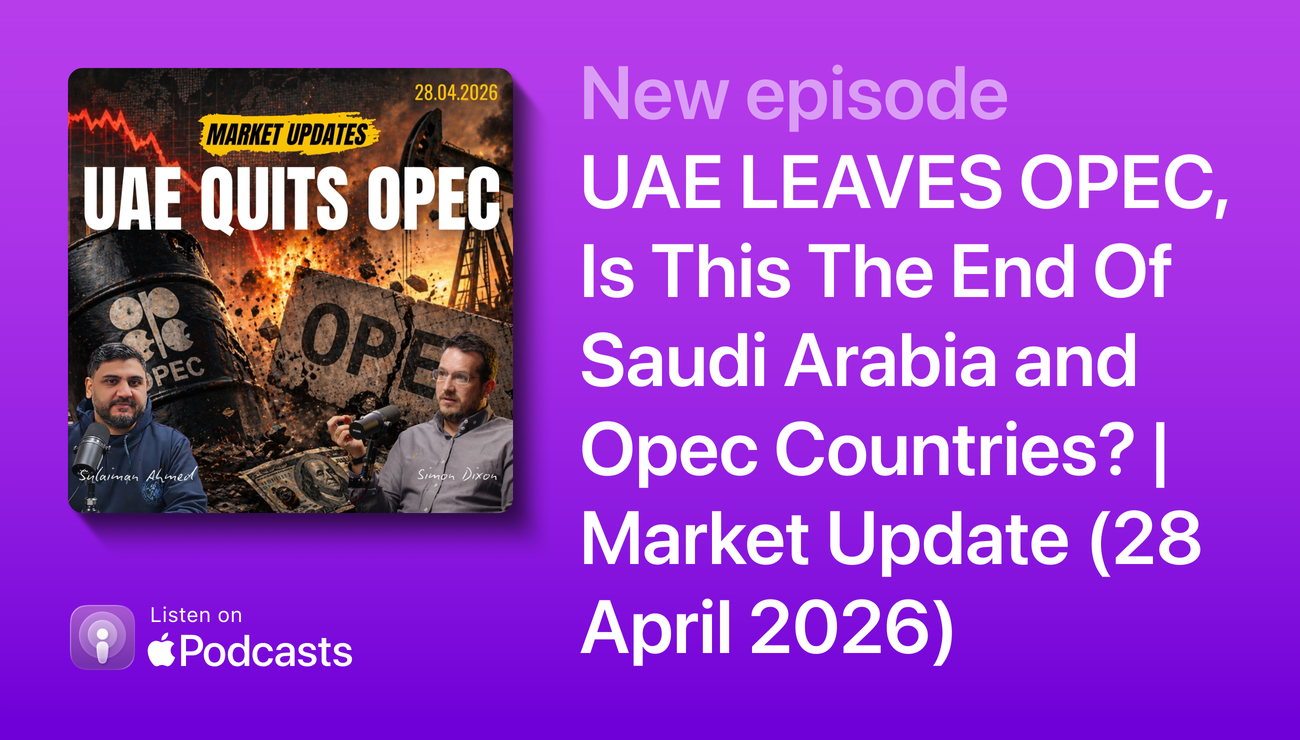
Prefer to Listen? Available on Spotify & Apple Podcasts
DISCLAIMER
The content provided in this blog post and the embedded video is for educational, informational, and entertainment purposes only.
Simon Dixon appeared strictly as a guest on Sulaiman Ahmed's show, Moral Resistance. His participation in this interview does not constitute an endorsement of the host, Sulaiman Ahmed, the Moral Resistance channel, or any other views, content, or guests featured on that platform.
All views, thoughts, and opinions expressed by Simon Dixon during this interview are entirely his own personal perspectives. Simon Dixon conducts his own independent research and his commentary is based solely on his own analysis of macroeconomic trends, geopolitical events, and the global financial architecture. Nothing in this discussion should be construed as financial, investment, legal, or tax advice. Any mentions of specific assets—including Bitcoin, US equities and bonds, US Treasuries, or commodities like oil—are strictly for analytical purposes and do not constitute a recommendation, solicitation, or endorsement to buy, sell, or trade any financial instruments. Simon Dixon accepts no liability for any financial or investment decisions made by viewers or readers. We strongly advise you to independently verify all information and consult with a licensed financial advisor or professional before making any investment decisions.