Knots vs Core: Bitcoin’s Next Governance War (Core v30 & BIP 110)
Feb 13, 2026Hey hey Sovereign Wealth Builders.
What we are witnessing right now in the Bitcoin ecosystem is not a crisis; it is a necessary stress test. Bitcoin was designed to be attacked, and the current friction between different development philosophies is exactly how a leaderless system discovers its own rules. This is not drama—it is the anti-fragile nature of the network proving its resilience once again.
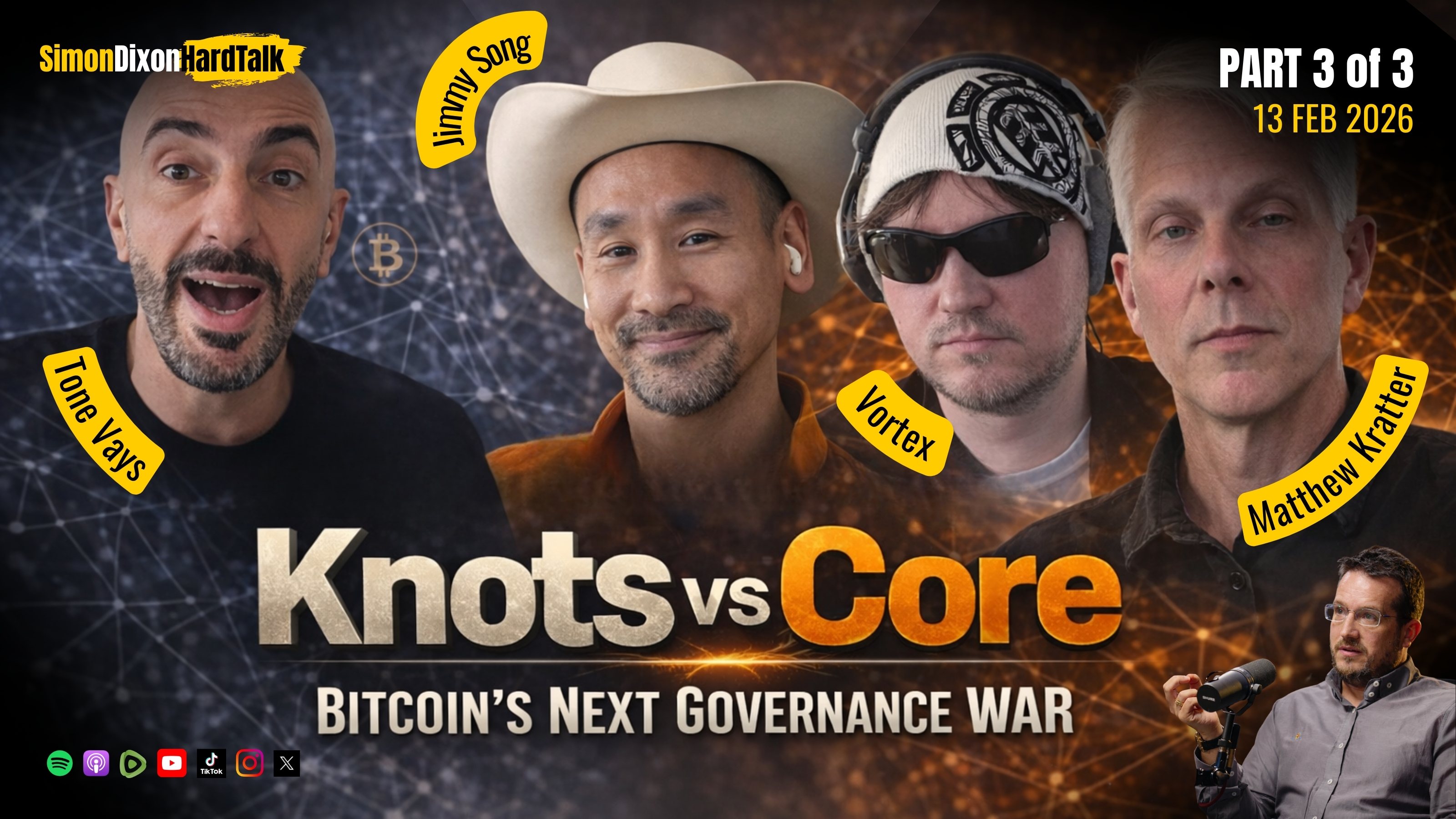
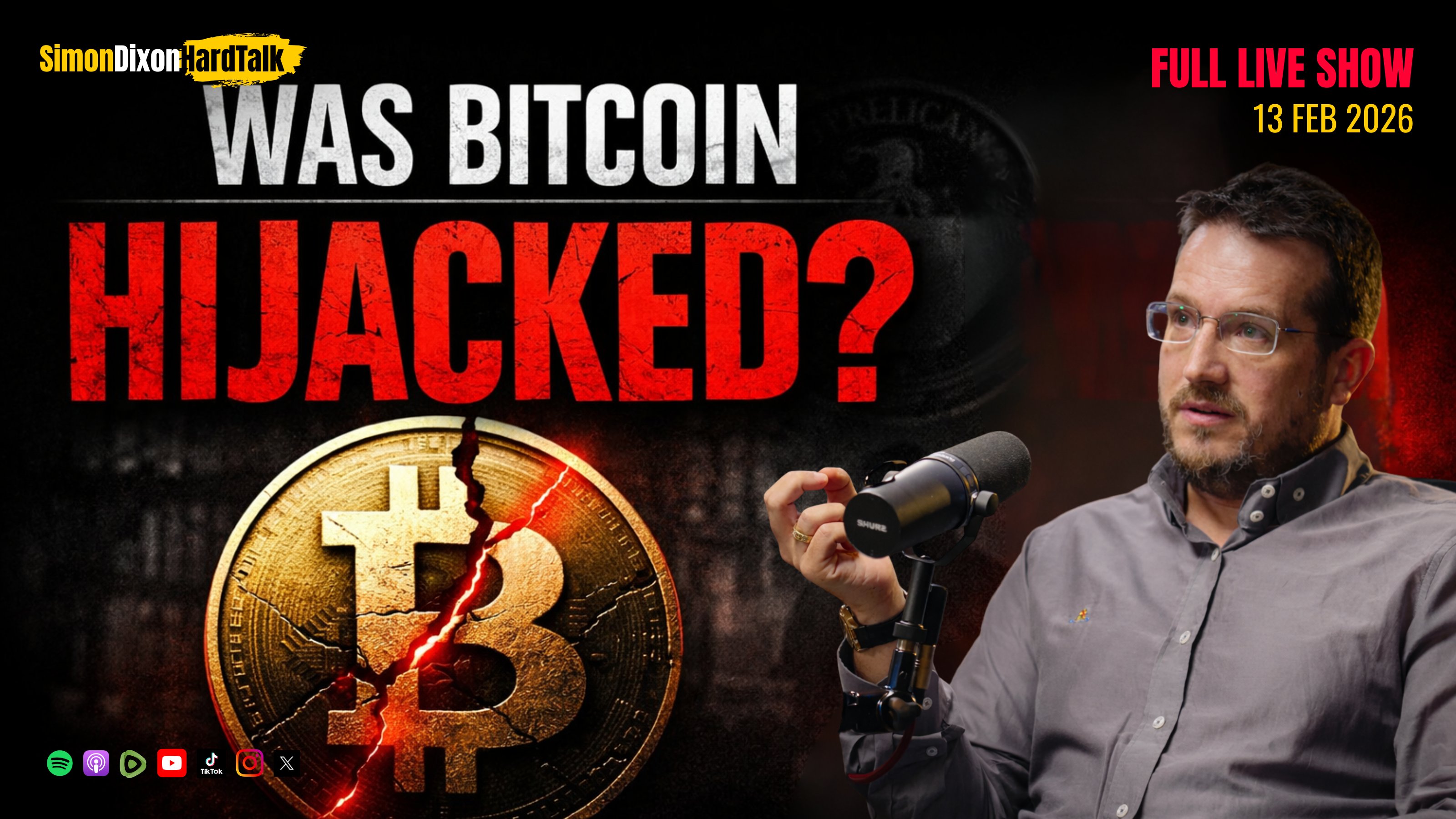
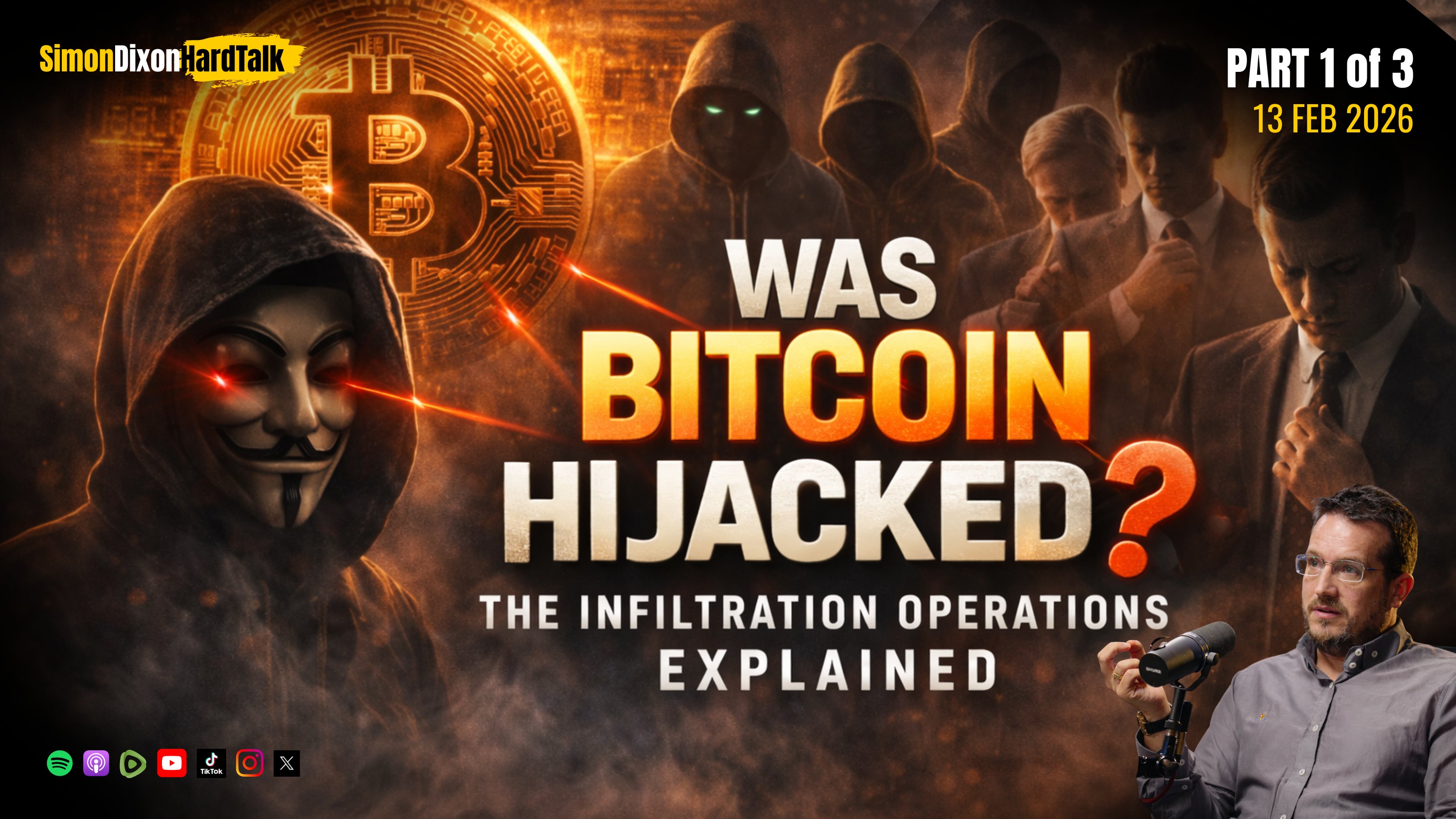
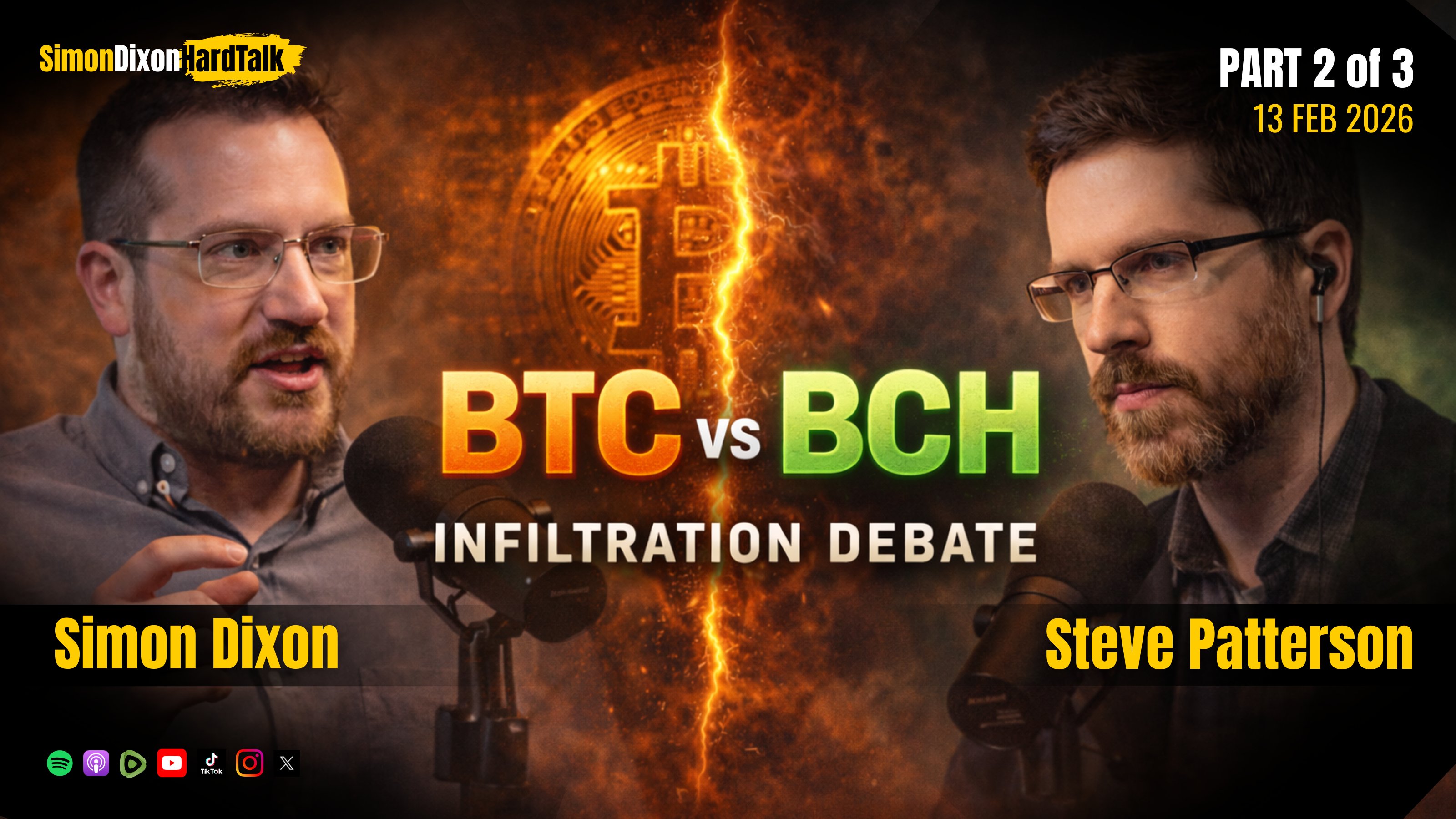
This post serves as a comprehensive strategic briefing of Part 3 of my SimonDixonHardTalk livestream, "Was Bitcoin Hijacked?", which aired on February 13th, 2026. The full stream spans 3 hours and 50 minutes, with this specific deep dive into the governance war (Part 3) lasting 1 hour and 36 minutes.
The central question we must answer is this: Is Bitcoin being hijacked by developers and corporate interests, or is the network proving it can resist every attempt at centralized control?
The Return of the Ghost of 2017
To understand today’s conflict, we must look back at the "Block Size Wars" of 2015–2017. Back then, the network was divided between "Big Blockers" (XT, Classic, Unlimited) and those who favored the SegWit soft fork (BIP 141) to enable Layer 2 scaling. We saw the coordination of BIP 91 and the grassroots intensity of the BIP 148 User Activated Soft Fork (UASF).
Today’s tension between Bitcoin Knots (supporting BIP 110) and Bitcoin Core v30 mirrors that old battle, but the focus has shifted from block size to "spam." Just as in 2017, we have competing implementations trying to define the soul of Bitcoin. During the livestream, I reflected on how we resolved the 2017 standoff:
"The first exchange that launched... Bitfinex... basically became the exchange for all global people that wanted to bet and use futures in order to determine what the value... whether they would support Bitcoin Cash or whether they would support Bitcoin... These markets allow traders to essentially price the probability of Bitcoin Cash being supported."
In 2017, futures markets on Bitfinex and Kraken provided the "Hard Talk" reality that signaled the economic majority's preference. Today, we look to modern prediction markets like PrediQt, where BIP 110 currently shows only a 14% chance of activation. The economic majority—users, exchanges, and businesses with skin in the game—remains the ultimate arbiter.
The "Spam" War: Money vs. Data Storage
The current conflict revolves around Ordinals and Inscriptions. These technologies allow users to embed non-financial data—images, tokens, and files—directly into the blockchain. This has split the community into two opposing philosophies:
- The Knots/BIP 110 View: Bitcoin is permissionless money, not a "decentralized Dropbox." Proponents argue that non-monetary data clogs the network and drives up fees for actual transactions. Bitcoin Knots has implemented aggressive filtering to discourage this use case.
- The Core v30 View: This philosophy prioritizes fee market neutrality. If a user pays the fee, the data belongs in the block. Interestingly, Core v30 removed the OP_RETURN limit as a strategic harm reduction strategy. The goal was to keep the market for block space public and decentralized, preventing large miners like MARA from creating private, centralized back-channels—such as "Slipstream"—to process high-fee data transactions in the shadows.
The Nuclear Option: UASF vs. MASF
BIP 110, the soft fork proposal to filter inscriptions, includes a responsible one-year reversal mechanism to mitigate long-term technical risks. It has two primary paths to activation:
- MASF (Miner Activated Soft Fork): This requires 55% of miners to signal support. Unlike the 95% threshold required for SegWit in 2017, this is a much lower bar, reflecting a shift in how we view miner influence.
- UASF (User Activated Soft Fork): Scheduled for approximately September 1st, 2026, this would see individual node runners reject blocks that do not follow the new rules, forcing the miners' hands.
While critics label this "minority rule," I lean toward the perspective shared by Jimmy Song: this chaos is the network discovering its own rules. This "intolerant minority" acts as a feature of Bitcoin’s security, testing if the protocol can resist both miner overreach and developer stagnation.
The Infiltration Narrative: A Boardroom Audit
In the spirit of "Hard Talk," we must address the reported theories regarding potential infiltration within the development and funding layers of Bitcoin. These questions are essential for a leaderless system's "boardroom audit." Using precise, legally cautious language, we observe several points of scrutiny:
- The Gloria Zhao Departure: Former maintainer Gloria Zhao reportedly revoked her PGP signing key amid public questions regarding her purported ideological alignment with Ethereum. Her reported personal relationship with developer Peter Todd has also faced scrutiny within the community.
- Funding Layers: There is ongoing discussion regarding Adam Back and Blockstream in relation to historical fundraising and alleged attempts by Jeffrey Epstein to purportedly network with Blockstream co-founders. However, let me be clear: I believe the theory that "Jeffrey Epstein is Satoshi" is completely misguided.
- Accountability: Asking these questions ensures the "open-source boardroom" remains transparent. If individuals or organizations are purportedly compromised, the decentralized nature of the system allows the community to route around them.
The New Power Players: ETFs and Sovereigns
The game theory has evolved since 2017. The "Economic Majority" now includes massive institutional and sovereign entities whose voices carry weight in the boardroom:
- Corporate Treasuries: MicroStrategy (holding 650,000+ BTC) is a massive voice, though Bitcoin remains Proof of Work, not Proof of Stake.
- Institutional Gatekeepers: The entrance of Bitcoin ETFs and players like Foundry (connected to Barry Silbert and DCG) and Tether (custodying with Cantor Fitzgerald and Howard Lutnick) introduces new layers of potential compromise and influence that we must watch closely.
- Sovereign Miners: Countries like Kazakhstan, Bhutan, and the UAE are now significant players in the hash rate.
Why I’m Running Knots
Personally, I have chosen to run a Bitcoin Knots node. This is a strategic move to support competing implementations. We must hold Bitcoin Core accountable because "Core doesn't run the shop." Competition in the code prevents any single group from hijacking the protocol.
Regarding the signaling for BIP 110, I am currently sitting out to watch the game theory unfold. I am staying cool, calm, and collected. Bitcoin cannot be hijacked precisely because these fights are messy, public, and difficult to resolve. Every attempt to co-opt the network only results in a more resilient protocol.
The Anti-Fragile Future
Every time the mainstream media claims Bitcoin is "dying" due to internal strife, a new chapter of strength begins. These governance wars are the mechanism through which Bitcoin maintains its status as the only truly decentralized form of money.
Is this chaos a bug, or is it the only feature that keeps us free? I believe it is the latter.
Three Whiteboard Explainer Videos
Here are the three short AI-generated whiteboard explainer videos that were presented during the live show. These summaries break down the key arguments from the longer discussions between Tone Vays and Jimmy Song, Tone Vays and Vortex, and Matthew Kratter of Bitcoin University — making the technical debate easier to understand and saving you hours of viewing time.
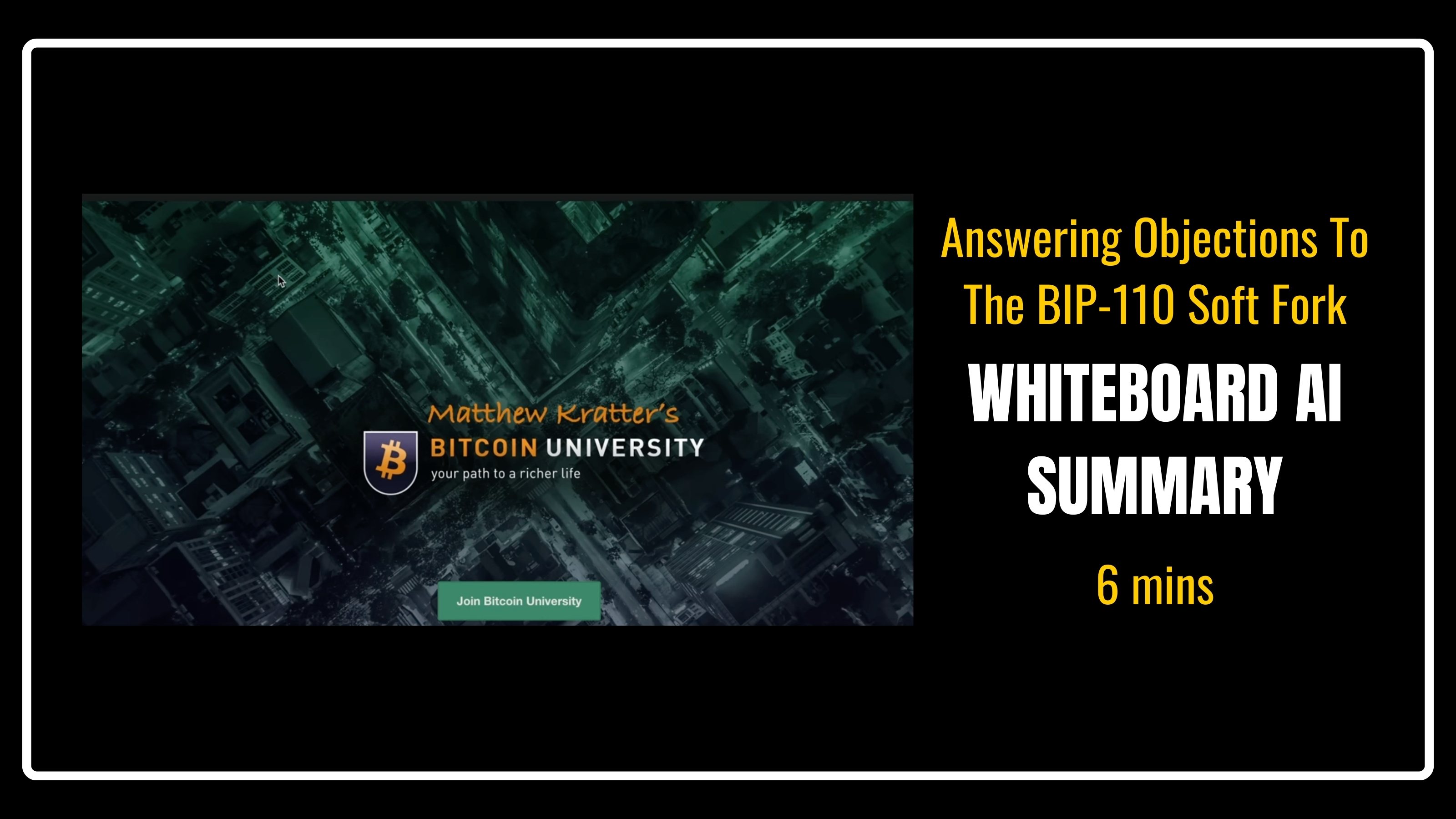
1. Answering Objections To TheBitcoin BIP 110 Soft Fork Whiteboard Explainer Video:
Ai generated whiteboard explainer video of Matthew Kratter's video which was titled "Answering Objections To The BIP-110 Soft Fork". The duration of the original video was 13 mins long.
2. Dangers of Bitcoin BIP110 (aka Knots) Whiteboard Explainer Video
Ai generated whiteboard explainer video of a video that Tone Vays and Vortex did. That video was called "Dangers of BIP110 (aka Knots) w/ Vortex". Duration of the original video was 1 hour 53 mins.
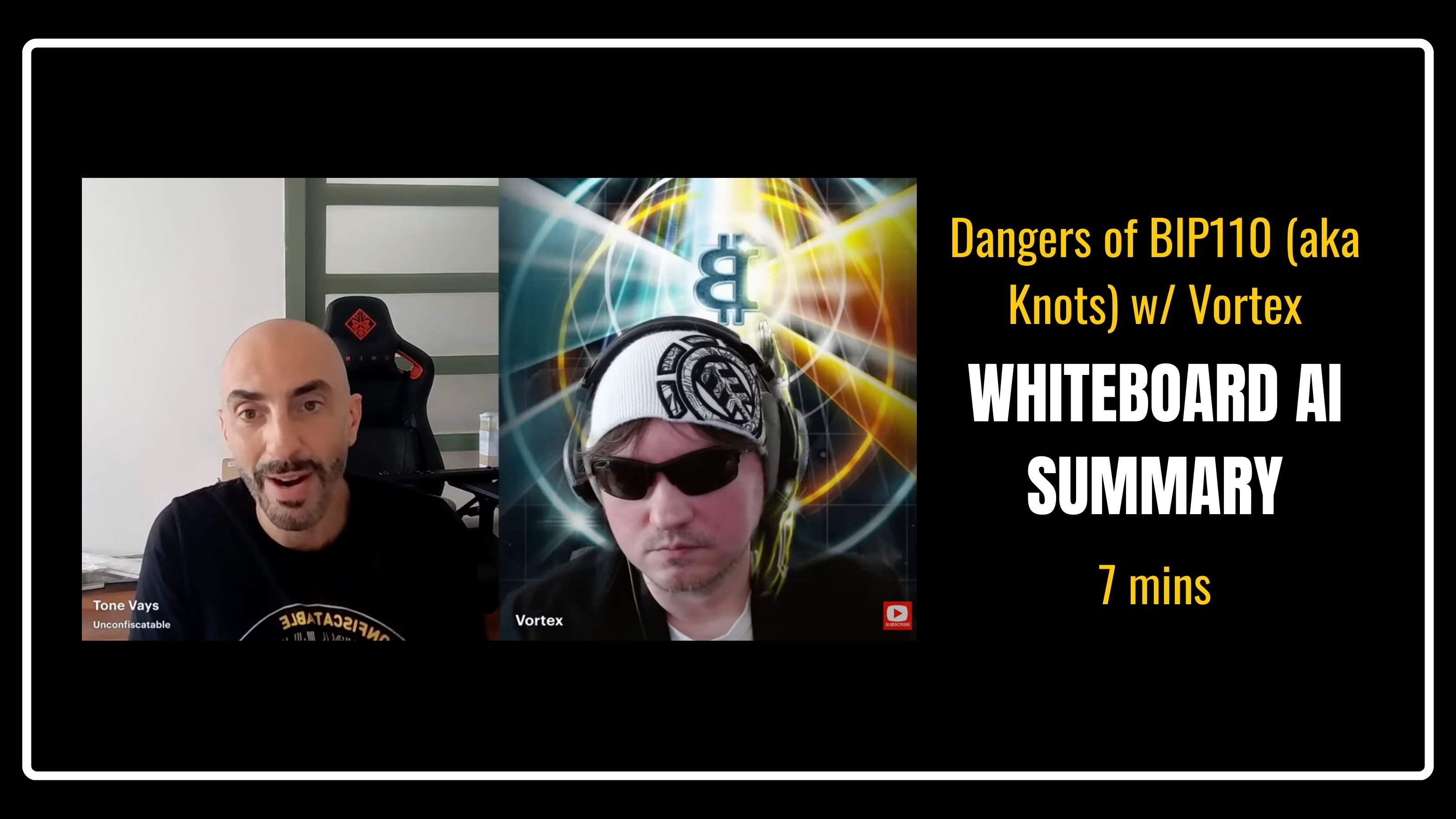
3. Bitcoin Knots vs Core v30 - Whiteboard Explainer Video
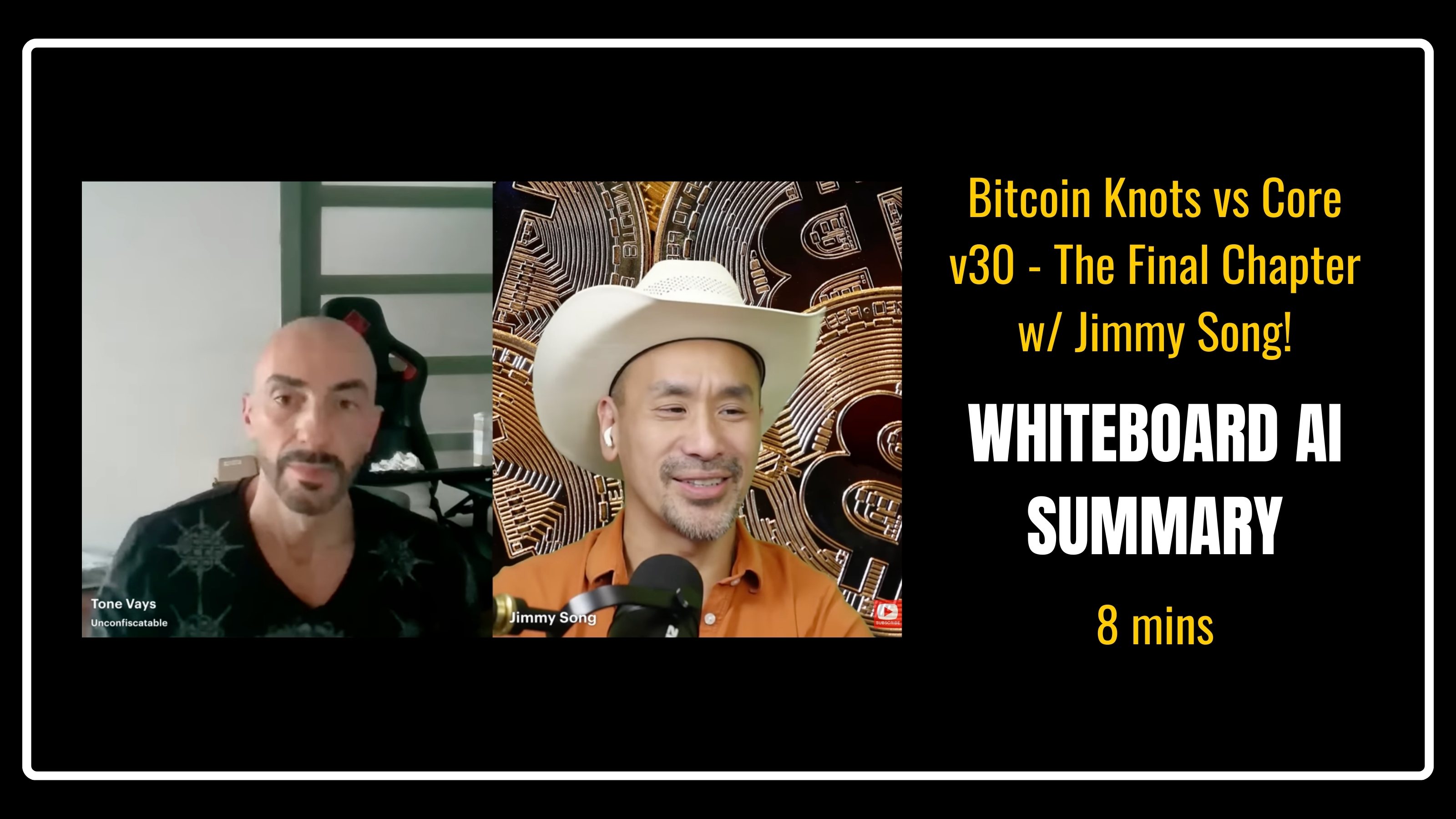
Ai generated whiteboard video explainer of a 3 hour 53 mins video between Tone Vays and Jimmy Song: Bitcoin Knots vs Core v30 - The Final Chapter
Take Action & Follow the Money
- Share this post. Share this blog post to expose the "divide and conquer" trap.
- Subscribe to the Simon Dixon YouTube channel. Get my weekly deep dives into geopolitics, macro, and Bitcoin. Subscribe to my YouTube channel.
- Find me on Rumble. This is my backup channel, safe from censorship. Follow me on Rumble.
- Follow me on X @SimonDixonTwitt. I post real-time updates and analysis on X and am highly active there. Follow me on X.
- Follow me on instagram. Usually short clips are posted here.
- Follow me on TikTok. Usually short clips are posted here.
- SimonDixon.com. This is my personal site and an archive of all my content, safe from de-platforming. Join the free membership portal.
Watch on YouTube
Prefer to listen? Available on Spotify and Apple Podcasts
Read other related blogs
Legal Disclaimer
The content provided in this post is for informational and educational purposes only and does not constitute financial investment legal or professional advice. Bitcoin and other digital assets involve a high degree of risk and potential for total loss of capital. All mentions of infiltration hijacking or specific individuals including but not limited to Gloria Zhao Peter Todd Adam Back and others are based on alleged reports public theories and the personal opinions of the author and have not been proven in a court of law. The author makes no claims regarding the truth of these allegations and provides them only to reflect the nature of current public debates within the Bitcoin community. The author is not responsible for any actions taken based on this content. Always conduct your own due diligence and consult with professional advisors before making financial decisions. Self-custody of digital assets carries inherent technical risks for which the user is solely responsible. The author's personal choice to run specific software is not an endorsement for others to do the same without independent technical evaluation.